


Elvira Kadyrova and Liliya Zhirnova
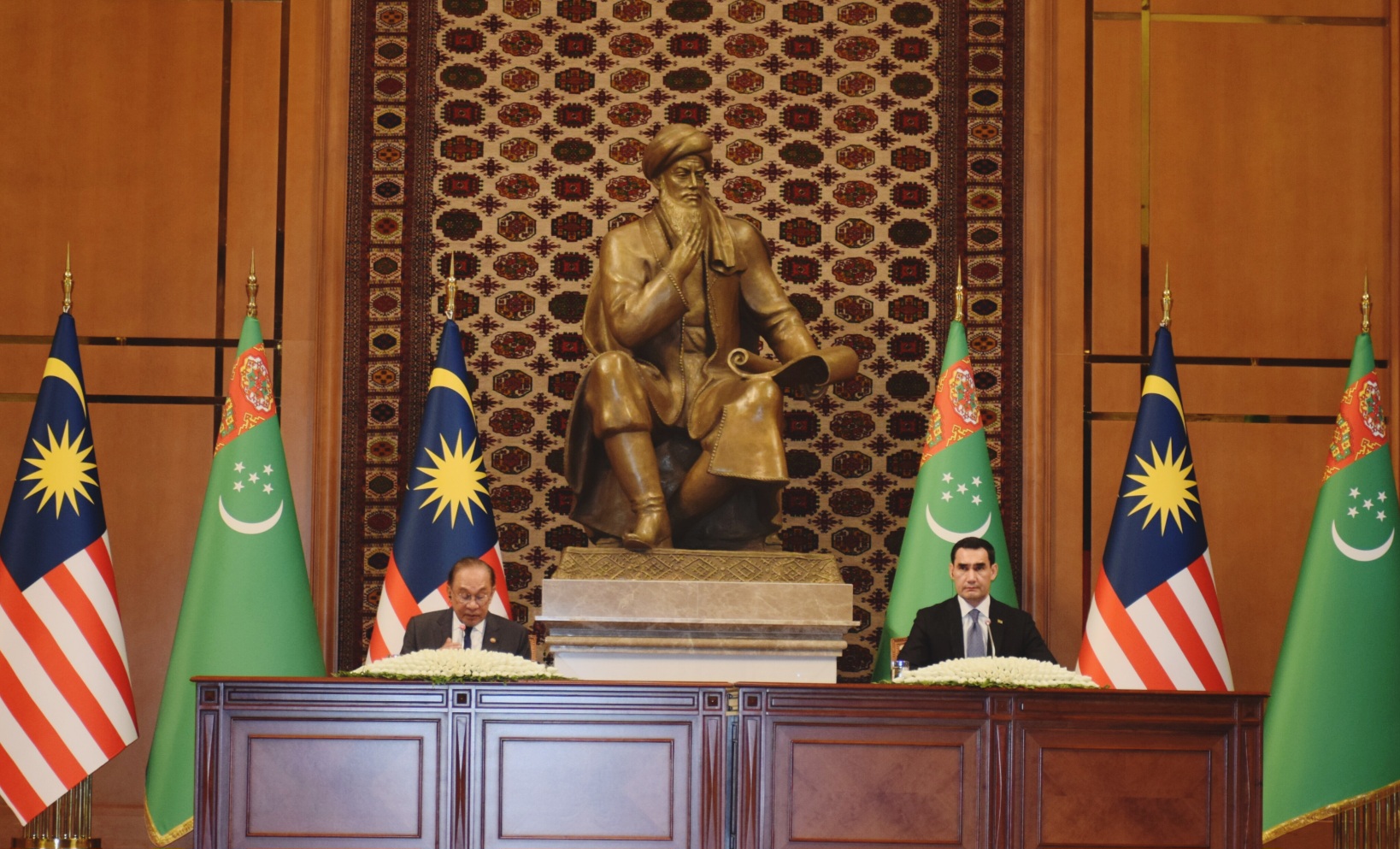
Prime Minister Anwar Ibrahim’s official visit to Turkmenistan on 18–19 June 2026 was, on the surface, centered on energy cooperation. The visit coincided with the celebration of three decades of PETRONAS operations in Turkmenistan and produced a number of important agreements in the oil and gas sector.
Yet a closer look reveals something more significant.
The visit marked the beginning of a new chapter in relations between Turkmenistan and Malaysia—one in which energy remains the foundation but no longer stands alone. The discussions, agreements and public statements issued during the visit point to a broader strategic partnership encompassing trade, investment, transport, logistics, education, technology and regional connectivity.
In many ways, the visit demonstrated how a successful corporate partnership can evolve into a comprehensive interstate relationship.
Thirty Years of Trust
Few foreign companies have a history in Turkmenistan comparable to that of PETRONAS.
For three decades, the Malaysian energy giant has operated successfully in the Turkmen sector of the Caspian Sea, becoming one of the country’s most prominent and reliable international investors. The anniversary exhibition held in Ashgabat highlighted not only the commercial achievements of PETRONAS but also its contribution to the development of Turkmenistan’s energy sector and human capital.
The agreements signed during Prime Minister Anwar Ibrahim’s visit suggest that both sides are looking far beyond the achievements of the past.
The newly announced arrangements open the way for deeper participation by PETRONAS in the development of Turkmenistan’s hydrocarbon resources. More importantly, they indicate a high level of confidence between the two partners.
Turkmenistan has traditionally approached foreign participation in strategic energy assets with careful consideration. The decision to expand cooperation with PETRONAS therefore reflects not only economic calculations but also political trust built steadily over thirty years.
Trust, after all, cannot be negotiated overnight. It is accumulated through consistency, reliability and mutual respect.
From Investor to Strategic Partner
The significance of the visit lies in the evolution of the relationship itself.
For many years, Malaysia’s presence in Turkmenistan was associated primarily with PETRONAS.
Today, that relationship is expanding into something much broader.
Official statements from both sides emphasized cooperation in transportation, logistics, trade, investment, technology, agriculture, education and people-to-people contacts. These are not supplementary areas added for diplomatic completeness. They represent sectors where both countries possess genuine complementarities.
Malaysia brings advanced industrial capabilities, extensive experience in logistics and international trade, a globally recognized halal industry and strong technological expertise.
Turkmenistan offers strategic geographic positioning, substantial natural resources and growing opportunities as a transit and connectivity hub linking various regions of Eurasia.
The two economies are different enough to complement each other and sufficiently developed to generate meaningful cooperation.
This is precisely the type of partnership that many countries seek but relatively few succeed in building.
Energy Security and Economic Diversification
The visit also highlighted how the interests of both countries increasingly converge.
For Malaysia, deeper engagement in Turkmenistan strengthens long-term access to one of the world’s most significant gas-producing regions. At a time when energy security remains a central concern for many nations, access to stable and reliable partnerships is becoming increasingly valuable.
For Turkmenistan, expanded cooperation with Malaysia provides more than investment capital. It offers access to technology, management expertise, international business networks and Southeast Asian markets.
This creates a relationship in which both sides gain tangible strategic advantages.
What is emerging is not a traditional host-investor arrangement but a partnership based on shared long-term interests.
Such partnerships tend to prove more resilient because they are supported by multiple pillars rather than a single sector.
A Bridge Between Central Asia and ASEAN
Perhaps the most important long-term dimension of the visit extends beyond bilateral relations.
The discussions in Ashgabat reflected growing interest in strengthening links between Central Asia and ASEAN. In this context, Malaysia occupies a unique position.
As one of ASEAN’s leading economies and a country with extensive experience in international trade and investment, Malaysia is well placed to serve as a bridge between Southeast Asia and Central Asia.
For Turkmenistan, this aligns closely with its broader foreign-policy vision.
Over recent years, Ashgabat has consistently promoted international connectivity, economic cooperation and diversified partnerships. While much attention has been devoted to links with South Asia, the Gulf region and Europe, Southeast Asia represents another important direction with substantial untapped potential.
The economic logic is compelling.
Central Asia possesses abundant energy resources, strategic transit routes and growing markets. ASEAN, meanwhile, is one of the world’s most dynamic economic regions, with a population exceeding 680 million and strong manufacturing, financial and technological capacities.
Closer interaction between these regions offers benefits for both sides.
In this regard, Malaysia and Turkmenistan may find themselves playing important roles in shaping future Central Asia–ASEAN cooperation.
More Than an Anniversary
Anniversaries often focus on past achievements.
The events held in Ashgabat certainly celebrated an impressive history of cooperation. Yet almost every major announcement made during Prime Minister Anwar Ibrahim’s visit was directed toward the future.
The exhibition showcased thirty years of successful partnership.
The agreements signed during the visit outlined a vision for the next thirty. — That distinction is important.
Rather than simply commemorating an established relationship, both governments used the occasion to expand it, deepen it and place it within a broader strategic framework.
Looking Ahead
Prime Minister Anwar Ibrahim’s June 2026 visit to Turkmenistan is likely to be remembered as more than an energy mission.
The expansion of PETRONAS’ role in Turkmenistan’s energy sector is undoubtedly a major achievement. Yet the deeper significance of the visit lies in the transformation of a long-standing corporate presence into a comprehensive strategic partnership between two countries that see growing opportunities in working together.
For Turkmenistan, the visit reinforced its reputation as a reliable partner capable of sustaining productive long-term cooperation with international investors.
For Malaysia, it opened new avenues in one of the world’s most resource-rich and strategically important regions.
For both countries, it created stronger foundations for cooperation in trade, investment, technology, transport and regional connectivity.
Thirty years ago, the relationship began with energy.
The developments of June 2026 suggest that the future of Malaysia–Turkmenistan relations will be considerably broader—and potentially far more consequential. /// nCa, 20 June 2026