


nCa Commentary
The Days of Azerbaijani Culture in Ashgabat and Arkadag are more than a cultural celebration. They are the latest visible expression of a steadily deepening partnership between Turkmenistan and Azerbaijan — a relationship that is increasingly acquiring strategic significance across the Caspian region.
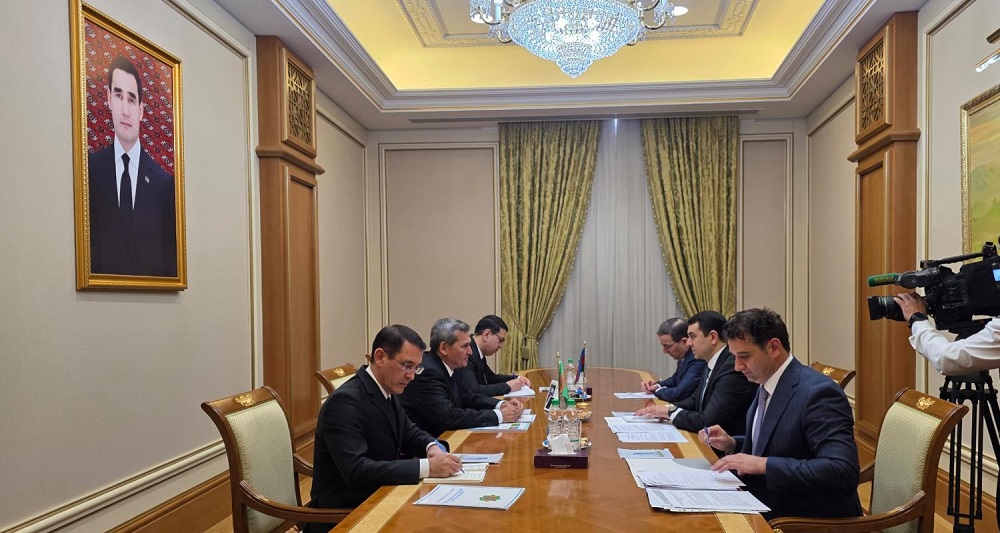
The visit of Azerbaijan’s Minister of Culture, Adil Karimli, to Turkmenistan and his meetings with President Serdar Berdimuhamedov and Foreign Minister Rashid Meredov highlighted the growing importance both countries attach to humanitarian cooperation. During the discussions, both sides emphasized cultural exchanges, joint projects, exhibitions, and stronger contacts between creative communities as instruments for bringing their peoples closer together.
Yet the significance of these developments extends far beyond culture.
Over the past several years, Turkmenistan and Azerbaijan have transformed their relationship into one increasingly characterized by partnership and practical cooperation. The breakthrough understanding on the Dostluk hydrocarbon field, the growth of Caspian transport links, and expanding diplomatic contacts have created a new atmosphere of trust between Ashgabat and Baku.
Today, both countries occupy pivotal positions on the East-West transport corridors linking Central Asia with the South Caucasus and Europe. Azerbaijan serves as a gateway to the Black Sea and Mediterranean markets, while Turkmenistan connects the Caspian basin with Central Asia, Afghanistan, South Asia, and China.
Their cooperation has therefore become a key component of broader Eurasian connectivity.
Cultural diplomacy has emerged as an important pillar supporting this strategic convergence. The Azerbaijani Culture Days in Turkmenistan follow the successful Days of Turkmen Culture held in Azerbaijan in October 2025, demonstrating a deliberate policy of reciprocal engagement and people-to-people interaction.
The symbolism is powerful.
Both nations share deep historical, linguistic, and cultural affinities as Turkic peoples living on opposite shores of the Caspian Sea. By investing in cultural exchanges, they are reinforcing the social foundations necessary for long-term cooperation in trade, transport, energy, tourism, education, and regional diplomacy.
Recent Azerbaijani media coverage of the Culture Days has consistently framed the events not merely as artistic showcases but as opportunities to strengthen friendship, mutual understanding, and strategic partnership.
Concerts, exhibitions, film screenings, literary presentations, and academic exchanges have been presented as part of a broader effort to deepen bilateral ties.
As geopolitical and economic dynamics continue to elevate the importance of the Caspian region, the relationship between Turkmenistan and Azerbaijan is acquiring a new relevance. The two countries increasingly appear not simply as neighbors across a shared sea, but as complementary partners helping shape emerging transport, energy, and connectivity architectures across Eurasia.
The current cultural celebrations in Ashgabat therefore represent something larger than a festival. They illustrate how cultural diplomacy is helping underpin a mature and multifaceted partnership—one that is becoming an increasingly important element of stability, cooperation, and development in the wider Caspian region. /// nCa, 8 June 2026