


nCa Commentary
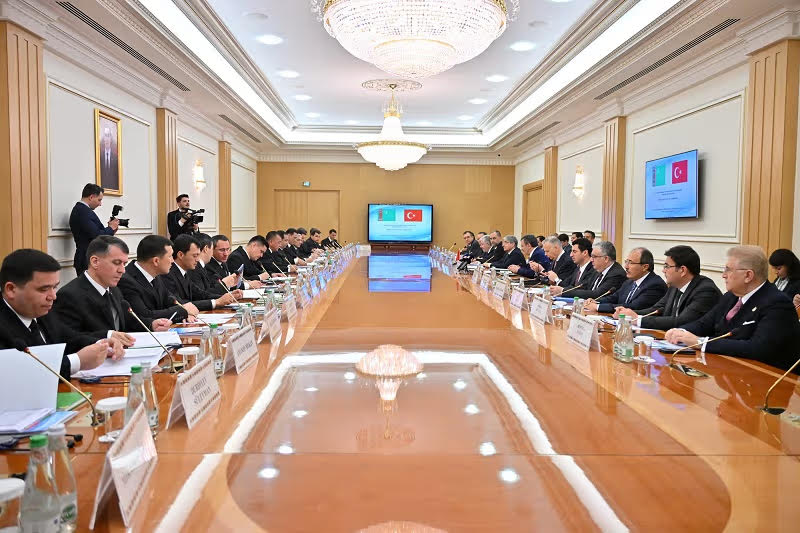
The 9th meeting of the Turkmen-Turkish Intergovernmental Commission in Ashgabat produced a Comprehensive Action Plan and reviewed cooperation across trade, energy, transport, construction, industry, agriculture, education, healthcare, and digital technologies. As reported by nCa, the discussions were held at the highest political level, including the reception of Vice President Yılmaz by Serdar Berdimuhamedow.
Turkish reporting and official statements surrounding the visit have emphasized three recurring themes: economic integration, connectivity, and the institutionalization of cooperation. Turkish officials described Turkmenistan as one of Türkiye’s closest partners in Central Asia and highlighted the importance of expanding bilateral trade and investment flows.
What is notable is that the language used by Turkish policymakers has become increasingly practical. A decade ago, discussions between Ankara and Ashgabat were often dominated by references to common history, language, and culture. Those themes remain important, but today they are increasingly accompanied by discussions of logistics corridors, industrial cooperation, investment opportunities, and energy connectivity.
The Economic Logic
Turkish construction companies have long been among the most visible foreign actors in Turkmenistan. The relationship is now broadening.
Türkiye faces a strategic need to deepen its economic footprint across Central Asia, while Turkmenistan is seeking diversified economic partnerships, expanded export routes, and greater integration into regional supply chains.
The Comprehensive Action Plan can therefore be viewed as an attempt to move cooperation from project-based engagement toward a more systematic framework. The likely priority areas include:
- expansion of bilateral trade;
- greater participation of Turkish companies in industrial and infrastructure projects;
- cooperation in transport and logistics;
- digital transformation and technology exchange;
- agricultural and food-sector collaboration;
- enhanced financial and investment mechanisms.
Rather than a dramatic breakthrough, the significance lies in creating a framework that allows multiple sectors to advance simultaneously.
Energy Remains the Strategic Variable
Although the official agenda covered a broad spectrum of cooperation, energy inevitably forms part of the strategic backdrop.
For several years, Türkiye has sought to strengthen its role as an energy hub linking producers in Central Asia and the Caspian region with European and Mediterranean markets. Turkmenistan, possessing some of the world’s largest natural gas reserves, remains a key component of that long-term vision.
Neither side appears to be presenting immediate grand announcements.
However, the political atmosphere created by such high-level visits contributes to building the trust necessary for future energy initiatives.
In this respect, the visit should be viewed as part of a longer process rather than an isolated event.
The Middle Corridor Context
The visit also fits within the broader development of Eurasian connectivity.
Türkiye has invested significant diplomatic capital in promoting the so-called Middle Corridor linking East Asia, Central Asia, the Caspian region, the South Caucasus, and Türkiye.
Turkmenistan occupies a critical geographic position within this architecture.
As global supply chains seek alternatives to routes affected by geopolitical tensions, the strategic value of Central Asian transit corridors has increased substantially. Turkish policymakers increasingly see Turkmenistan not merely as a bilateral partner but as a pivotal transit state within a wider Eurasian network.
This perspective helps explain why transport and logistics cooperation featured prominently in the discussions.
The Turkic Dimension — Present but Not Dominant
The visit also reflects the gradual evolution of cooperation among Turkic states.
Turkmenistan remains an observer in the Organization of Turkic States, while maintaining its policy of permanent neutrality. Nevertheless, practical cooperation with Türkiye and other Turkic countries has expanded steadily in recent years.
What is striking is that the Turkic dimension increasingly serves as an enabling framework rather than the primary objective. Shared cultural and linguistic heritage helps create political comfort and public goodwill, but the driving force today is increasingly economic pragmatism.
Realistic Projections
Looking ahead, three developments appear plausible.
First, bilateral trade is likely to grow steadily rather than dramatically. Institutional mechanisms established through the Comprehensive Action Plan can reduce barriers and create opportunities for businesses on both sides.
Second, Turkish participation in Turkmen industrial, construction, and logistics projects is likely to expand. Turkish firms already possess experience, familiarity, and networks within Turkmenistan that few foreign competitors can match.
Third, cooperation in transport and energy connectivity will continue to deepen incrementally. Major headline projects may take time, but the political groundwork is being reinforced through regular high-level engagement.
The Trajectory
The significance of Vice President Cevdet Yılmaz’s visit lies less in any single agreement and more in what it reveals about the trajectory of Turkmen-Turkish relations.
The relationship is entering a more mature phase in which cultural affinity remains important but is increasingly complemented by concrete economic interests, connectivity ambitions, and long-term strategic calculations. The Comprehensive Action Plan signed in Ashgabat may therefore be best understood not as the culmination of a process, but as a framework for the next stage of cooperation.
For both Ashgabat and Ankara, the message appears clear: the future of the partnership will be measured less by declarations of friendship and more by the ability to convert political goodwill into tangible economic and strategic outcomes. /// nCa, 8 June 2026