


Tariq Saeedi
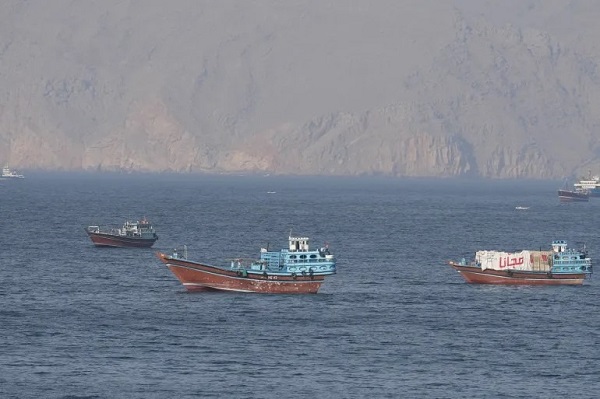
If Iran is blocking the Strait of Hormuz from the inside and the United States is blocking it from the outside, does that make them unwitting partners in the same blockade? The question is worth asking, even if we leave it hanging without easy answers.
The closure has created real hardship far beyond the battlefield. Non-combatant countries that had no role in starting the conflict are now paying a heavy price.
The Philippines, almost wholly dependent on Middle Eastern crude, declared a national energy emergency on 24 March 2026. Fuel prices have surged by 50 percent, and the IMF has cut the country’s 2026 growth forecast to 4.1 percent. Thailand, heavily reliant on oil imports and exports through the strait, has seen tourism arrivals drop by 50 percent in March alone, with projected losses reaching up to $4.5 billion if the disruption continues.
These are not abstract statistics. — They represent higher costs for families, cancelled flights, closed factories, and strained budgets in countries that had nothing to do with the decision to strike Iran.
The United States, as the initiator of the military campaign, faces a moral — and arguably legal — question: does the party that starts a war bear some responsibility for its global fallout?
President Trump has stated clearly that the United States is “not responsible” for the security of trade through the Strait of Hormuz and that countries relying on the waterway should ensure their own security. Yet the administration has offered limited targeted aid, including approximately $60 million to the Philippines on 15 April 2026.
Iran, for its part, has granted limited passage to Thai and Philippine-flagged vessels after specific diplomatic talks.
While the country is under severe pressure, the latest news digest from Iran’s Ministry of Foreign Affairs presents a striking picture. Nearly half of its content is devoted not to military updates or sanctions, but to cultural and everyday life: a long, detailed article on a particular style of kebab, complete with recipe and historical notes, alongside coverage of Iran’s preparations for FIFA participation. Even in the middle of war, the digest reflects a deliberate effort to maintain normalcy.
This is consistent with what we have observed throughout this ‘War on Iran’ series. Despite decades of maximum sanctions, Iran remains one of the most educated nations in the world. It produces a very high number of doctoral graduates, particularly in engineering and STEM fields, and has ranked as high as third globally in annual engineering graduates. Its scientific output has placed it consistently in the global top 15–17 for publications, with notable strength in technology and medicine.
Academic growth rates were once among the fastest in the world. These achievements did not happen in isolation; they reflect a deep cultural commitment to knowledge and self-reliance.
The same digest reminds us of the human cost. The entire top leadership of the nation — Supreme Leader Ayatollah Ali Khamenei, senior national security official Ali Larijani and his son, and other key figures — embraced martyrdom in the opening phase of the conflict. Hundreds of little children were buried after the Minab school strike just over a month ago. And yet life continues. Shops remain open where possible, Nowruz was observed, and cultural threads are still being woven.
In the early part of the digest, Iranian officials claim the sides in Islamabad were very close to signing what they called the “Islamabad MoU.” Something shifted, they say, and the agreement was sabotaged. Other sources have hinted at similar last-minute complications. The question lingers: who does not want peace, and why?
The blockade, the hardship of innocent nations, the quiet cultural resilience of Iran, and the abrupt end of the Islamabad talks all point to the same uncomfortable truth — Wars rarely end cleanly at the battlefield. Sooner or later, the parties return to the table.
The only real question is how much more suffering will occur before they do — and whether the world will have learned anything from the cost already paid. /// nCa, 21 April 2026