


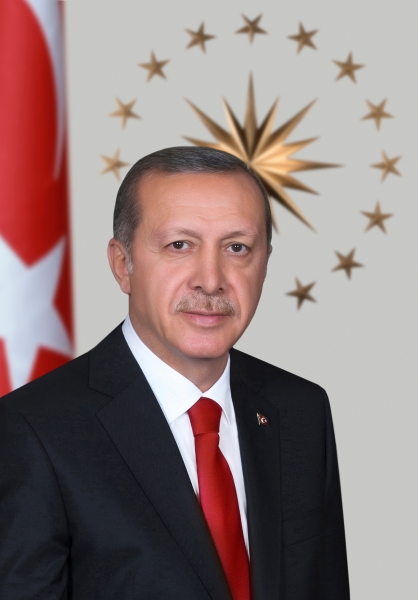
President Recep Tayyip Erdoğan has marked the tenth anniversary of the 15 July coup attempt with a message reflecting on the night Türkiye’s institutions came under attack — and on the response of ordinary citizens that, in his words, followed.
Writing on the occasion of Democracy and National Unity Day, President Erdoğan recalled that one of the most serious challenges in Türkiye’s modern political history unfolded exactly a decade ago, on 15 July 2016. He described the plot as the work of a network that had “insidiously infiltrated the institutions of our state,” with the aim of pushing the country into prolonged instability.
What stood out, the President said, was the public’s response. He asserted that by standing up for their independence, the nation showed the world that the will of the people cannot be overridden. In his words, the Turkish people’s “prudence, courage, and foresight on the night of 15 July are also unprecedented in the history of world democracy.”
According to Erdoğan, the attempt went well beyond a conventional coup. He said the plotters — whom he identified with the Fetullahist Terrorist Organisation (FETO) — had targeted the Presidential Complex and the Grand National Assembly, the two institutions he described as embodying the national will.
The President noted that on that night, he had told the public he recognised no power greater than that of the people, and said he made the statement confident that citizens would stand behind it. He recounted that people did take to the streets that night, and credited them with what he called an enduring “epic of national will.”
Turning to the years since, the President said his government moved quickly to draw lessons from the episode, introducing structural reforms intended to guard state institutions against similar threats. He also pointed to operations against other groups Türkiye has designated as terrorist organisations, and highlighted the “Terror-Free Türkiye” initiative as a marker of this period, describing it as part of the broader “Century of Türkiye” vision. He expressed hope that the initiative’s progress would benefit not just Türkiye but the wider region.
On the economic front, Erdoğan said the country had continued to invest through the past decade in energy, transport, healthcare, agriculture, technology, and defence, framing this as a response to those who — in his telling — had also sought to undermine Türkiye’s prosperity. He cited the National Technology Move as driving advances in defence, aviation and space, and pointed to the TOGG electric vehicle, the KAAN fighter jet, national corvettes, and unmanned aerial vehicles as products of that push.
The President also addressed Türkiye’s foreign policy, saying the country had positioned itself over the past decade as an active participant in resolving regional and global crises. He said Türkiye had tried to support “the oppressed and the righteous, rather than the powerful” wherever conflict arose, and suggested that the country’s growing diplomatic weight traces back to the resolve shown on the night of 15 July.
On counterterrorism, Erdoğan said cooperation between nations remains central to his government’s approach. He noted that FETO’s overseas networks have shown signs of internal decline in recent years, though he said some countries continue to quietly shelter members of the organisation. He called for continued vigilance, describing FETO as a group willing to invoke concepts like democracy and human rights to serve its own ends. Recalling that 253 people were killed by the plotters that night, he said Türkiye’s main expectation of the international community is support for what he called its legitimate fight against terrorism — adding that lasting global security, in his view, depends on a consistent stand against terrorist groups, without exception. /// nCa, 15 July 2026