


The first meeting of the “Dialogue Mechanism” for heads of state research institutions of the five Central Asian countries and China took place in Urumqi. The event was supported by the Xinjiang Institute of Ecology and Geography under the Chinese Academy of Sciences, the People’s Government of the Xinjiang Uygur Autonomous Region, and the Secretariat of the China–Central Asia Dialogue Mechanism, according to the Neutral Turkmenistan newspaper.
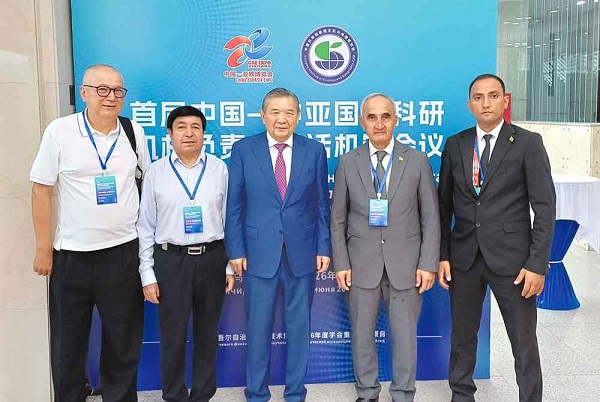
Turkmenistan’s delegation at the international forum was led by Pirli Kepbanov, Director of the National Institute of Deserts, Flora, and Fauna (NIDFF) under the Ministry of Environmental Protection and Candidate of Biological Sciences. He delivered a report during the key session titled “Deepening Scientific Cooperation for Sustainable Development in the Region.”
Participants focused on pressing regional environmental challenges, including desertification, dust and sandstorms, land and pasture degradation, and glacier melting. Scientists emphasized that effectively countering these risks requires immediate action and close interstate cooperation.
Kepbanov highlighted land reclamation, watershed preservation, and maintaining the ecological cleanliness of transboundary rivers and lakes as priority areas for joint efforts. On the interstate level, he proposed joint reforestation, coordinated disaster response, real-time exchange of hydrometeorological data, and suppression of pest infestation hotspots.
The Turkmen scientist paid special attention to the research work conducted at the NIDFF Central Karakum research station and the country’s nature reserves, noting that vegetation cover serves as the primary foundation for preventing the degradation of desert ecosystems.
The creation of ecological corridors for migratory animals was another key topic of scientific discussion. Scholars noted that artificial restrictions on habitats and seasonal migration routes create adverse conditions for wildlife populations, leading to inbreeding and species degradation. Establishing transboundary protected areas to preserve ecosystem integrity across neighboring borders was identified as a viable solution to these challenges.
Practical Outcomes and New Projects
The inaugural meeting of the “Dialogue Mechanism” yielded tangible results. Research centers for ecology and environmental protection from Central Asian countries and new members of the association signed a cooperation agreement.
Additionally, participants were presented with the first major ecological and geographical project: the “China–Central Asia Spatiotemporal Intelligent Satellite Network.”
It was decided to hold the next meeting of scientific leaders from the region and China in Tashkent.
Cultural Program
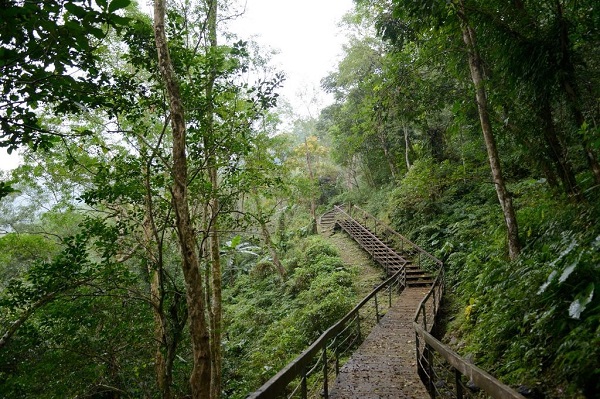
The organizers prepared a rich cultural program for participants, including a visit to Liyushan Ecological Park. Guests explored ancient geological sites, including petrified trees aged 130 to 195 million years, and visited a training facility for Akhalteke horses featuring equestrian shows, trick riding, and show jumping. Symbolically, these renowned “heavenly horses” have historically served as a living bridge of friendship and cultural exchange along the Great Silk Road. /// nCa, 22 July 2026