


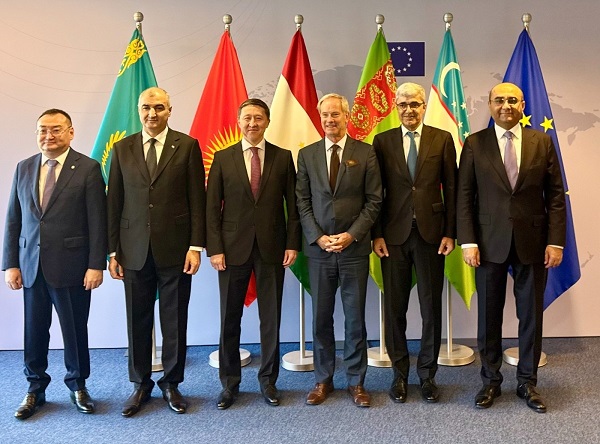
Turkmenistan consistently maintains that ensuring long-term security is impossible through military force alone. This was stated by the Deputy Minister of Foreign Affairs of Turkmenistan, Ahmet Gurbanov, at the 13th Meeting of the European Union–Central Asia High-Level Political and Security Dialogue, held on Thursday, 16 July 2026, in Brussels.
According to the remarks by Gurbanov, Turkmenistan believes that a solid foundation for sustainable peace and security must continue to rest on political-diplomatic mechanisms, confidence-building measures between states, sustainable socio-economic development, strict adherence to universally recognized norms and principles of international law, effective multilateral diplomacy, and the central coordinating role of the UN.
Deputy foreign minister emphasized that Turkmenistan advocates for further improving the mechanisms of cooperation between Central Asia and the EU. This includes the High-Level Political and Security Dialogue, meetings of special representatives from Central Asian countries and the EU, as well as practical EU programs aimed at strengthening the security capacity of regional states.
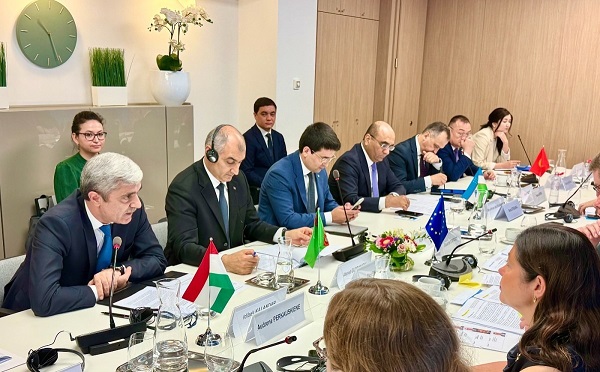
During the dialogue, participants discussed current issues of regional and international security, prospects for further cooperation between Central Asian countries and the European Union, and the practical implementation of joint initiatives to enhance resilience, ensure security, manage borders, counter modern challenges and threats, and develop connectivity and multilateral cooperation.
Bilateral Meetings
During his visit to Brussels, Gurbanov met with Gilles Bertrand, the European Union Special Envoy for Afghanistan and Head of the Afghanistan and Pakistan Division of the European External Action Service (EEAS).
The parties discussed current issues regarding cooperation on Afghanistan.
The Turkmen side reaffirmed its commitment to continuing humanitarian assistance to the Afghan people, implementing transport and energy projects involving Afghanistan, and expanding practical cooperation with the EU through consultations of special representatives and regional programs such as CADAP and BOMCA.
Special attention was paid to coordinating international efforts under the central role of the UN, including cooperation within the UN Doha Process, to facilitate Afghanistan’s sustainable socio-economic development and strengthen regional security.
In a meeting with Olof Skoog, Deputy Secretary-General for Political Affairs of the EEAS, prospective areas of Turkmen-European cooperation were reviewed. These include developing transport connectivity, unlocking the potential of the Trans-Caspian Transport Corridor, and implementing the EU’s Global Gateway initiative.
The parties noted a mutual interest in expanding cooperation in the energy sector, including improving energy efficiency, developing renewable energy sources, implementing modern technologies, and reducing methane emissions.
Additionally, the sides reviewed cooperation in education, professional training, and academic exchanges. They emphasized the importance of maintaining a regular political dialogue and expressed confidence that the steady development of this partnership will facilitate mutually beneficial joint projects. ///nCa, 17 July 2026 [photo credit – MFA Tajikistan]