


On 16 July, President of Turkmenistan Serdar Berdimuhamedov arrived in Georgia on a state visit. The visit featured a series of high-level meetings, including summit talks between the two heads of state, consultations involving government officials, ministers and senior representatives of both countries, as well as the Turkmen–Georgian Business Forum. The agenda focused on advancing the strategic Middle Corridor, significantly expanding cargo flows, and strengthening the role of the private sector in bilateral economic cooperation.
Summit Talks
The official programme began at the Presidential Palace in Tbilisi, where President Serdar Berdimuhamedov held one-on-one talks with President Mikheil Kavelashvili. The meeting set the tone for the broader negotiations that followed throughout the day.
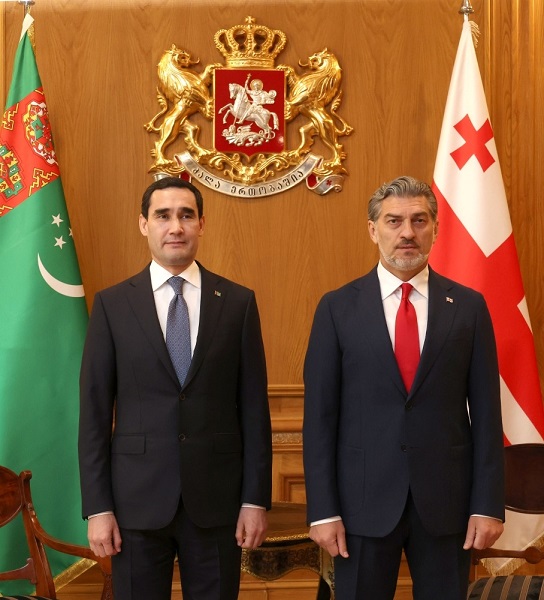
President Kavelashvili described the visit—the first state visit by a Turkmen head of state to Georgia—as a landmark in bilateral relations and a clear indication that political dialogue between the two countries has reached a new level.
During their discussions, the sides reviewed ways to deepen practical cooperation, with particular attention given to trade and economic ties, the promotion of mutual investment, and major joint projects in the fields of energy, transport and logistics.
A central theme of the talks was the need to make full use of the transit potential of the Middle Corridor. Both presidents agreed that Georgia, serving as a strategic gateway between Europe and Asia, is committed to expanding its transit capacity, including through the development of the deep-water port of Anaklia and the greater use of its Black Sea ports.
Highlighting transport, logistics, communications, and port infrastructure among the key vectors of cooperation, the President of Turkmenistan emphasized that our countries support the initiative to create the “Caspian Sea–Black Sea” transport corridor along the Turkmenistan–Azerbaijan–Georgia–Romania route. Linking the Caspian and Black Sea regions opens up vast opportunities for the development of trade, economic, and investment partnerships.
The presidents also agreed to strengthen academic exchanges, expand youth cooperation programmes, and promote new joint cultural initiatives.
Berdimuhamedov invited Kavelashvili to visit Turkmenistan at any convenient time. The invitation was gratefully accepted.
Following the meeting, President of Turkmenistan left a commemorative entry in the Book of Honored Guests.
Business Forum in Tbilisi: Capital Integration and New Logistics Hubs
The Turkmen–Georgian Business Forum was held at the Expo Georgia exhibition centre in Tbilisi. Alongside the forum, Turkmenistan organised a large-scale national exhibition covering 592 square metres, where 17 government agencies and 42 private companies showcased their latest products, technologies and industrial achievements under the “Made in Turkmenistan” brand.
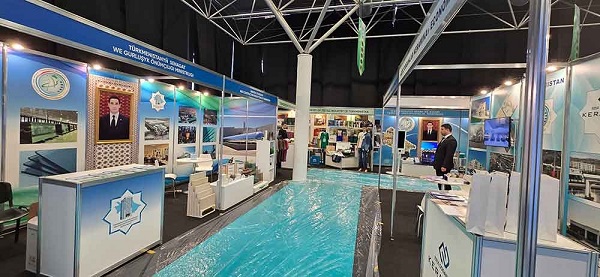
The exhibition was visited by President Serdar Berdimuhamedov and Georgian Prime Minister Irakli Kobakhidze, who addressed business leaders from both countries and outlined their vision for expanding bilateral economic cooperation.
In his remarks, President Berdimuhamedov called on the private sector to become a driving force behind the Turkmen–Georgian partnership, particularly in infrastructure development, logistics and the creation of international supply chains.
He highlighted Turkmenistan’s key economic indicators, including GDP growth of 6.3%, a long-term public investment programme worth US$12 billion (more than 41 billion manats), and the allocation of 77% of the national budget to social spending.
The President also outlined the country’s economic diversification strategy, ranging from the development of Caspian offshore energy resources in partnership with leading international companies to the expansion of the textile industry. Turkmenistan produces approximately 133 million square metres of textile products annually, with around 80% exported and the remaining 20% supplied to the domestic market.
Agriculture was identified as another strategic priority. Berdimuhamedov noted that the country continues to expand the production, processing and export of fruit and vegetables. Turkmenistan has become one of the region’s leading tomato exporters, shipping more than 200,000 tonnes abroad each year.
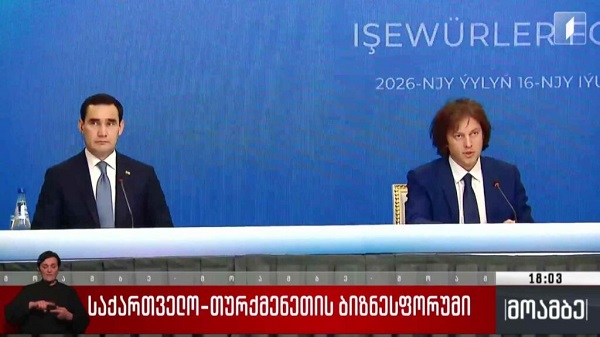
Turkmenistan Proposes Establishing a Terminal at Georgia’s Black Sea Ports
President Serdar Berdimuhamedov announced that Turkmenistan is considering the establishment of its own logistics terminal on Georgia’s Black Sea coast, describing the initiative as a strategic step toward deepening economic ties between the two countries.
“We are conducting negotiations on establishing a Turkmen cargo terminal on the Georgian coast of the Black Sea. I believe that the business communities of both countries should take an active part in implementing this project, putting public-private partnership into practice through concrete action,” Berdimuhamedov said.
He also encouraged business leaders from Turkmenistan and Georgia to build on existing partnerships, expand commercial cooperation, and launch new joint ventures that would strengthen bilateral economic relations.
Georgia Sees Strong Potential for Expanded Economic Cooperation
Prime Minister Irakli Kobakhidze responded by reaffirming Georgia’s readiness to pursue ambitious joint projects, describing Georgia and Turkmenistan as strategic bridges between Europe and Asia.
“Georgia’s strategic position in the Black Sea region offers us a unique opportunity to act as a pivotal link connecting European markets, Asian economies, and international transport routes. Meanwhile, Turkmenistan, as one of Central Asia’s leading economic powers, stands out for its rich natural resources and expanding export capabilities. By building upon these shared strategic advantages, we place exceptional importance on developing the Middle Corridor. This route is increasingly gaining global significance, creating new avenues for the transit of goods between Europe and Asia,” Kobakhidze said.
The Georgian Prime Minister welcomed Turkmenistan’s interest in expanding its logistics and warehousing capacity near Georgia’s Black Sea ports.
“I am confident that our existing ports, alongside the upcoming Anaklia Deep Sea Port and its planned Free Industrial Zone, will offer an invaluable platform for Turkmen companies seeking to access regional markets,” he added.
Kobakhidze also praised the contribution of Turkmen businesses already operating in Georgia. Companies with Turkmen investment are active in sectors including transport and logistics, construction, agriculture and real estate, creating a solid foundation for further economic cooperation.
Looking ahead, the Prime Minister highlighted the immense potential to expand this partnership into energy, renewable resources, the digital economy, IT, tourism, agriculture, and manufacturing.
“Collaborating in these fields will allow us to generate new economic value, drive investment, foster innovation, and open new horizons for both Georgian and Turkmen businesses,” he said.
High-Level Bilateral Meetings Focus on Turning Strategy into Action
Alongside the state visit, Tbilisi hosted a series of bilateral meetings between ministers and deputy prime ministers from the Turkmen delegation and their Georgian counterparts. These discussions translated the broad strategic agenda set by the two presidents into concrete areas of cooperation.
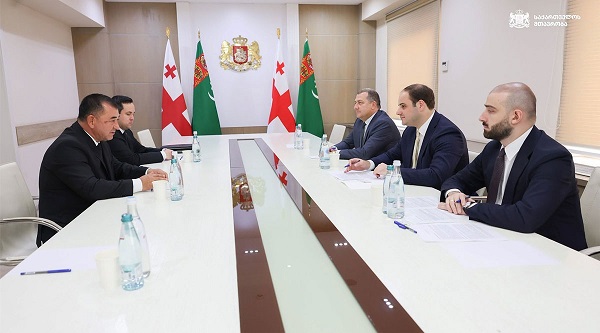
Levan Zhorzholiani, Head of the Georgian Government Administration, held separate meetings with Turkmen Deputy Chairmen of the Cabinet of Ministers Guvanch Agajanov (oil and gas), Batyr Annayev (transport and communications), Nokerguly Atagulyev (trade), as well as Minister of Trade and Foreign Economic Relations Nazar Agakhanov.
The talks focused on Georgia’s major investment projects aimed at accelerating the development of the Trans-Caspian transport corridor. Georgian officials presented ongoing infrastructure initiatives designed to strengthen the country’s role as a regional logistics hub and enhance connectivity along the Middle Corridor.
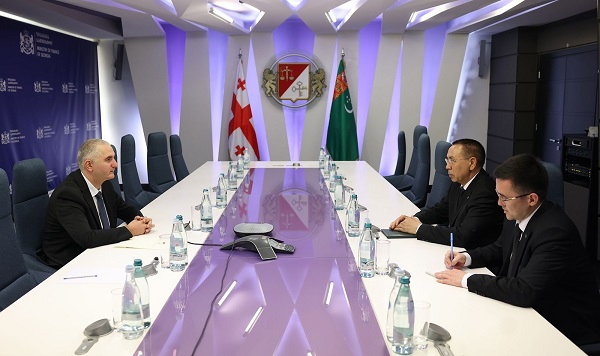
Georgian Finance Minister Lasha Khutsishvili met with Turkmen Deputy Chairman of the Cabinet of Ministers Hojamyrat Geldimyradov (economy and finance) to discuss financial coordination and regional development projects.
The two sides exchanged views on their respective macroeconomic outlooks and reviewed key economic indicators. They also expressed confidence that President Berdimuhamedov’s state visit would provide a strong boost to bilateral trade and help attract greater volumes of foreign direct investment between the two countries.
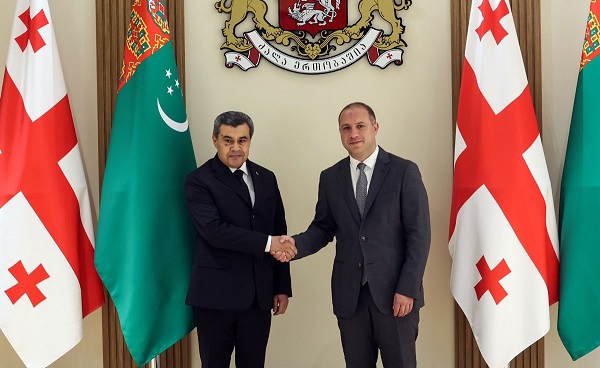
The Minister of Education, Science and Youth of Georgia, Givi Mikanadze, and his Turkmen counterpart, Djumamurat Gurbangeldyev, agreed to develop cooperation between Turkmenistan and Georgia in the fields of vocational, preschool, general, and higher education, as well as to expand interaction in the youth sector. In particular, they discussed the possibility of organizing international youth camps. A separate topic of the negotiations was the expansion of partnerships between higher education institutions and research institutes of the two countries.
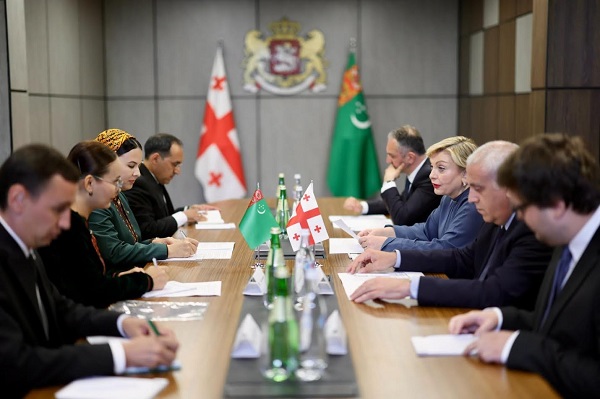
Georgian Minister of Culture Tinatin Rukhadze met with Turkmen DPM Bahar Seyidova to advance bilateral cultural cooperation.
The two sides reached the final stage of preparations for a series of cooperation memoranda covering museums, theatre, cinema and literature. These MoUs will provide a framework for expanding collaboration across a broad range of cultural fields, including museums, literature, music, theatre, film and cultural heritage preservation. They are also expected to encourage professional exchanges and further strengthen cultural ties between Turkmenistan and Georgia.
Days of Turkmen Culture
The opening ceremony of the Days of Turkmen Culture took place in Tbilisi. As part of the ceremony, a large-scale exhibition was launched, showcasing Turkmen decorative and applied arts, museum valuables, as well as works by contemporary artists and sculptors.
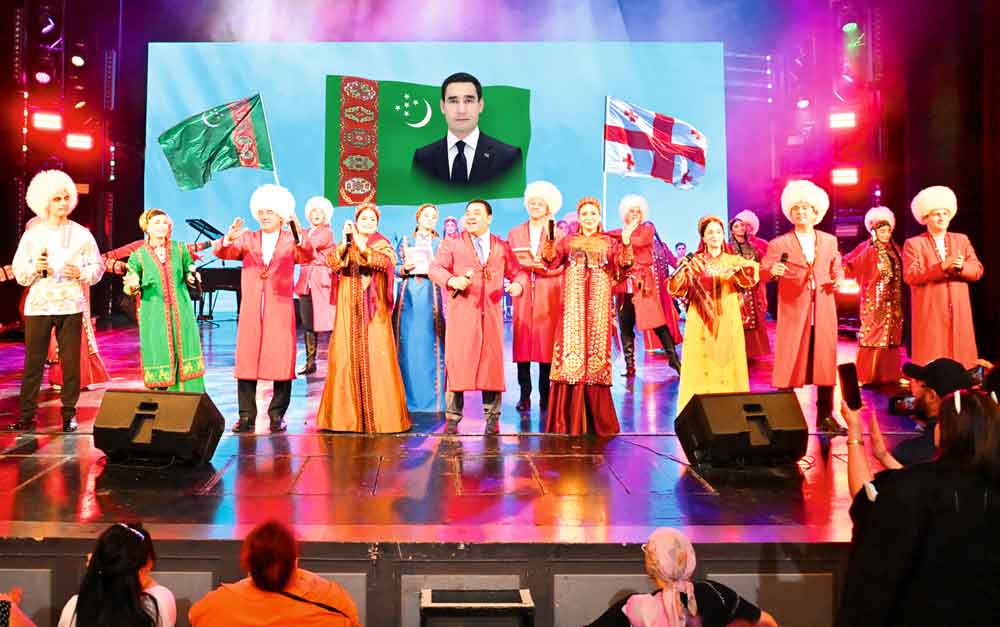
On the same day, working meetings were held between theatre directors and library professionals of the two countries. The specialists discussed prospects for sharing experience and joint creative projects.
Turkmen musicians, dance, and folklore groups presented a rich program. The performance of Georgian songs by Turkmen artists was particularly well-received by the audience. The grand finale of the evening was the performance of the song “Öňe, öňe, diňe öňe, jan Watanym – Türkmenistan”. The organizers emphasize that holding the Days of Culture concurrently with the high-level state visit demonstrates the commitment of both countries to bringing interstate relations to a qualitatively new level.///nCa, 16 July 2026 (based on reports by Georgian media and official press releases of the Government of Georgia).