


Tariq Saeedi
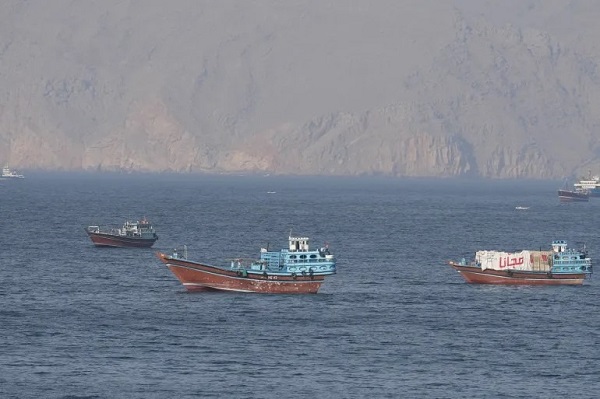
The Strait of Hormuz has again become the fulcrum of the US-Iran conflict, turning a corridor that normally carries close to a fifth of global oil trade into a contested chessboard.
Traffic has thinned sharply since the war resumed, as Iran has struck commercial vessels, pushed ships toward a northern route through its own waters, and signaled it would levy tolls if left in control.
Washington, in turn, has reinstated a naval blockade aimed at Iranian ships and cargo, styling itself the “Guardian of the Strait.”
That framing produced one of the more unusual episodes of the crisis. — On July 13, President Trump announced the US would charge a 20% reimbursement fee on all cargo transiting Hormuz in exchange for naval protection — a move the UN’s International Maritime Organization and even US Secretary of State Marco Rubio’s own prior statements suggested had no legal basis under international law, and which Brazilian President Lula called “piracy.”
Within two days, Trump reversed course, dropping the fee and saying Persian Gulf states would instead direct “record” investment into the US economy. The blockade on Iranian shipping, however, stayed in place and hardened — the US has since struck Iranian coastal military assets and floated the idea of seizing Kharg Island, Iran’s main oil export terminal.
The net effect is compounded disruption even without a formal closure: elevated war-risk insurance, rerouting hesitancy, and reduced volumes that Persian Gulf exporters (Saudi Arabia, UAE, Iraq) cannot fully offset through pipelines.
Brent crude has traded in the mid-$80s through mid-July — a one-month high, up roughly a third from the post-ceasefire lows earlier in the year, but still well below the ~$120 peak hit in the spring. Prices have moved on nearly every headline: strikes, ceasefire talk, the fee announcement and its reversal.
The economic mechanics remain straightforward. Higher crude feeds directly into gasoline, diesel, and petrochemical costs, squeezing import-dependent economies in Europe and Asia hardest, while even net-exporting economies like the US face domestic inflationary pressure that complicates monetary policy.
The fee episode — proposed and then withdrawn within 48 hours — illustrates something more durable than the number itself: a US administration willing to treat a historically open international waterway as a bargaining chip, whether through direct tolls or, as it settled on, negotiated investment flows. That precedent may matter more for long-term trade norms than the specific 20% figure did.
Central Asia: Ground-Based Challenges and Opportunities
For Central Asia (Kazakhstan, Uzbekistan, Kyrgyzstan, Tajikistan, Turkmenistan) — landlocked, resource-rich, and pragmatic by necessity — the Hormuz turbulence presents a mixed picture, felt mainly through commodity prices and great-power positioning rather than direct exposure.
Challenges:
- Energy and import costs. States that import refined products or feel knock-on effects from global oil spikes could see higher transport and food costs. Kyrgyzstan and Tajikistan, hydropower-dependent with thinner fiscal buffers, are more exposed to secondary inflation.
- Remittances. Labor migration to Russia and the Persian Gulf means any regional slowdown tied to the conflict could squeeze a key household income source.
- Geopolitical balancing. Heightened US-Iran tension sharpens the region’s usual tightrope between Russia/China-aligned frameworks (SCO) and Western engagement, with sanctions-adjacent trade carrying more risk than usual.
- Logistics friction. Broader shipping disruption raises costs for non-energy trade, complicating diversification efforts already underway.
Opportunities:
- Export premium. Kazakhstan (Kashagan and other fields) and Turkmenistan (gas) stand to benefit from elevated prices if export volumes to China, Europe, or elsewhere hold up — reinforcing the case for routes that bypass Hormuz entirely.
- Positioning as a stable alternative. As Persian Gulf volatility persists, Central Asia can market itself as a steadier transit and energy partner. Middle Corridor rail links between China and Europe look more attractive as southern sea routes carry more risk.
- Investment inflows. Elevated commodity revenue could fund infrastructure and reform, and the region’s relative calm may draw capital from investors looking to diversify away from Persian Gulf exposure.
- Regional cooperation. Shared vulnerability to external shocks could accelerate coordination on water management, green energy, and joint bargaining with larger powers, building on existing SCO and C5+1 formats.
On the ground, Central Asian governments are likely to do what they typically do: hedge across partners, prioritize domestic stability, and capture windfalls quietly rather than take visible sides.
The Hormuz crisis won’t reorder the region’s priorities, but it adds another data point in favor of the connectivity and diversification strategies these states were already pursuing.
The situation remains fluid — the fee reversal within 48 hours of its announcement is itself a reminder that today’s terms may not hold through the week.
Central Asia’s leaders, accustomed to navigating shocks generated by much larger neighbors, are reasonably well positioned to ride this one out with their usual mix of caution and resourcefulness. /// nCa, 17 July 2026