


Tariq Saeedi and Elvira Kadyrova
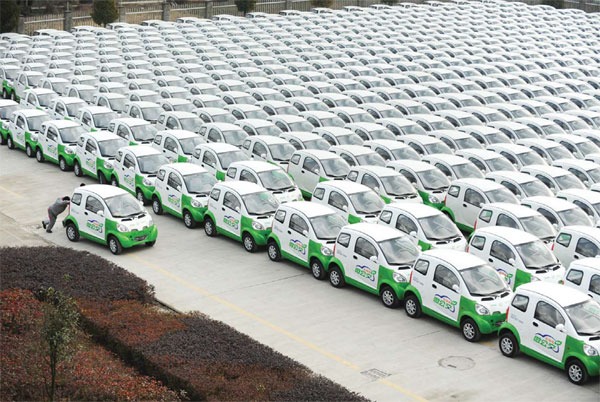
China has led the global shift to electric vehicles (EVs) more aggressively than any other nation. By 2025, China sold over 11–13 million electric cars annually, with EVs (including plug-in hybrids) comprising around 50% or more of new car sales in key periods. This dominance stems from heavy policy support, subsidies, and manufacturing scale, making China home to roughly half the world’s EVs on the road.
The central question is whether this has genuinely improved China’s atmosphere, ecology, and environment, or if coal-heavy electricity generation and battery production offset the gains.
Tailpipe vs. Smokestack: Local Air Quality Gains
EVs produce zero tailpipe emissions, directly cutting urban pollutants like particulate matter (PM2.5), nitrogen oxides (NOx), carbon monoxide (CO), and volatile organic compounds from gasoline and diesel vehicles. Real-world studies in major Chinese cities confirm this.
One analysis of battery electric vehicles (BEVs) in three cities found that replacing gasoline vehicles reduced CO2 emissions by 8.72–85.71 kg per vehicle monthly (average ~9.5% reduction), with broader air quality index (AQI) improvements. A 10% increase in BEV travel frequency correlated with declines in PM2.5 (0.5%), PM10 (0.2%), CO (0.7%), SO2 (1.4%), and O3 (6.3%), though NO2 sometimes rose slightly due to other factors.
Broader evidence is compelling. — A 2026 study linked China’s rapid EV (and new energy vehicle) adoption to significant urban air quality gains, including a 23% reduction in fine particulate matter and a 30% drop in carbon monoxide in analyzed cities. Researchers attributed this to preventing an estimated 262,000 premature deaths from air pollution-related causes.
China’s overall “war on pollution” since 2013 has delivered dramatic results: national PM2.5 levels fell ~41% from 2013–2022, with Beijing seeing even steeper drops (over 50% in some periods).
While EVs are not the sole driver—industrial controls, coal plant retirements, and other policies played major roles—the scale of vehicle electrification has amplified urban improvements, especially for transport-related smog.
The Coal Challenge and Grid Decarbonization
Critics rightly note China’s electricity mix. Coal still dominates generation (~55–60% in recent years), raising questions about whether EVs simply shift pollution from city streets to power plants. Older studies (e.g., from ~2012) suggested EVs could produce more health-damaging particulates per km in China due to coal power.
However, the picture has evolved. China’s grid is greening rapidly. Clean sources (renewables + nuclear) reached ~42% of electricity generation in 2025, with solar and wind surging. Coal generation actually declined in 2025 for the first time in years amid record renewable additions (hundreds of GW of solar and wind). EVs charged during off-peak hours can better utilize wind power, further improving the CO2 and pollution profile.
Lifecycle analyses show EVs still deliver net CO2 reductions versus gasoline cars in China today (often 30–40%+ lower per km, depending on assumptions), with advantages growing as the grid cleans. Battery production and mineral refining add upfront emissions and localized pollution risks (e.g., SO2 hotspots near processing facilities), but these are mitigated by vehicle longevity, recycling potential, and China’s dominance in clean manufacturing scale.
Public fleet electrification (buses, taxis) yields especially strong benefits, cutting NOx and improving urban air quality faster than private cars.
Broader Ecological Impacts
Beyond air quality, EVs reduce oil dependence, noise pollution, and certain urban heat effects. However, challenges persist: increased electricity demand strains grids and water resources for coal plants; battery mining and production impact land and ecosystems (lithium, cobalt, nickel); and end-of-life recycling is critical to avoid waste. China leads in battery recycling tech but must scale it.
PM2.5 rebounded slightly in some years (e.g., 2023), showing that EVs alone cannot solve all issues amid economic growth, weather, and residual coal use. Yet the long-term trend is downward, coinciding with EV ramp-up.
Conclusion: Substantive Progress with Room for Acceleration
China’s EV revolution has measurably improved urban air quality and public health, preventing hundreds of thousands of premature deaths and contributing to one of the fastest large-scale pollution reductions in history.
Net CO2 and local pollutant benefits are positive and growing as renewables expand and coal declines. The strategy is not perfect—grid decarbonization must accelerate, and supply-chain impacts require cleaner practices—but the data overwhelmingly supports a net environmental gain over the alternative of continued gasoline/diesel dominance.
For China and the world, the EV push demonstrates that rapid technological and policy shifts can deliver tangible ecological wins, even in a coal-dependent giant. Sustained investment in renewables, efficiency, and circular economy practices will determine how deep these benefits run. /// nCa, 10 July 2026