


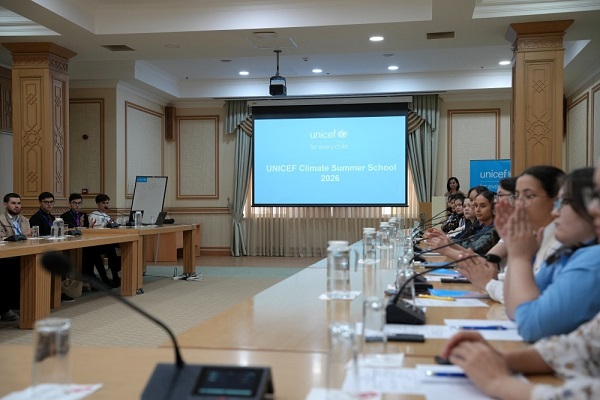
UNICEF, in partnership with the Ministry of Education of Turkmenistan and the Ministry of Environmental Protection of Turkmenistan, has launched the second Youth Climate Summer School, bringing together 35 young people aged 16–25 from all regions of the country. Participants were selected through a competitive nationwide call, with around 150 applications received this year, reflecting the growing interest of young people in climate action and sustainable development.
Building on the success of the inaugural Summer School in 2025, the programme equips young people with the knowledge, skills and leadership competencies needed to address climate challenges and contribute to sustainable development. Through four thematic modules, participants will explore climate change, sustainable water resource management, biodiversity conservation, combating desertification, sustainable cities and waste management. The programme combines expert-led sessions with interactive workshops, group projects and field visits, enabling participants to connect theory with practice.
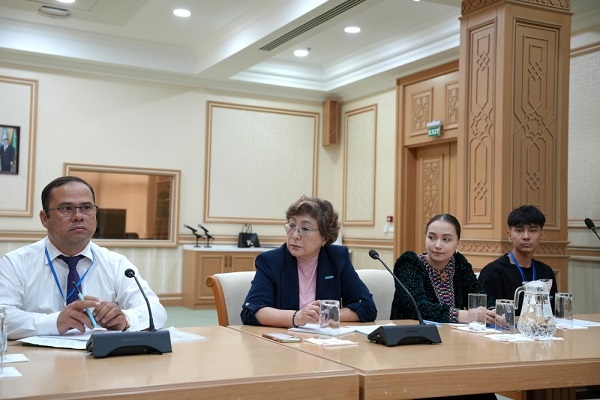
Opening the Summer School, Zhanar Sagimbayeva, Deputy Representative of UNICEF in Turkmenistan, highlighted the importance of empowering young people to become leaders in climate action.
“Climate change is no longer a distant or abstract challenge. We are already witnessing its impacts, and they directly affect the lives and future of children and young people, including here in Turkmenistan. Addressing these challenges requires knowledge, innovation and collective action—and young people have a vital role to play in shaping the solutions,” she said.
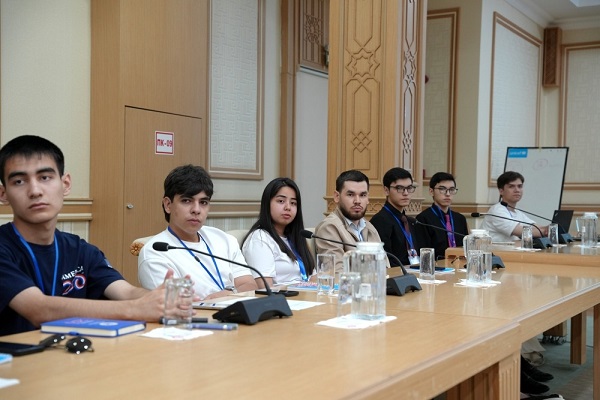
She also noted that the first Youth Climate Summer School served as a catalyst for youth-led initiatives across the country, with participants continuing to raise awareness, implement community projects and advocate for climate action long after the programme ended.
For participants, the Summer School represents an opportunity to become active contributors to climate solutions.
“I don’t want to simply learn about climate change—I want to be part of the solution. Through this Summer School, I hope to gain the knowledge and skills to make a meaningful contribution to my community, represent the voices of young people from Turkmenistan in climate discussions and inspire other young people to take action,” said participant Lachyn Durdyyeva.
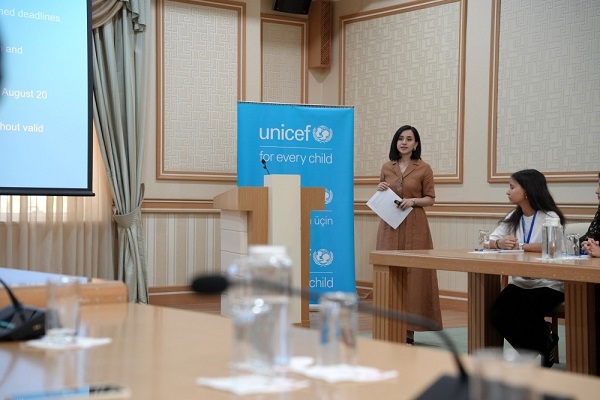
“Being selected through this highly competitive process is a great honour. The Summer School is a unique opportunity to learn from leading experts, collaborate with like-minded young people from across the country and develop practical solutions that can help our communities become more resilient to climate change,” said participant Rahman Garahanov.
The 2026 Youth Climate Summer School will serve as the official preparatory platform for LCOY Turkmenistan 2026, the national youth climate conference endorsed by YOUNGO, the official youth constituency of the United Nations Framework Convention on Climate Change (UNFCCC). As part of the programme, participants will contribute to developing the National Youth Statement for COP31, ensuring that the priorities and perspectives of young people in Turkmenistan are reflected in global climate discussions.
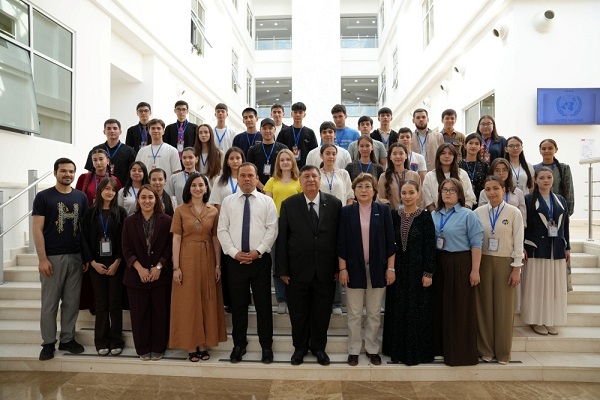
For UNICEF, supporting youth leadership means creating opportunities for young people not only to discuss climate challenges but also to actively shape and advance solutions. Following the Summer School, participants will have the opportunity to design and implement their own youth-led climate initiatives, with selected projects receiving mentoring and technical support from UNICEF and partner organizations. Through initiatives such as the Youth Climate Summer School, UNICEF is helping strengthen meaningful youth participation in decision-making and empowering young people to become agents of positive change for a more sustainable future. ///nCa, 8 July 2026 (in cooperation with UNICEF Turkmenistan)