


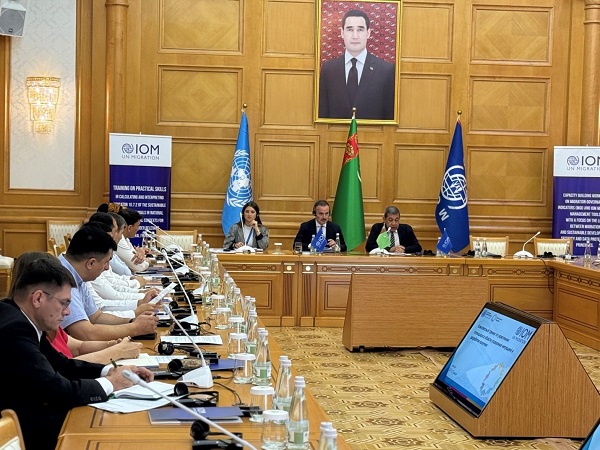
Ashgabat, 15-17 July 2026 – The International Organization for Migration (IOM) in Turkmenistan supported key national stakeholders in strengthening their policy-making and institutional capacities to advance migration governance, monitor migration-related Sustainable Development Goal (SDG) indicators and develop strategic migration policy frameworks during three-day training in Ashgabat. It also helped improve their understanding of the Global Compact for Safe, Orderly and Regular Migration (GCM) and the importance of evidence-based policy planning and whole-of-government approaches to migration governance.
The training was facilitated by migration policy experts from IOM Headquarters in Geneva and Regional Office for Europe and Central Asia in Vienna, who shared international experience and practical approaches to migration governance, strategic planning, policy development, monitoring and inter-agency coordination.
Over the course of three days, participants explored international migration governance frameworks, GCM implementation and review processes, migration-related SDG indicators, practical approaches to developing national migration strategies and action plans. They also examined best international practices and exchanged views through discussions and group exercises.
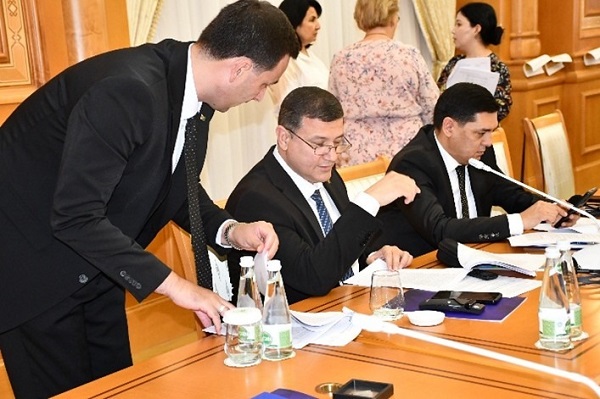
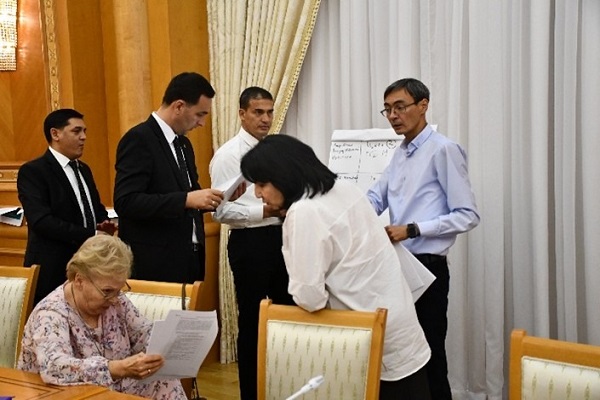
The training took place at an important time, when Turkmenistan rolled out preparations for its Third Voluntary National Review (VNR) of the Sustainable Development Goals, contributing to a broader understanding of the linkages between migration, sustainable development and evidence-based policymaking, while supporting national efforts to monitor progress and report on SDG implementation. In this context, it was noted that existing coordination mechanisms, including the United Nations Migration Network at the national level and the Inter-Agency Working Group for Monitoring the Implementation of the GCM provide practical platforms to exchange expertise, monitor progress and support follow-up on migration-related commitments in line with national sustainable development priorities.
Participants also discussed at length the Migration Governance Indicators (MGI) and SDG indicator 10.7.2, which relates to planned and well-managed migration policies. Through a practical exercise on calculating indicator 10.7.2 and discussions on international tools for assessing migration governance, they considered how these instruments can strengthen national capacities to monitor migration-related SDG indicators, prepare evidence-based reporting and measure progress in implementing commitments under the GCM.
In this context, IOM reaffirmed its readiness to continue supporting Turkmenistan in further strengthening institutional capacities, evidence-based policymaking and inter-agency coordination on migration governance, SDG monitoring and strategic migration planning in line with the country’s sustainable development priorities.
*****
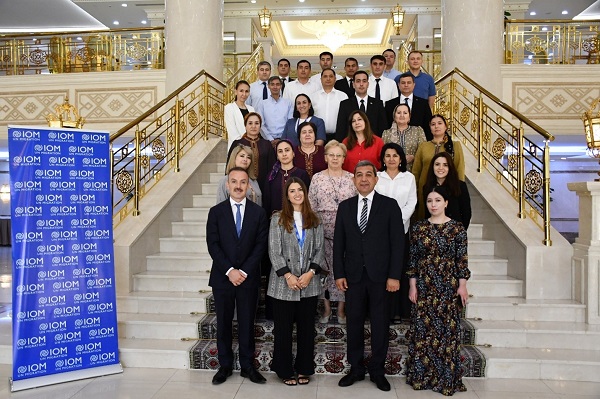
Organized within the framework of IOM’s ongoing cooperation with Turkmenistan, the training reflects a shared commitment to enhancing policy coherence, integrating migration considerations into sustainable development planning and supporting safe, orderly and regular migration in line with national priorities and international commitments.///nCa, 18 July 2026 (in cooperation with IOM Turkmenistan)