


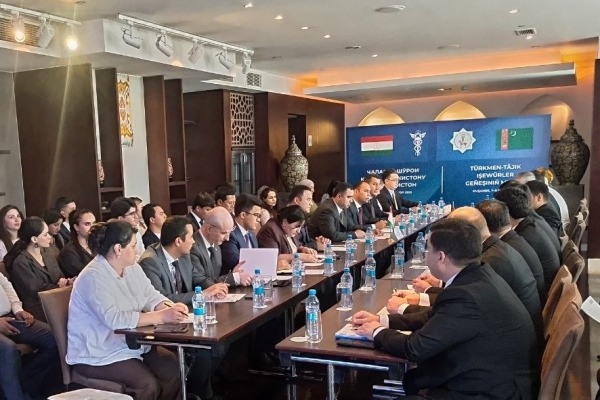
The meeting of the Tajik-Turkmen Business Council took place on 7 July 2026 in Dushanbe, reports the National Information Agency of Tajikistan “Khovar.” The meeting served as a platform for presenting the investment and economic opportunities of the two states, as well as for conducting B2B business negotiations. The meeting served as a platform for presenting the investment and economic opportunities of the two states, as well as for conducting B2B business negotiations.
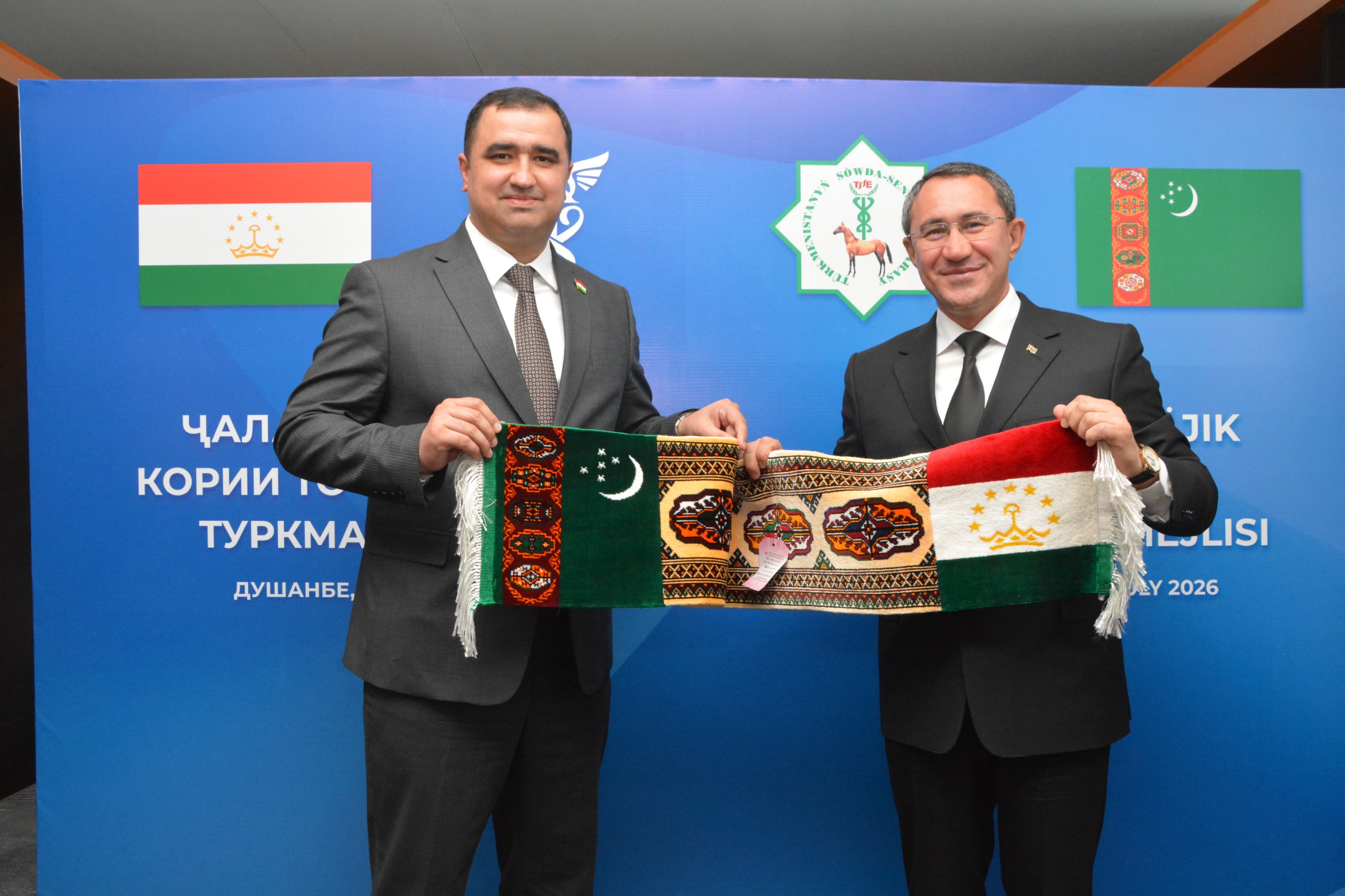
The meeting was co-chaired by the Chairman of the Chamber of Commerce and Industry of Tajikistan, Farkhodshokh Rakhmonali, and the Chairman of the Chamber of Commerce and Industry of the Republic of Turkmenistan, Mergen Gurdov.
According to the Chamber of Commerce and Industry of Tajikistan, the meeting was attended by more than 35 authorized representatives from Turkmenistan, including officials from government bodies and a wide range of private sector stakeholders, notably the management and representatives of 20 leading Turkmen companies and enterprises.
The Tajik side was represented at the meeting by officials from the ministries of economic development and trade, agriculture, and industry; the state committees on investment and state property management, and tourism development; the customs service; the leadership of the chambers of commerce and industry of the Sughd and Khatlon regions; as well as a broad spectrum of the country’s private sector, including chamber members.
Despite a significant increase in mutual trade at the beginning of 2026—more than doubling—the meeting concluded that the economic and industrial potential of the partnership between Ashgabat and Dushanbe is still far from fully realized and requires deep diversification.
Trade Turnover Between Turkmenistan and Tajikistan on the Rise
Discussing the prospects for trade relations was one of the key items on the agenda.
“The dynamics of mutual trade confirm the high interest of the business communities of Tajikistan and Turkmenistan in developing cooperation. By the end of 2025, the volume of foreign trade turnover between the countries increased by 17%. For January–April 2026, trade turnover grew 2.2 times compared to the same period last year,” stated Farkhodshokh Rakhmonali, Chairman of the Chamber of Commerce and Industry of Tajikistan.
The core of Tajik exports consists of aluminum profiles, while quality petroleum products, plastics, and construction materials are traditionally imported from Turkmenistan.
However, the full potential of bilateral trade is yet to be unlocked. As Rakhmonali emphasized, despite the positive dynamics, Turkmenistan currently ranks 20th in Tajikistan’s foreign trade turnover, with a share of 0.4%, which does not fully reflect the actual potential of the two countries’ industrial capabilities.
“In this regard, we face a clear task—to facilitate further diversification of trade and increase the volumes of mutual trade turnover,” the speaker noted.
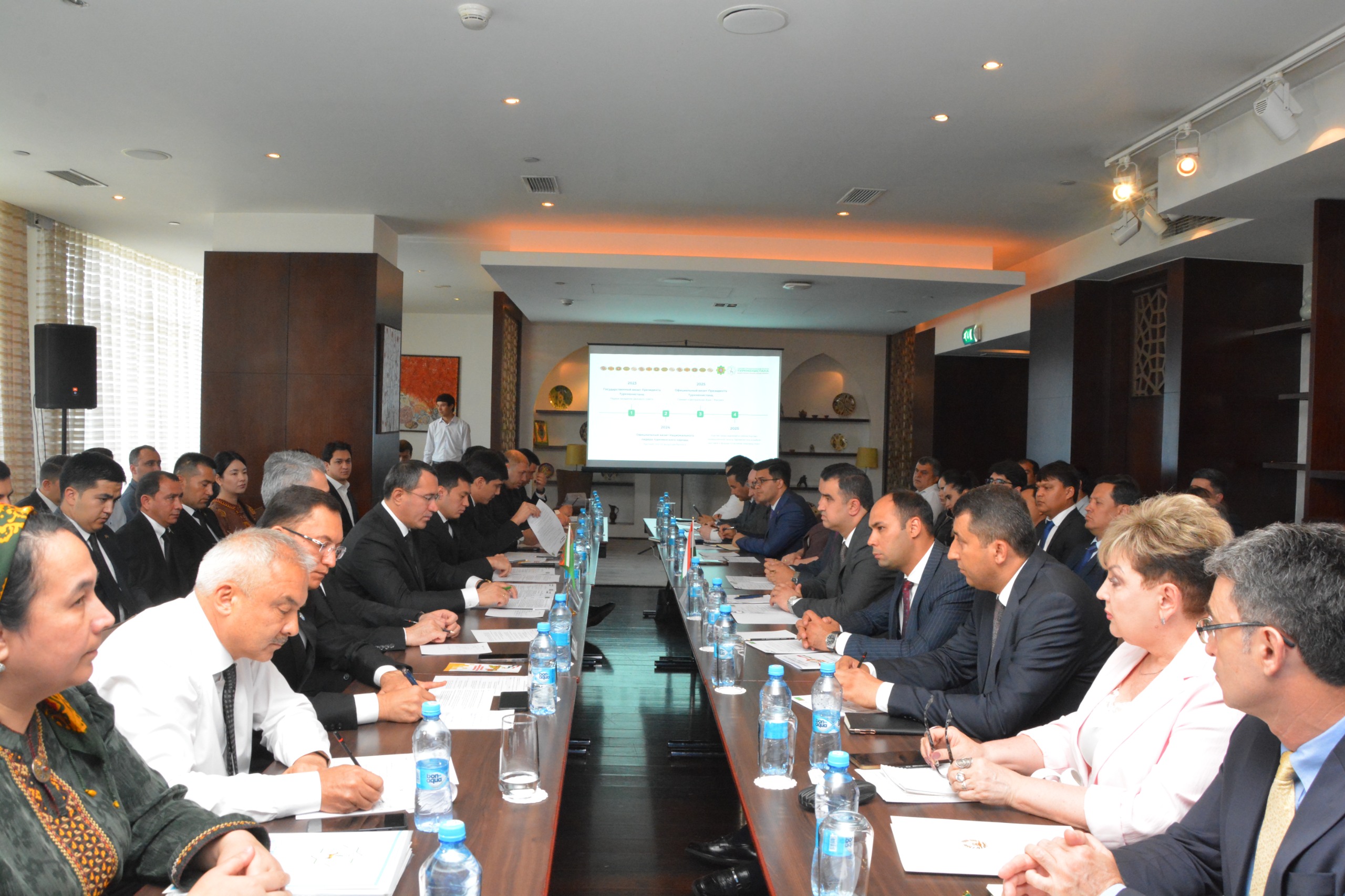
Investment Opportunities in Tajikistan
A significant part of the program was dedicated to presenting investment opportunities in Tajikistan.
“Tajikistan possesses substantial natural wealth, hydropower potential, opportunities for agricultural development, a mineral resource base, and unique tourist sites. For investors, this translates into a wide range of opportunities in energy, industry, agriculture, tourism, logistics, and the service sector,” said Davlat Khabibov, Deputy Director of the State Unitary Enterprise “Tajinvest” under the State Committee on Investment and State Property Management of the Republic of Tajikistan.
It was noted that the main sources of investment are China, Russia, the UK, Iran, Cyprus, the USA, Türkiye, France, Kazakhstan, and Switzerland.
Tajikistan offers investment opportunities in key sectors, including green energy, mining, tourism, agriculture, IT and digitalization, banking and finance, transport, healthcare, textiles, construction, and real estate.
It was emphasized that practical support for investors is provided through a “Single Window” mechanism, which is aimed at simplifying and coordinating the investment process. Investors can receive assistance on administrative, legal, tax, and customs issues, as well as on investment protection and interaction with government bodies.
SEZs as a Tool for Investor Support
Free Economic Zones (SEZs) serve as one of the key tools for supporting foreign investors in Tajikistan.
The total area of Tajikistan’s free economic zones exceeds 1,700 hectares. Moreover, over 40% of this territory has already been developed, featuring the necessary infrastructure, functioning enterprises, and production facilities.
“To date, more than 2,000 jobs have been created in the SEZs, attracting investments worth 2.6 billion somoni, which amounts to approximately US $ 27 million at the current exchange rate. There are 120 registered entities, of which more than 40 have already launched full-scale production and commercial operations,” said Jovid Khuseynzoda, Head of the SEZ Department of the Directorate-General for Investment Policy and Regional Development of the Ministry of Economic Development and Trade of Tajikistan.
According to him, entities operating within the free economic zones are exempt from all types of taxes, with the exception of income and social taxes. ///nCa, 7 July 2026