


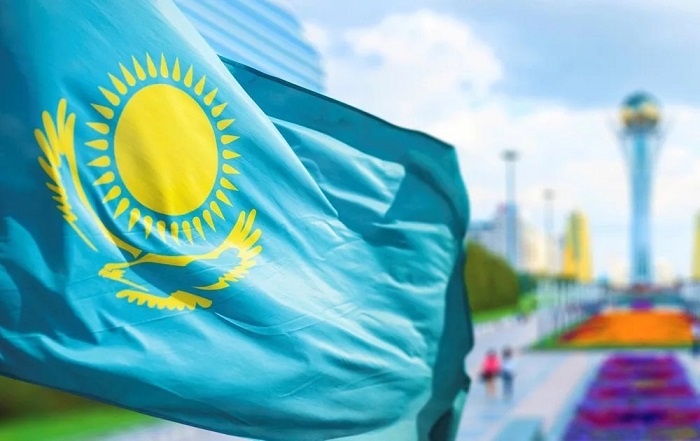
The turmoil of January 2022 posed a significant and unique challenge for Kazakhstan. After the situation was brought under control, analysts both domestically and internationally voiced concerns that the political system might shift toward stricter governance and tightened control, as is common following political crises.
However, time has proven these concerns unfounded. Kazakhstan is actively fostering inclusive public administration institutions. The reforms implemented in recent years are focused on establishing a resilient, transparent, and equitable political framework.
New Constitution
The pinnacle of these political reforms was the constitutional overhaul of 2022, endorsed through a nationwide referendum.
President Kassym-Jomart Tokayev’s decision to call for a constitutional referendum was a logical move, aligning with the goal of democratizing Kazakhstan’s political structure. Rather than confining the decision to a parliamentary vote, the issue was opened to public discourse and a national vote.
For the first time in decades, matters of such magnitude were decided not in closed-door meetings but through direct engagement with the populace. This sent a clear message: the state trusts its citizens to shape the trajectory of political development.
The referendum underscored that there is no retreat from democratic processes in Kazakhstan. Instead, it highlighted a shift toward a more transparent and balanced governance model. The choice to put constitutional changes to a public vote reflects the government’s willingness to relinquish its sole claim to authority and share responsibility with society. Notably, the last referendum occurred 27 years earlier, in 1995.
The constitutional reform marked a turning point in Kazakhstan’s development. The amendments revised a third of the Constitution, representing not mere tweaks but a comprehensive redefinition of the state’s operational principles.
The revised Constitution established new benchmarks for a political system rooted in fair and transparent rules. These reforms facilitated sweeping political transformations, including:
- Reducing presidential dominance. The shift from a “super-presidential” model to a presidential republic with a robust parliament has been fully realized. The president’s term is now capped at a single seven-year period, with no possibility of reelection. A legal prohibition prevents the president’s immediate family members from occupying political or quasi-public sector leadership roles. Kazakhstan’s current system operates on the principle of “a strong president, an influential parliament, and a responsible government.”
- Fostering party system growth. Procedures for party registration have been streamlined, with the registration threshold lowered fourfold and the required number of regional offices reduced threefold. This liberalization has invigorated the political landscape. The 2023 parliamentary elections saw two new parties—Respublica and the National Social Democratic Party—secure seats in the Majilis.
- Bolstering human rights frameworks. To uphold the Constitution’s supremacy and safeguard citizens’ constitutional rights, a Constitutional Court was created. The ombudsman’s office was also strengthened, supported by new laws and decrees. For instance, the law on peaceful assemblies has enabled activists, including those with dissenting views, to organize rallies and express their opinions freely.
Additionally, reforms have restructured the representative branch of government, refined the electoral system, modernized electoral processes, enhanced the role of civil society, and improved the country’s administrative-territorial framework. Collectively, these changes have propelled Kazakhstan toward significant political modernization.
Evolution Continues
In his recent Address to the Nation, President Tokayev proposed transitioning from a bicameral to a unicameral parliamentary system, emphasizing that such a fundamental change would require a referendum, planned for 2027.
The primary benefit of this proposal is efficiency. A single-chamber parliament would expedite the legislative process, eliminating prolonged approval procedures and enabling the state to address crises and emerging challenges more swiftly.
Another advantage is cost reduction. Maintaining two chambers involves substantial expenses for infrastructure, staff, housing, and transportation. A unicameral system would optimize resources by focusing on core legislative functions.
Additionally, a unicameral system enhances accountability. With party lists, it becomes clearer which parties support specific decisions, fostering transparency in decision-making.
The unicameral model is well-established globally. According to the International Parliamentary Union, 107 of 188 national parliaments operate with a single chamber, primarily in unitary states with smaller populations. By adopting this model, Kazakhstan would align its legislative system with contemporary international standards.
Stability Through Development
It is critical to note that these political transformations are occurring amid overall political and social stability. Despite the unrest in early 2022, Kazakhstan not only maintained control but leveraged the crisis as an opportunity for renewal. The political system is becoming more adaptable, and the state is growing more responsive to public needs.
Citizen involvement in strategic decision-making is a key factor. Through referendums, transparent electoral processes, and opportunities for political activism, Kazakhstan is cultivating a new political culture. This reduces the disconnect between the government and society, boosts trust in institutions, and strengthens governmental legitimacy.
In essence, citizen participation in political processes is becoming a hallmark of democratization and a mechanism for reinforcing Kazakhstan’s internal stability.
Conclusion
Kazakhstan’s political evolution reflects a consistent and systematic approach. The country has transformed the challenges of crisis into a catalyst for renewal, staying committed to democratization and openness. Referendums, institutional reforms, liberalization of the political party system, and the expansion of civil liberties illustrate that Kazakhstan is developing a model where stability is achieved not through rigid control but through active public participation in governance.
Kazakhstan is steadily advancing toward a balanced political system, where the government and society are learning to share responsibility for the nation’s future. This is a clear indicator of political maturity and a foundation for sustainable development, driven not by short-term measures but by a robust social consensus, stability, and shared accountability. ///nCa, 30 September 2025