


Elvira Kadyrova
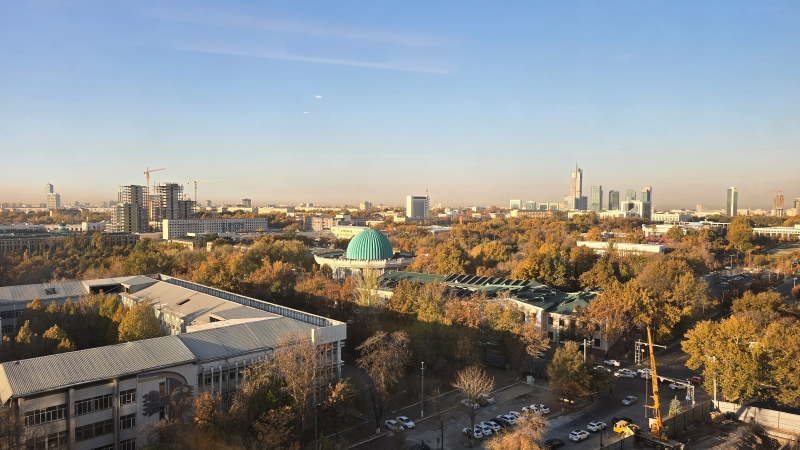
Tashkent is a city where you can literally feel the pulse of life and the unstoppable energy of youth. That’s exactly how Uzbekistan’s capital revealed itself to me, the vibrant megapolis of Central Asia.
Our delegation of journalists from Turkmenistan stayed at one of the city’s most luxurious hotels, the InterContinental Tashkent, part of the prestigious British InterContinental Hotels Group. Stunning views from the windows, rooms equipped with every possible comfort, and perfect facilities for the forum’s work: that’s the best way to sum up our experience at the InterContinental Tashkent.
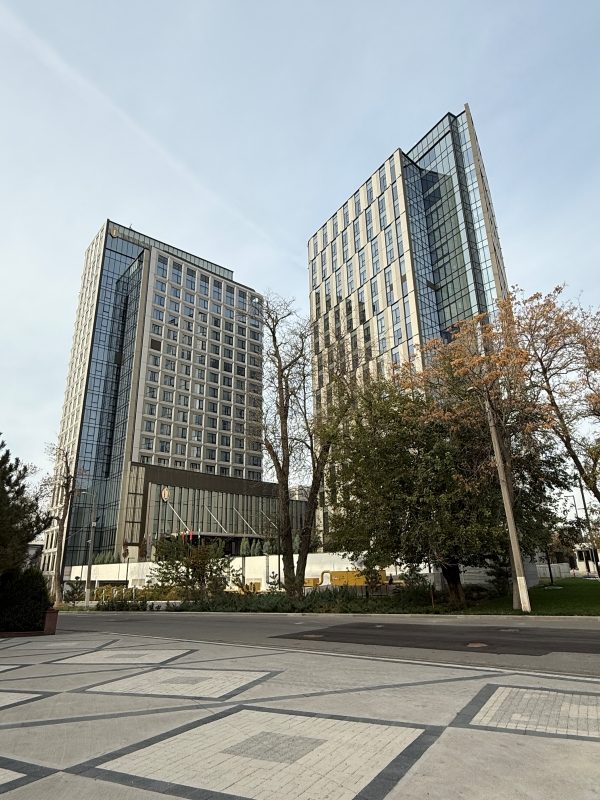
Despite having only two days in the city for a journalistic conference, we managed to visit some of Tashkent’s most iconic landmarks.
Amir Timur Square

The square and monument dedicated to Amir Timur are just a ten-minute walk from the InterContinental Tashkent.
Amir Timur was a great commander, conqueror, and strategist, the founder of the medieval Turco-Mongol Timurid Empire, which in the 14th–16th centuries stretched across Persia, Mesopotamia, Khorasan, northern India, and Central Asia.
The era of Amir Timur (known in the West as Tamerlane) was marked by a dazzling flowering of economy, construction, architecture, science, and art. In Uzbekistan’s history, he is revered as a national hero.
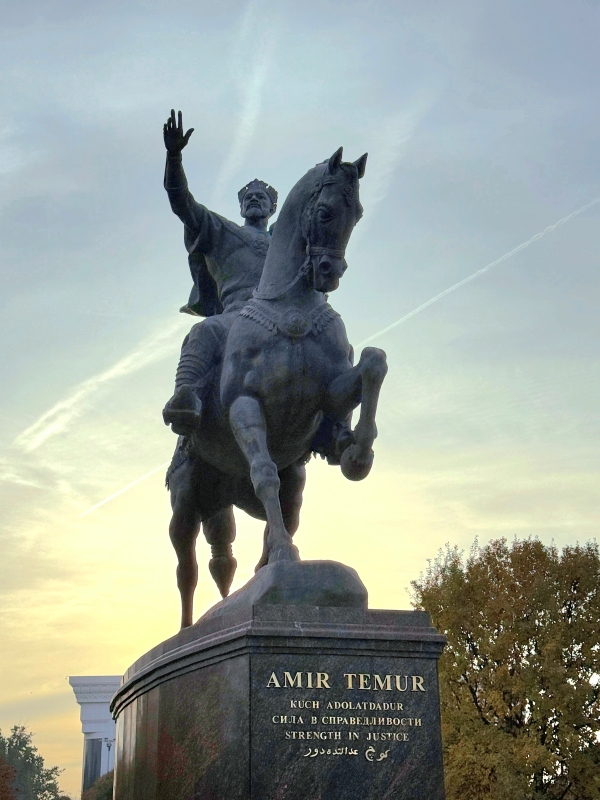
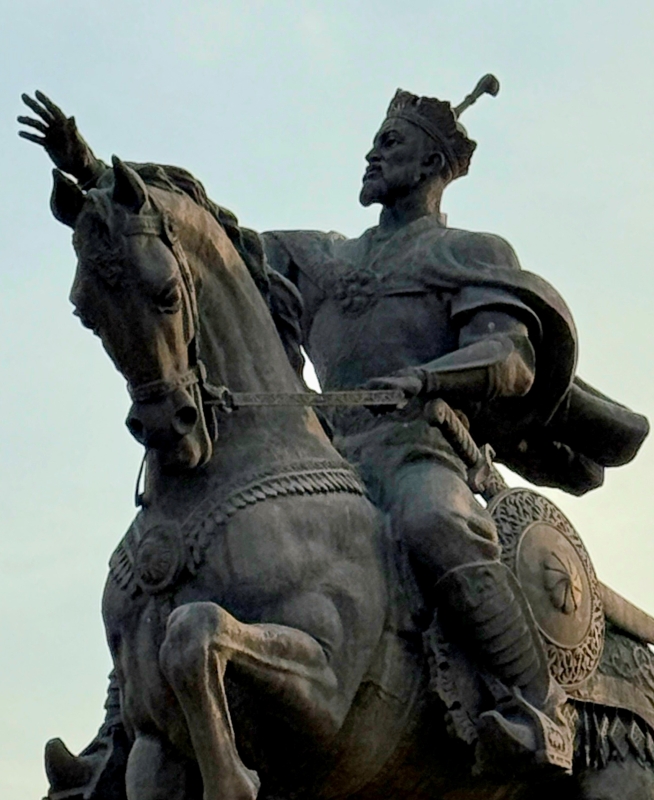
The magnitude of his personality is immediately felt at the monument: a bronze statue of the leader on horseback sits atop a granite pedestal. Sculptors Kamal and Ilkhom Jabbarov chose this depiction because Timur spent most of his life leading military expeditions. His extended right hand is a symbolic gesture of protection and guardianship over his people. Notably, one of the horse’s forelegs is raised—an ancient tradition indicating that the warrior was victorious in battle and returned safely. The pedestal is inscribed in Uzbek (both Latin and Arabic scripts), Russian, and English is Amir Timur’s famous motto: “Strength is in Justice.”
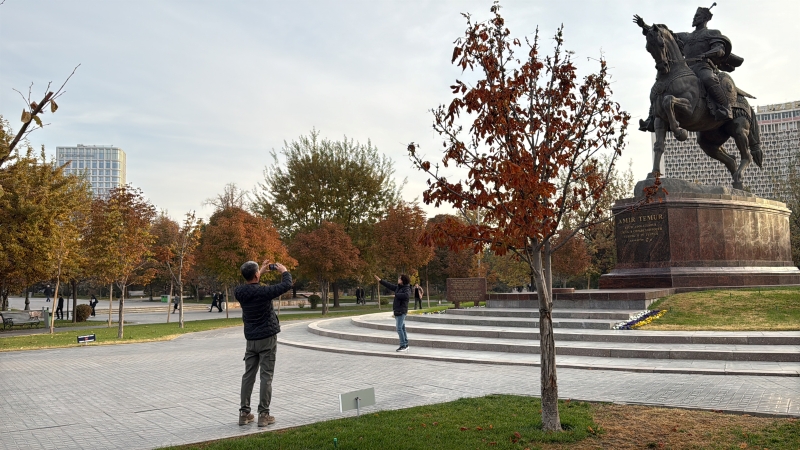
Strolling through the square, one inevitably reflects on Central Asia’s pivotal role in the historical development of Eurasia. These lands gave birth to great leaders whose actions immortalized the region in the annals of world history. Central Asia is a cradle of individuals whose iron will and strategic genius are primarily associated with the might and prosperity of their people.
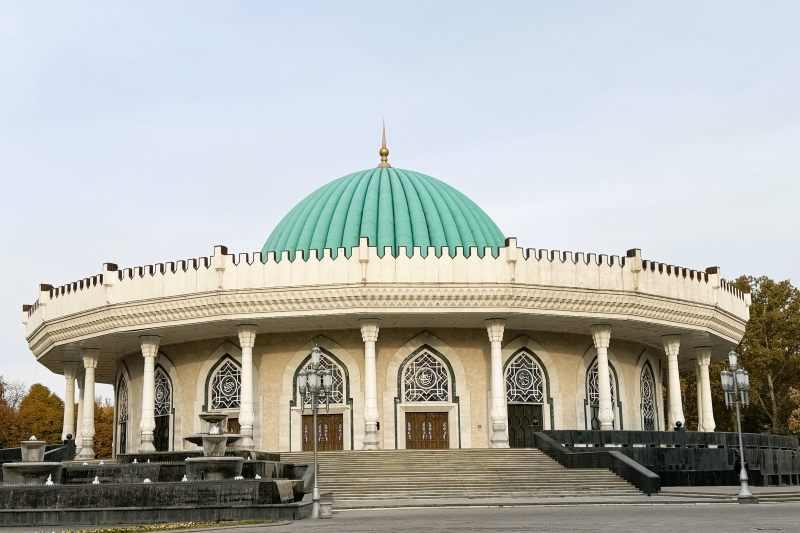
The Timurid Museum
You can learn more about the Timurid dynasty at the State Museum of the Timurids, located right next to the park. The museum building itself is striking, designed in the form of a giant royal crown, topped with a magnificent ribbed turquoise dome.
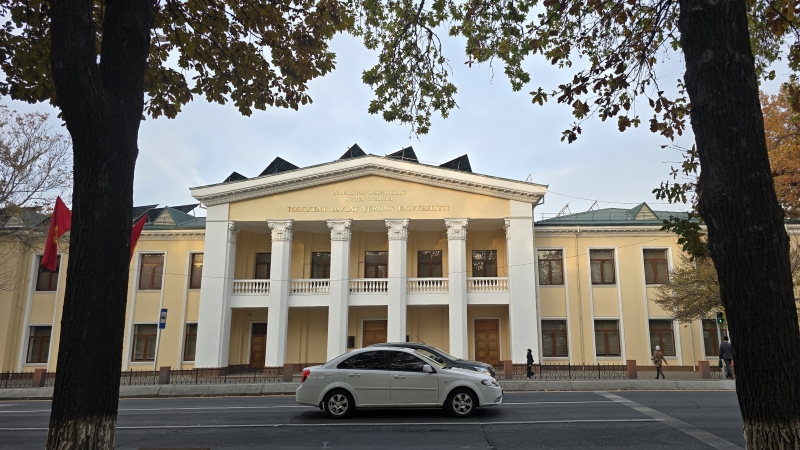
Tashkent State University of Law
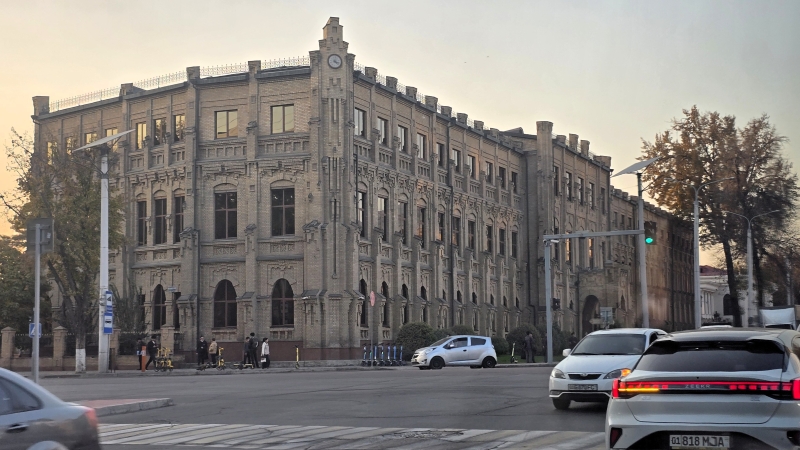
It feels deeply symbolic that Tashkent State University of Law rises along the same Amir Timur Avenue, as if bringing the conqueror’s motto “Strength is in Justice” straight into the 21st century. Founded back in 1917 as the law faculty of Turkestan State University, it remains one of the country’s oldest higher education institutions and continues to train the lawyers who safeguard the rule of law in modern Uzbekistan.
The Tashkent Chimes
Completing the ensemble near the square is another fascinating landmark: the Tashkent Chime Tower, built in 1947 to mark the second anniversary of Victory in the Great Patriotic War.
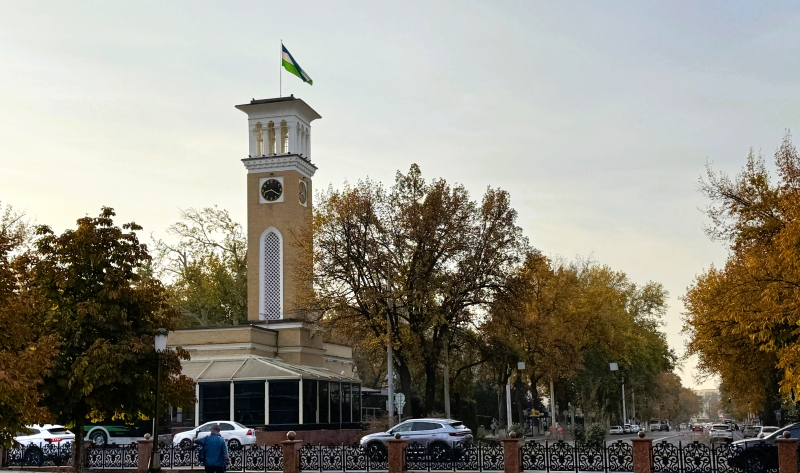
The clock mechanism and one of the four dials were brought to Tashkent from East Prussia as war trophies, completely shattered. Local master watchmakers miraculously revived the German-Austrian masterpiece and crafted the three missing dials on site. Ever since, the tower has kept perfect time, even surviving the devastating 1966 earthquake, a quiet reminder of resilience and rebirth. The structure itself is a beautiful East-West hybrid: the very idea of a clock tower is European, yet it is adorned with traditional ganch wood-carving and ornamental plasterwork in pure Central Asian style.
Tashkent Metro
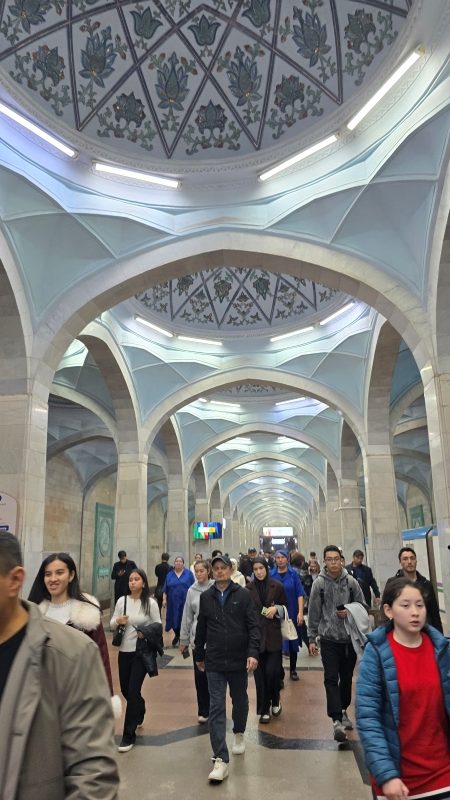
The Tashkent Metro is not only the fastest and cheapest way to get around (a ride costs less than a dollar), it is also one of the city’s greatest sights. Once you step underground, you’re already inside a work of art.
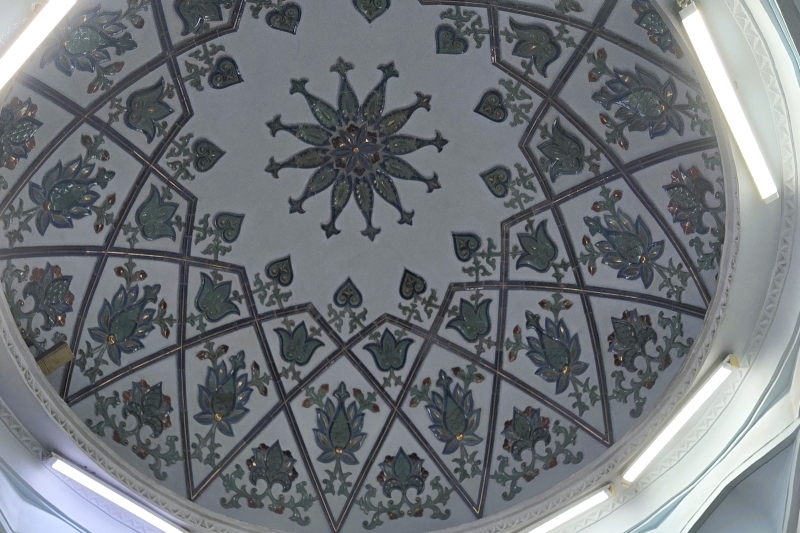
After the catastrophic 1966 earthquake, the city needed a new, earthquake-resistant and efficient transport system. In 1977 the first line, the Chilonzor Line, opened, linking the densely populated Chilonzor district with the centre. Each station became a unique palace of marble, crystal chandeliers and thematic decoration.
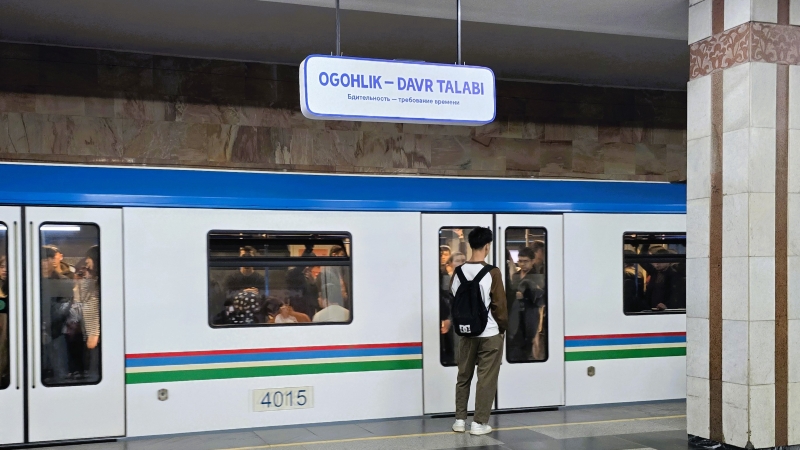
Our underground journey began at “Amir Timur Hiyoboni” station, just a few minutes’ walk from the InterContinental Tashkent. Two stops later we reached “Paxtakor”, changed to the Uzbekistan Line and emerged at “Alisher Navoi”, widely regarded as one of the most beautiful stations in the entire system. A few more minutes, and the train delivered us to “Chorsu”. We surfaced right in the middle of the legendary oriental bazaar…
Chorsu Bazaar
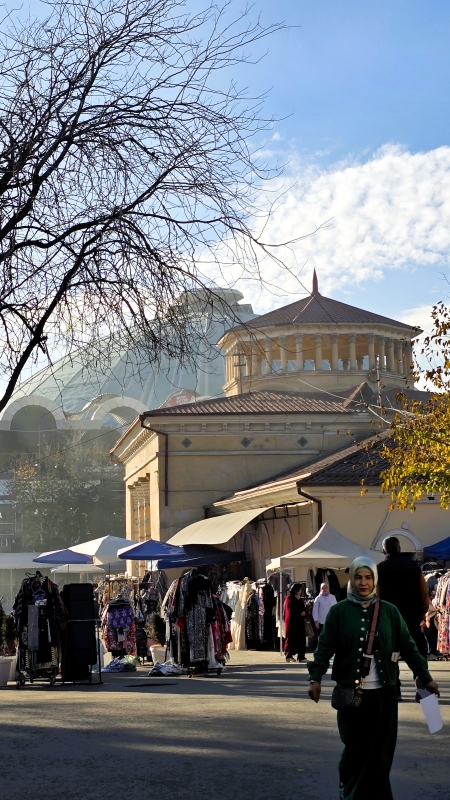
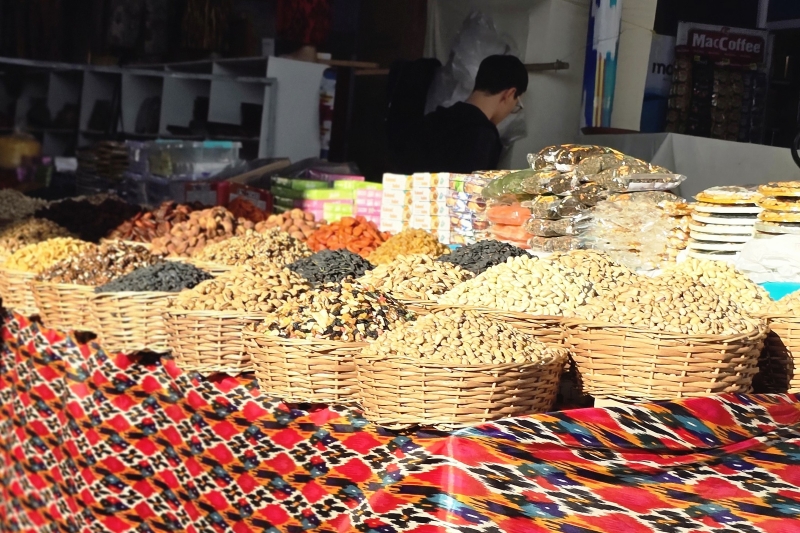
We were greeted by the Chorsu Bazaar, a thousand-year-old marketplace that is lively, noisy, colorful, and utterly delicious. The air is thick with the aromas of fresh fruits, dried delicacies, warm lepeshka (tortillas), and tangy pickled snacks. It is impossible to resist the onslaught of flavors when passing the open stalls where samsa, lagman, and pilaf are prepared; the delicious smells instantly awaken the appetite.
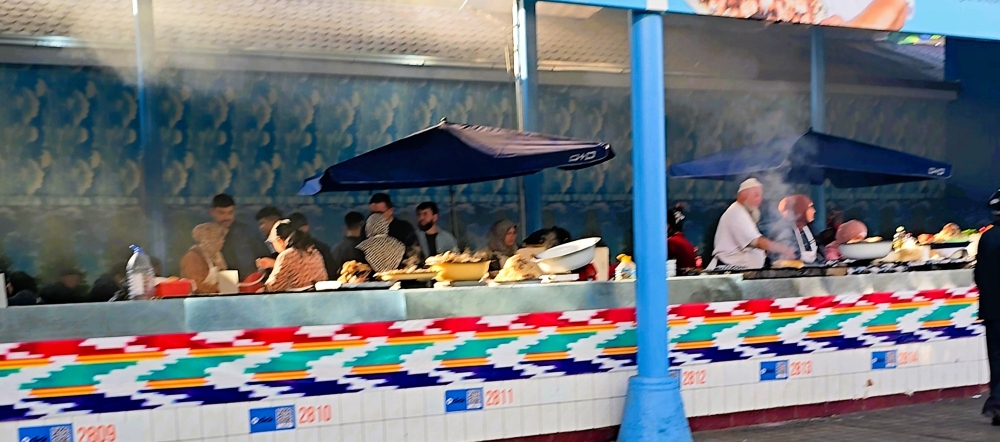
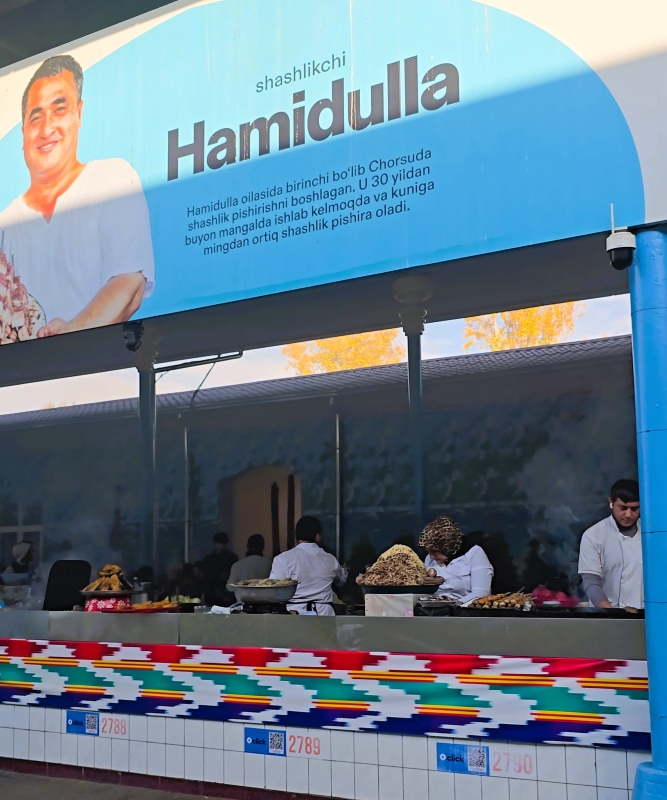
The market’s history dates back to the 14th century, when Tashkent was a vital trading hub on the Great Silk Road during the reign of Amir Timur. Translated from Persian, “Chorsu” means “Four Ways,” signifying where caravans converged from the four corners of the world.
Today, under the huge turquoise dome of the old market and on the surrounding streets, the same vibrant life continues: merchants call out, inviting shoppers to “Have a look, dear!”, customers freely haggle, and visitors are met with genuine hospitality.
The colorful rows of women’s and men’s robes, known as chapan, are truly breathtaking. The chapan is a traditional quilted robe and the principal element of the national men’s costume in Uzbekistan. Derived from Arabic, the word literally means “dress of honor.”
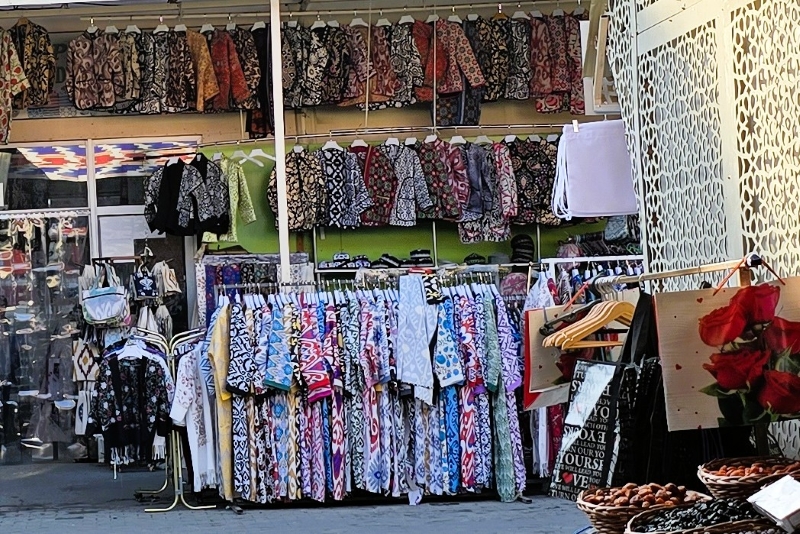
A tourist could happily empty their wallet here in just an hour, as Chorsu offers gifts and souvenirs for every taste. You can purchase dried fruits, nuts, halva, and various sweets, carpets, ceramic goods, tyubeteyka (skullcaps), silk scarves, silver jewelry, and astrakhan fur coats, as well as T-shirts and eco-friendly shopping bags.
In short, regardless of how short your stay in Tashkent may be, the Chorsu Bazaar is an absolute must-visit destination.
***
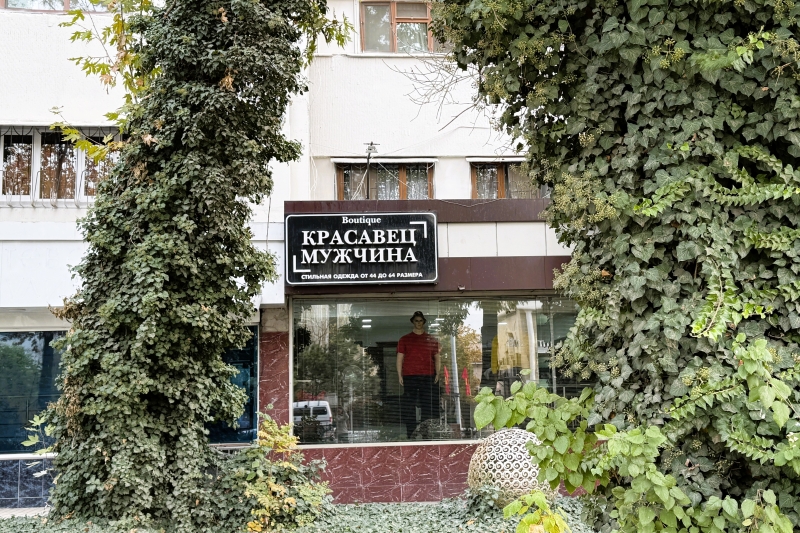
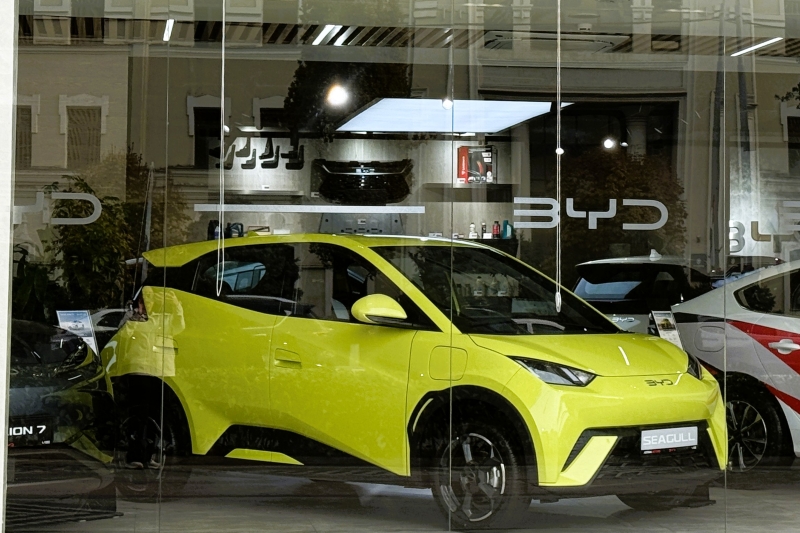
Our two days in Tashkent flew by in a single, bright moment. Yet, even this brief stay was enough to confirm that young, vibrant energy truly pulsates here. You see it in the eyes of law students hurrying across Amir Timur Square, in the endless rivers of people underground, in the laughter and banter between sellers and buyers at Chorsu.
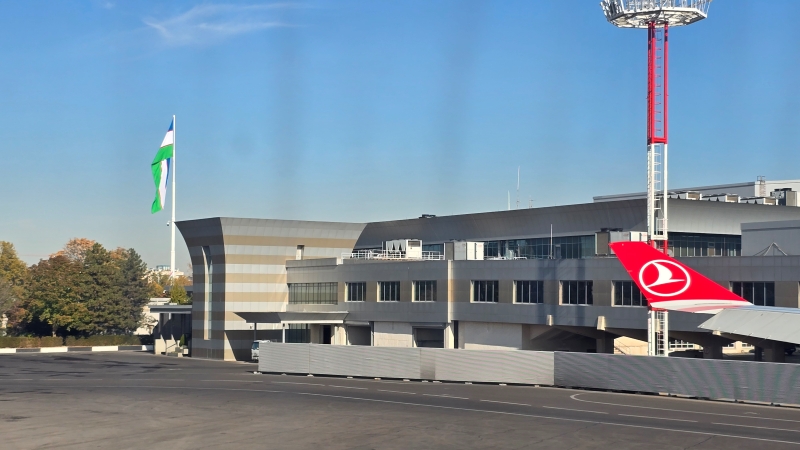
Tashkent lives fully and loudly: it is delicious, expansive, and deeply hospitable.
As our airliner gained altitude over the morning city, I watched not just a place, but the pulsating heart of Central Asia, and its rhythmic beat resonated within my soul long after.
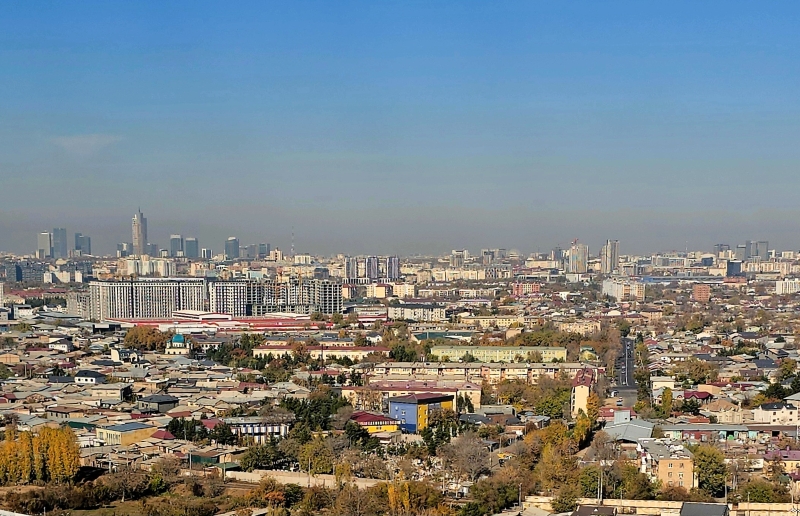
Tashkent doesn’t say goodbye. It says: ‘See you soon.’///nCa, 17 November 2025 (photo credit – Elvira Kadyrova)