


Elvira Kadyrova
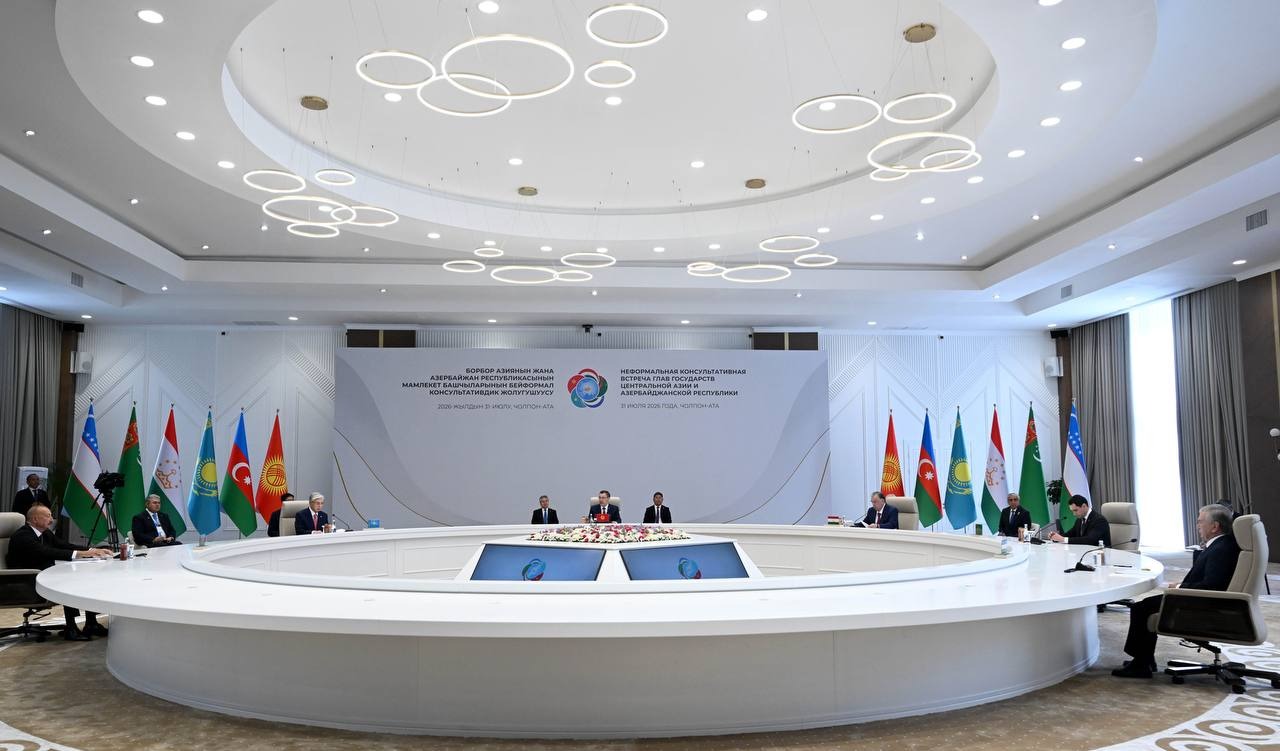
An informal Consultative Meeting of the Heads of State of Central Asia and the Republic of Azerbaijan was held in Cholpon-Ata, Kyrgyzstan on 31 July 2026. The summit was attended by President Sadyr Japarov of Kyrgyzstan, President Kassym-Jomart Tokayev of Kazakhstan, President Shavkat Mirziyoyev of Uzbekistan, President Emomali Rahmon of Tajikistan, President Serdar Berdimuhamedov of Turkmenistan, and President Ilham Aliyev of Azerbaijan.
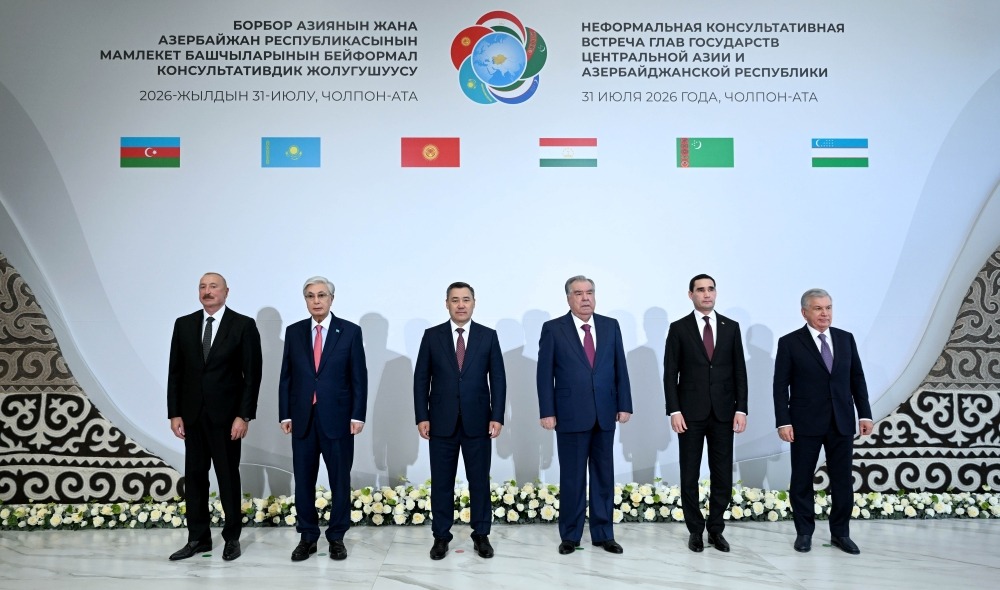
While the official agenda focused on deepening cooperation, transport and logistics connectivity, climate change adaptation, and regional energy security, a deeper process was clearly at play: the institutional and political integration currently taking shape across Central Asia. A broader transformation is underway as a region historically fragmented by border disputes and mutual distrust actively builds a resilient foundation to navigate an unpredictable global environment.
From Central Asia to a Greater Eurasian Macro-Region
The defining innovation of this Consultative Meeting format was Azerbaijan’s full-fledged participation. As President Ilham Aliyev pointed out, the intensity of diplomatic contacts—including 16 visits by him to Central Asian states and 26 reciprocal visits by his counterparts over the past 3.5 years—reflects a geopolitical reality: Central Asia and the South Caucasus have definitively merged into a single geopolitical and geoeconomic space.
“The accession of Azerbaijan elevates our interaction to a qualitatively new—macro-regional—level,” noted President of Uzbekistan Shavkat Mirziyoyev.
Integrating Baku into the Central Asian 5-party platform establishes an end-to-end logistics axis along the Middle Corridor. This creates a seamless transport chain stretching from the borders of China across the Caspian Sea to Europe, with Azerbaijan serving as an indispensable bridge and Afghanistan emerging as a promising southern vector.
Regional Consolidation: Legal and Political Milestones
The meeting in Cholpon-Ata demonstrated in action the multi-year process of consolidating ties within the region itself:
First, this concerns the regional Treaty of Friendship. Kassym-Jomart Tokayev specifically thanked President of Turkmenistan Serdar Berdimuhamedov for joining the Treaty on Friendship, Good-Neighborliness, and Cooperation for the Development of Central Asia in the 21st Century. Thus, the document shaping the political framework of the region has achieved comprehensive coverage.
Kazakhstan proposed translating it into a practical plane by developing a long-term Action Plan with clear benchmarks for long-term interaction aimed at further strengthening friendship and good-neighborliness, as well as reinforcing trade, economic, cultural, and humanitarian cooperation.
Second, bilateral ties within the format are consolidating significantly. On the eve of the summit, Kyrgyzstan signed Treaties on Allied Relations with Uzbekistan and Azerbaijan. Combined with the final settlement of border issues in the region, this creates an environment of complete mutual trust.
As President of Kyrgyzstan Sadyr Japarov noted, in recent years regional cooperation has reached a qualitatively new level, facilitated by historical agreements reached on state borders and the strengthening of mutual trust. This is also supported by the growing political weight of the region: Asian countries unanimously supported Kyrgyzstan’s candidacy for the UN Security Council for 2027–2028.
Energy and Refining
Discussions extended well beyond high-level declarations to tackle fundamental parameters of economic security. Against the backdrop of global market volatility and recent regional fuel disruptions, President of Tajikistan Emomali Rahmon proposed constructing large-scale oil refineries across Central Asian states—a direct response to vulnerabilities linked to external dependencies.
This initiative underscores a major structural transition: the region’s shift from being a pure exporter of raw materials (crude oil and natural gas) toward high-value downstream processing.
Joint oil and gas refining leveraging the infrastructure and expertise of Turkmenistan, Kazakhstan and Azerbaijan, combined with strategic maritime logistics (such as the ports of Turkmenbashi and Baku), offers a robust guarantee for regional fuel and food security.
Symbolism and Economics: Baku Resort & Spa
A tangible symbol of this Caspian–Central Asian partnership was the inauguration of the five-star Baku Resort & Spa on the shores of Lake Issyk-Kul, developed by Azerbaijan.
As the first international-class five-star resort complex on Lake Issyk-Kul—featuring a congress hall and dedicated infrastructure for business tourism—it highlights direct Azerbaijani investment in Kyrgyzstan’s economy and provides a premium venue for future summits.
Looking Ahead: Awaza 2026 in Turkmenistan
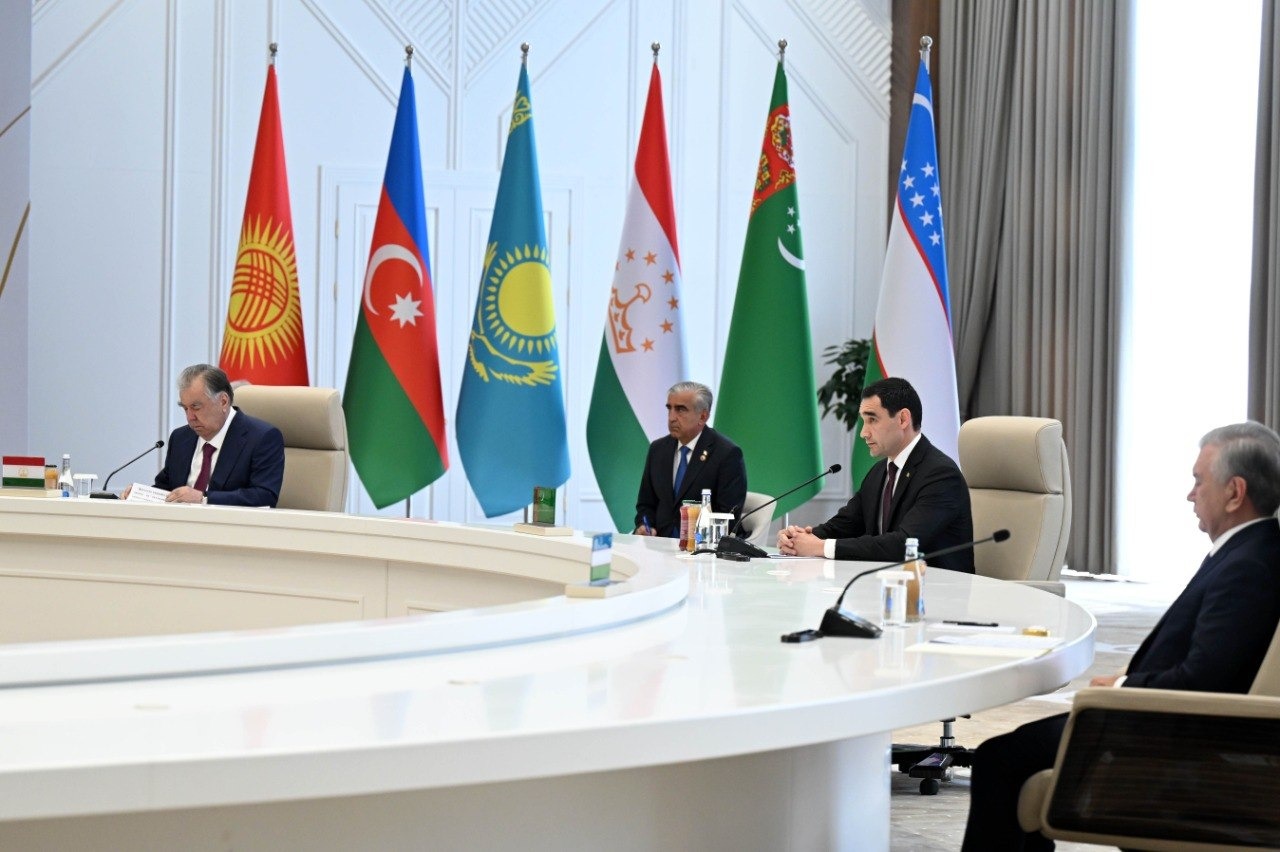
President of Turkmenistan Serdar Berdimuhamedov provided the primary bridge from the Cholpon-Ata discussions to future strategic planning. He presented the draft agenda for the upcoming Eighth Consultative Meeting of the Heads of State of Central Asia and Azerbaijan, scheduled for 8 October 2026 in the Awaza National Tourist Zone.
The draft agenda circulated to participating states spans five core pillars:
- Security and Stability: Exchanging views on pressing regional and international issues regarding peace and security;
- Diplomatic Coordination: Strengthening political and diplomatic alignment between Central Asia and Azerbaijan;
- Economy and Logistics: Deepening trade ties, expanding energy cooperation, and developing sustainable transport and logistics corridors;
- Ecology and Water Sovereignty: Implementing joint measures for climate adaptation, sustainable management of the Amu Darya and Syr Darya river basins, and coordinated efforts toward the ecological restoration of the Aral Sea;
- Humanitarian Foundation: Expanding cultural, educational, scientific, and youth exchange programs.
“Our country approaches this significant event with full responsibility, taking all necessary steps to ensure the upcoming Summit is highly productive and organized to the highest standard,” emphasized Serdar Berdimuhamedov, noting that a series of international forums and cultural events will also take place alongside the summit.
The agenda proposed by Turkmenistan demonstrates that the Awaza meeting is designed to translate the commitment to further strengthening friendship and good-neighborly relations, recorded in the Cholpon-Ata Declaration, into practical institutional solutions. The special emphasis on ecology and rational water resource management (the Amu Darya and Syr Darya rivers, the Aral Sea problem) bears witness to the maturity of the format: alongside solving tasks of economic integration, the countries of the region are ready to jointly overcome fundamental natural and climatic challenges. /// nCa, 1 August 2026