


nCa Report
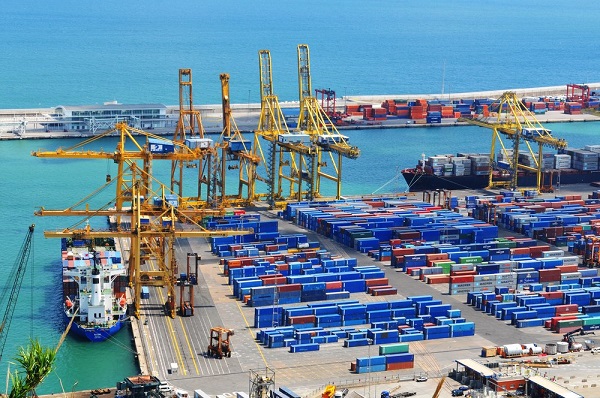
Iran has finalized approvals to allocate a land plot at its strategic Shahid Rajaee Port in Bandar Abbas to Kazakhstan for the development of a dedicated logistics facility, marking a significant step in strengthening bilateral transport and trade ties.
According to Kazakhstan’s Prime Minister’s Office and multiple reports on the recent high-level talks, the plot will be formally transferred once remaining legal and procedural steps are completed. The move positions Kazakhstan closer to establishing its own logistics base on the Persian Gulf, enhancing its access to global markets via Iranian ports.
The development was announced following a meeting in Astana between Kazakhstan’s Deputy Prime Minister and Minister of National Economy Serik Zhumangarin and an Iranian delegation led by Farzaneh Sadegh, Iran’s Minister of Roads and Urban Development. Discussions focused on port infrastructure, the International North-South Transport Corridor (INSTC), and broader connectivity between Central Asia, the Persian Gulf, and the Indian Ocean.
This latest agreement builds on a memorandum of understanding signed in April 2025 between Iran and Kazakhstan for the construction of an exclusive Kazakh terminal and logistics center in the backshore area of Shahid Rajaee Port. Under that earlier deal, Iran’s Ports and Maritime Organization committed to land allocation, while Kazakhstan was to submit a commercial proposal.
Freight Growth and Ambitious Targets
Freight volumes along the INSTC rose 12% in 2025 to 3.5 million tonnes, while rail freight between Kazakhstan and Iran surged 69%. Zhumangarin proposed a joint roadmap to modernize transport infrastructure with the goal of expanding the corridor’s annual capacity to 20 million tonnes.
Iran also confirmed its readiness to offer Kazakhstan operating opportunities at Chabahar Port on the Gulf of Oman. The Chabahar-Zahedan railway is reported to be over 90% complete and is expected to become operational in the coming months, improving integration with regional rail networks and providing enhanced access to South and Southeast Asian markets.
In a reciprocal gesture, Kazakhstan expressed willingness to consider providing Iranian companies with access to port space, berths, and terminals at its Caspian Sea ports of Aktau and Kuryk.
The sides further discussed a potential five-party railway agreement involving China, Kazakhstan, Turkmenistan, Iran, and Türkiye, alongside a planned four-party tariff agreement between Kazakhstan, Russia, Turkmenistan, and Iran.
Trade Momentum
Bilateral trade between Kazakhstan and Iran grew 26.4% in 2025 to $430.2 million. Both governments are pursuing a roadmap to scale this up to $3 billion, supported by the free trade agreement between Iran and the Eurasian Economic Union (EAEU).
Strategic Context
Shahid Rajaee Port, part of the larger Bandar Abbas complex on the Strait of Hormuz, is one of Iran’s primary commercial gateways. Chabahar offers a complementary deep-water alternative with strong potential for transit to landlocked Central Asian states. For Kazakhstan, securing dedicated facilities in these ports diversifies its export routes beyond traditional northern and western corridors, particularly amid evolving geopolitical dynamics and global supply chain shifts.
Analysts view these developments as part of broader efforts to bolster the eastern routes of the INSTC, which connects Russia, Central Asia, Iran, and ultimately India and beyond, offering a faster and more resilient multimodal alternative to certain maritime routes.
No immediate details were released on the size of the allocated plot, investment commitments, or timelines for construction and operational launch. Officials from both sides emphasized the practical implementation of agreements reached during the Iranian President’s visit to Kazakhstan in December 2025.
This port deal underscores the deepening economic partnership between Astana and Tehran, with transport infrastructure serving as a cornerstone for future growth in trade and regional connectivity. /// nCa, 19 June 2026