


Ashgabat took center stage today as the premier diplomatic and business hub for the Commonwealth of Independent States (CIS). The meeting of the CIS Council of Heads of Government sparked a wave of rapid-fire bilateral talks, paving the way for full-scale multilateral discussions. Delegations focused on pivotal issues, ultimately sealing agreements that will reshape regional economic integration for years to come.
The newly approved package of documents makes one thing clear: regional strategy is shifting to meet fresh economic realities. Today, long-term prosperity hinges on bulletproof connectivity—whether digital, transport-driven, or industrial. This nCa report breaks down how CIS nations plan to unlock new markets and cement their partnerships.
Participants
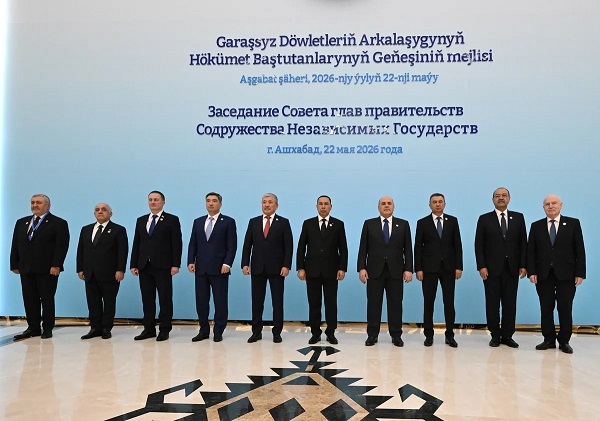
The high-level summit brought together the following heads of delegations:
- Turkmenistan (Chair Country): Hojamyrat Geldimuradov, Deputy Chairman of the Cabinet of Ministers of Turkmenistan
- Azerbaijan: Ali Asadov, Prime Minister
- Belarus: Aleksandr Turchin, Prime Minister
- Kazakhstan: Olzhas Bektenov, Prime Minister
- Kyrgyzstan: Adylbek Kasymaliev, Chairman of the Cabinet of Ministers and Head of the Presidential Administration of the Kyrgyz Republic
- Russia: Mikhail Mishustin, Prime Minister
- Tajikistan: Kokhir Rasulzoda, Prime Minister
- Uzbekistan: Abdulla Aripov, Prime Minister
- Armenia: Razmik Khumaryan, Permanent Plenipotentiary Representative of the Republic of Armenia to the Statutory and Other Bodies of the CIS and Ambassador of Armenia to the Republic of Belarus
- CIS: Sergei Lebedev, Secretary General
Narrow-Format Session: Rollout of the CIS Spatial Data Infrastructure Geoportal
While economic ties are always on the table, the restricted-format session turned its focus toward a major tech milestone. The heads of government reviewed the final tracking report on the Interstate Cooperation Program for geodesy, cartography, spatial data, GIS technologies, remote sensing, and real estate registration, which wraps up this year.
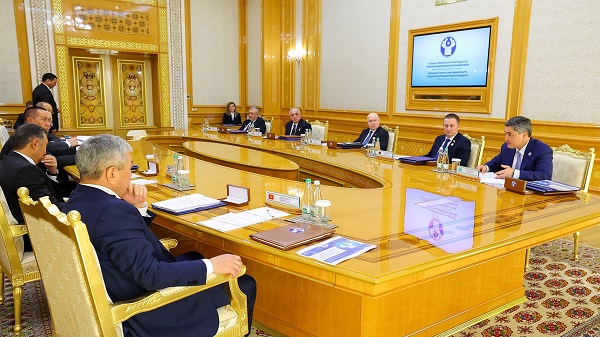
The standout achievement of this multi-year initiative is the launch of the CIS Spatial Data Infrastructure Geoportal. This unified GIS platform integrates, visualizes, and hosts verified, legally binding spatial data across the entire Commonwealth. It provides citizens, businesses, government bodies, and academia with fast, streamlined access to standardized geographic records.
“In essence, this is an excellent, modern digital foundation for driving cooperation in geodesy, cartography, and remote sensing data across a massive range of applications. We are looking at everything from property registration and tourism to regional spatial development,” noted Russian Deputy Prime Minister Alexei Overchuk, commenting on the launch.
Moving forward, the CIS Council of Heads of Government has urged relevant sectoral bodies to explore how they can weave the Geoportal into their daily operations. Additionally, member states are encouraged to submit proposals to the Secretariat to expand the platform with new, open-access thematic datasets.
Expanded-Format Session: Key Strategic Agreements Signed
The expanded-format session concluded with the signing of a package of joint documents designed to deepen integration across economic sectors and security frameworks.
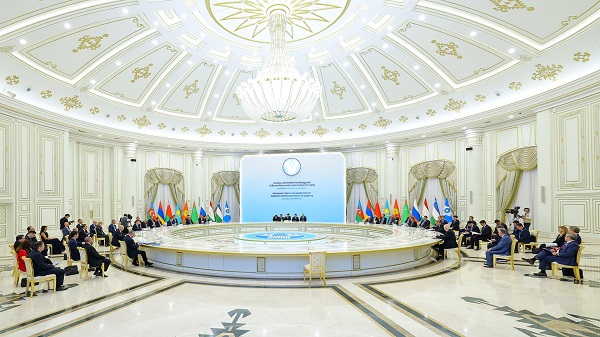
- Boosting Business Activity: The summit approved the CIS Strategy for Congress and Exhibition Activities through 2030. The roadmap aims to build highly competitive event industries across member states. This initiative is expected to drive socio-economic growth and innovation, while expanding the global market share of CIS nations by promoting domestic goods, services, and scientific achievements both within the region and internationally.
- Industrial Digitalization: The sides endorsed the Concept for the Digital Transformation of the Mining and Metallurgical Complex, alongside its implementation action plan. Currently, industrial enterprises across the CIS are rapidly going digital. Traditionally, automation, protection, and operational management systems—particularly in heavy industry—have been sourced from global IT giants. However, managing fragmented software ecosystems and complex tech platforms poses clear challenges. Companies need to optimize budgets without compromising reliability or data security. The newly adopted Concept addresses this by setting clear standards and benchmarks, enabling businesses to select optimal digital solutions smartly and cost-effectively.
- Transport and Connectivity: The meeting approved the Concept for Harmonizing Main Transport Arteries Passing Through the CIS Member States. Initiated by Kazakhstan, the document addresses a strategic priority: the transit routes cutting across the CIS integrate regional transport networks into global logistics chains, moving passengers and freight between Europe, Asia, and the Middle East. Seamless alignment and modernization of these corridors are vital to boosting trade, lowering transit costs, and unlocking fresh logistical capabilities for the region. The newly adopted framework is designed to make CIS transit routes more competitive, while drawing in new investments and freight traffic.
- Technological Cooperation: The sides greenlit the Interstate Radionavigation Program for 2027–2030. In today’s digital economy, top-tier navigation is essential. Satellite and radionavigation systems have evolved far beyond basic transit, becoming backbone technologies for energy, telecom, and agriculture. As automation takes over, requiring minimal human intervention, the Commonwealth needs a unified approach to keep these systems running smoothly and securely. The new program will pool regional efforts and channel budget resources into high-priority tracks, with a core focus on coordinating navigation grids and launching the manufacturing of homegrown equipment and electronics based on CIS developments.
- Environmental Security: The summit reviewed the outcomes of the Interstate Targeted Program on the Reclamation of Territories Affected by Uranium Mining Operations.
Humanitarian Agenda and Institutional Appointments
New Youth Capitals of the Commonwealth: In the humanitarian sphere, the CIS continues to foster intercultural dialogue among the younger generation. During the session, the upcoming Youth Capitals of the Commonwealth were officially announced. In 2027, the title will be held by Minsk (Republic of Belarus). In 2028, the baton will be passed to Karaganda (Republic of Kazakhstan).
Both cities have a proven track record in youth affairs, boasting robust infrastructure tailored for young people and actively supporting international youth initiatives.
Child Welfare and Rights Protection: The summit adopted key amendments to the Implementing Protocol of the Agreement on Cooperation of the CIS Member States in the Return of Minors to their States of Permanent Residence (dated 7 October 2002).
Personnel Decisions: The Council finalized a decision regarding the leadership structure of the CIS Anti-Terrorism Center. Specifically, following a proposal by the Council of Ministers of Defense, Colonel Sergei Zubkov’s term as Deputy Head of the Center was extended.
Upcoming Summits: Awaza and Moscow to Play Host
The CIS Council of Heads of Government will gather for its next session in December 2026 in Moscow.
However, the premier political event of the year for the Commonwealth will be the CIS Heads of State Summit. This October, the high-level forum will be hosted by Turkmenistan at the Awaza National Tourist Zone, located on the pristine shores of the Caspian Sea. ///nCa, 22 May 2026