


nCa Report
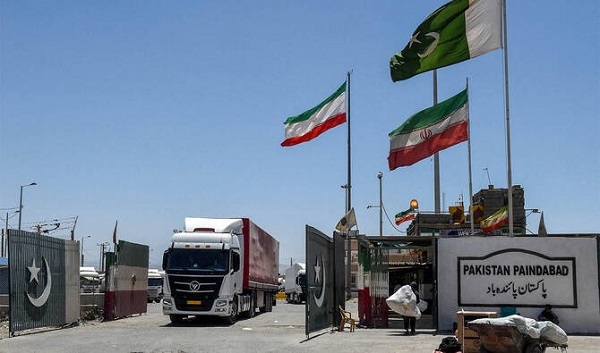
In April 2026, Pakistan’s Ministry of Commerce issued the Transit of Goods through Territory of Pakistan Order 2026 (effective April 25), formalizing six overland road corridors. These routes connect Pakistan’s key ports—Karachi, Port Qasim, and Gwadar—to Iran’s border crossings at Gabd (near Gwadar/Rimdan) and Taftan.
They were activated amid disruptions in the Strait of Hormuz, allowing third-country cargo (including from China and beyond) to transit Pakistan by road into Iran, bypassing maritime blockades.
The routes utilize existing infrastructure across Balochistan, passing through towns such as Turbat, Panjgur, Khuzdar, Quetta, and Dalbandin. Here is a breakdown of the six designated corridors:
- Gwadar – Gabd: The shortest and most efficient route (approx. 89 km), reducing travel time to the Iranian border to just 2–3 hours. It offers significant cost savings (estimated 45–55% lower than from Karachi).
- Karachi/Port Qasim – Lyari – Ormara – Pasni – Gabd: A coastal route providing an alternative southern access to the Gabd crossing.
- Karachi/Port Qasim – Khuzdar – Dalbandin – Taftan: An inland route to the Taftan border crossing, roughly 900 km long.
- Gwadar – Turbat – Hoshab – Panjgur – Nagg – Besima – Khuzdar – Quetta/Lakpass – Dalbandin – Nokundi – Taftan: A longer internal route via central Balochistan to Taftan (over 1,000 km in parts).
- Gwadar – Liari – Khuzdar – Quetta/Lakpass – Dalbandin – Nokundi – Taftan: A combined coastal-inland variant to Taftan.
- Karachi/Port Qasim – Gwadar – Gabd: A direct feeder route linking the larger ports to the short Gwadar-Gabd segment.
These corridors operate under customs regulations (e.g., encashable bank guarantees) and have already seen trucks moving stranded cargo. They build on a 2008 Pakistan-Iran road transport agreement and enhance the role of Gwadar Port, which has seen a surge in activity.
How Central Asia Can Best Benefit
The opening of these Pakistan-Iran routes, combined with existing China-Pakistan Economic Corridor (CPEC) infrastructure and the northern route via China’s Sost Dry Port, offers landlocked Central Asian countries (Kazakhstan, Kyrgyzstan, Tajikistan, Turkmenistan, Uzbekistan) a compelling alternative to traditional paths through Afghanistan or congested maritime routes. Here’s how they stand to gain:
- Diversified and Secure Access to Warm-Water Ports: CARs gain reliable overland connections to Gwadar, Karachi, and Port Qasim on the Arabian Sea. This bypasses Afghanistan (where Pakistan closed key crossings in 2025 due to security issues) and reduces dependence on Iranian ports affected by Hormuz disruptions. Goods can move south via Pakistan-Iran corridors or north via China, enabling faster, more predictable trade with global markets.
- Lower Costs and Faster Transit: Shorter road segments (especially Gwadar-Gabd) and multimodal options (sea + road) can cut transportation expenses compared to longer detours or sea routes vulnerable to blockades. Integration with CPEC’s roads, railways, and special economic zones could further streamline logistics for minerals, textiles, agriculture, and energy exports from Central Asia.
- Enhanced Regional Connectivity and Trade Volumes: Routes support frameworks like the Quadrilateral Traffic in Transit Agreement (QTTA) and link to broader initiatives (e.g., International North-South Transport Corridor). Central Asian states like Kyrgyzstan have already tested consignments to/from Pakistan via these networks. This could boost two-way trade—exporting raw materials northward/southward and importing finished goods, machinery, or energy.
- Geopolitical Resilience: Multiple corridors (Iran-Pakistan and China-Pakistan) provide redundancy against single-point failures, whether due to conflict, sanctions, or infrastructure issues. For Iran-bound or transit cargo, this land bridge sustains supply chains; for CARs, it opens southern gateways previously limited by geography or politics.
To maximize benefits, Central Asian governments and businesses should:
- Invest in logistics hubs, truck fleets, and digital customs clearance (e.g., Pakistan Single Window system) for seamless cross-border operations.
- Pursue bilateral/multilateral agreements for streamlined visas, security, and tariffs.
- Coordinate with China, Pakistan, and Iran on infrastructure upgrades (e.g., rail links) to shift from road-dominant to multimodal efficiency.
- Focus on high-value sectors like energy, mining, and agro-exports that leverage Gwadar’s proximity.
Overall, these routes position Pakistan as a pivotal transit hub, potentially generating substantial revenue for Islamabad while giving CARs greater economic agency in a fragmented region. Long-term success will depend on stability, investment in security along the corridors, and sustained diplomatic engagement. This development marks a pragmatic step toward resilient Eurasian connectivity. /// nCa, 13 July 2026 [photo credit – Arab News]