


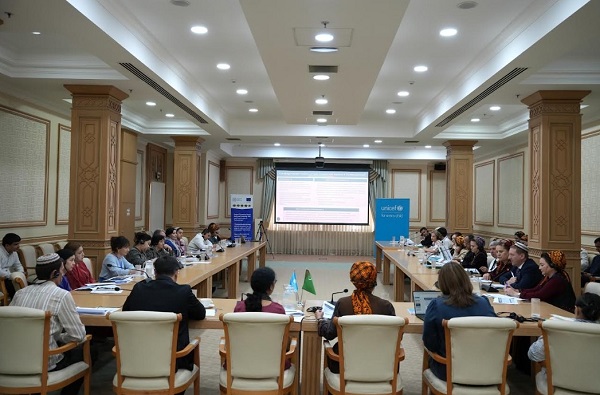
Ashgabat, Turkmenistan, 25 May 2026 — UNICEF, together with the Ministry of Labour and Social Protection of the Population, the Ministry of Finance and Economy, and the State Statistics Committee, convened a series of national consultations with stakeholders and social partners to review the findings of the Social Protection System Assessment conducted using the Core Diagnostic Instrument (CODI). The process also benefited from the strategic engagement of the International Labour Organization (ILO) and the World Bank.
The CODI process provides an evidence-based foundation for strengthening Turkmenistan’s social protection system. It assesses how effectively policies, programmes and delivery systems respond to the needs of the population and supports dialogue on practical reform options to build a more inclusive, equitable and resilient system.
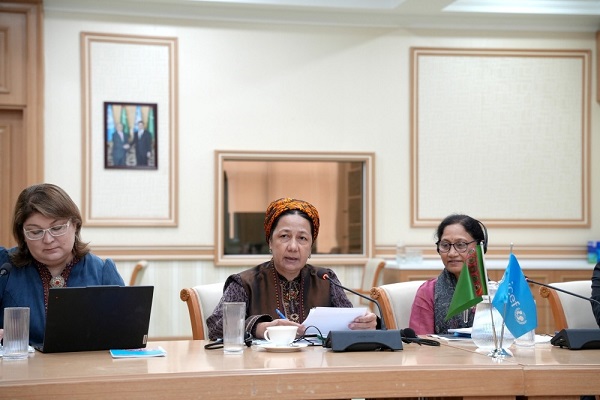
The consultations began on 21 April and concluded with a final conference on 21 May, bringing together representatives of the Mejlis (Parliament), key government institutions, etrap-level hakimliks, the Union of Industrialists and Entrepreneurs, the National Trade Union Centre, the Women’s Union, the Youth Union, organizations of persons with disabilities, the National Red Crescent Society, and other civil society organizations.
Through the consultations, government institutions, development partners and technical experts reviewed the assessment findings and discussed priorities for strengthening social protection across the life cycle—for children and families, working-age populations, persons with disabilities, and older persons—to ensure more inclusive and responsive support at every stage of life.
Key recommendation areas emerging from the dialogue include clarifying a realistic social service delivery model and sequencing its implementation; expanding child benefits; advancing reform of the disability policy and benefits framework; strengthening pension system governance; improving linkages with active labour market programmes to support vulnerable young people in the transition to employment; fostering a rights-based and client-centred service delivery culture; and reinforcing strategic planning, monitoring and evaluation, including through the development of a National Social Protection Strategy.
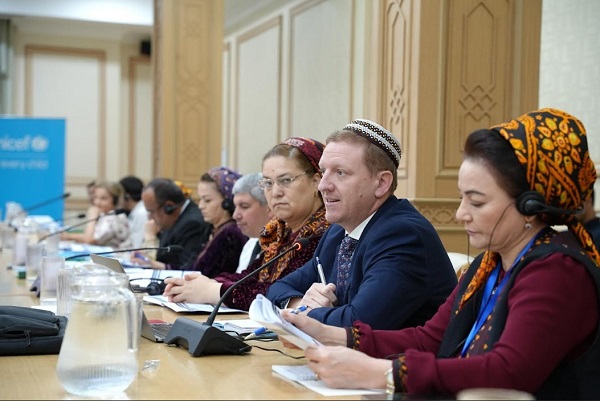
“A comprehensive, costed, and time-bound National Social Protection Strategy and multi-year action plan can serve as a unifying framework — bringing together social insurance, social assistance, social services, and labour market measures,” said Ms. Laxmi Bhavani, UNICEF Deputy Representative a.i.
“We consider the CODI results an important basis for further work on developing the social protection system in line with international standards and national priorities,” said Ms. Halbibi Tachjanova, Deputy Minister of the Ministry of Labour and Social Protection of the Population.
The conference also provided a platform to discuss a comprehensive set of recommendations generated through the CODI analysis, aimed at accelerating social protection reforms identified in the National Socio-Economic Development Programme of the President of Turkmenistan. They are critical to advancing national priorities to improve living standards, strengthen human capital, and enhance child well-being.
UNICEF remains committed to supporting the Government of Turkmenistan and national partners in translating evidence into action and advancing social protection reforms that better respond to the needs of children, families and vulnerable populations across the country. ///nCa, 26 May 2026 (in cooperation with UNICEF Turkmenistan)