


nCa Report
There is perhaps a building somewhere near you — windowless, humming faintly, surrounded by generators and cooling towers — that does more to shape your daily life than almost any other structure in your city. You have probably never given it a second thought.
That is a data center. And right now, it is quietly becoming one of the most strategically important pieces of infrastructure on the planet.
More Than a Room Full of Servers
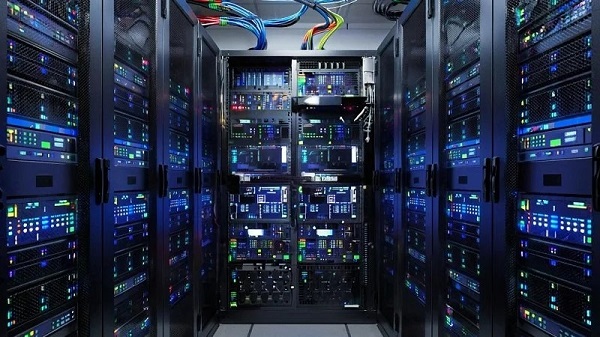
The easiest way to think about a data center is as a factory — except instead of producing cars or steel, it processes information. Every email you send, every payment you make, every video you stream, every search you run: somewhere, a data center made that possible. The same is true for satellite image analysis, AI-generated text, financial trading systems, logistics networks, and national power grids. Underneath almost everything digital lies this invisible layer of physical infrastructure.
But calling it “a room full of servers” is like calling an oil refinery “a bunch of pipes.” A modern data center is an engineered ecosystem — electricity substations, backup generators, precision cooling systems, fiber-optic networks, physical security layers, and increasingly, racks of specialized AI chips that consume more power per square meter than almost any other technology in commercial use. The engineering challenge is simple to state and ferociously difficult to solve: keep everything running, all the time, without exception.
Even a few seconds of downtime can trigger millions of dollars in losses. This is why data centers are designed with redundancy stacked upon redundancy — backup power for the backup power, cooling systems that can survive the failure of other cooling systems. Reliability is not a feature. It is the entire product.
What They Actually Do
Data centers perform four broad functions, and it helps to understand each one separately.
The first is storage. The world now generates data at a scale that would have been incomprehensible a generation ago — financial records, government archives, scientific datasets, medical histories, surveillance footage, social media, industrial sensor readings. All of it has to live somewhere physical. Data centers are where it lives.
The second is computing. Storage is passive; computing is active. Data centers process transactions, run search engines, train machine-learning models, optimize shipping routes, detect cybersecurity threats, and render the graphics in cloud gaming platforms — simultaneously, continuously, for millions of users at once.
The third is cloud services. Most companies no longer want to own and manage their own computing infrastructure. Instead, they rent it — virtual servers, cloud storage, software platforms — from providers who operate the physical facilities on their behalf. This “infrastructure-as-a-service” model has quietly become one of the most profitable sectors in the digital economy.
The fourth is connectivity. Data centers are not isolated facilities; they are nodes in a global network. Many function as internet exchange points, routing enormous volumes of traffic between countries, continents, and industries. This connectivity role is what gives certain data centers outsize geopolitical importance — control the node, and you influence the flow.
The Economics: What It Actually Costs
Here the original picture has changed dramatically, and it is worth being precise.
A few years ago, you could build a credible mid-sized commercial data center for somewhere between $80 million and $300 million. That range is now obsolete. The AI boom has triggered a construction surge unlike anything the industry has previously experienced. According to industry data, the average data center completed in the twelve months through late 2025 cost approximately $597 million to build — nearly double the figure from just two years prior, and rising at a pace that has left analysts struggling to keep up. AI-optimized facilities designed for the heat and power demands of GPU clusters can run $20 million per megawatt of capacity or more, compared to $10–12 million per megawatt for a conventional facility.
Understanding where the money goes helps demystify why these numbers are so large.
Land and site preparation come first. Power availability has become so constrained in established markets that developers are increasingly buying large parcels — often hundreds of acres — in locations where they can actually get a grid connection. Land costs for large parcels jumped over 23% year-on-year in 2024 alone.
Electrical infrastructure is frequently the largest single expense. Data centers need substations, transformers, industrial-scale backup generators, battery systems, and power distribution networks engineered to prevent any single failure from cascading into a blackout. Electricity is so fundamental to the operation that even seconds without it can cause irreversible data loss and catastrophic financial damage.
Cooling comes next, and it is no longer a secondary concern. Conventional air conditioning works well enough for standard servers. But GPU clusters — the hardware that trains and runs AI models — generate heat densities that conventional cooling simply cannot handle. Liquid cooling, immersion cooling, and chilled water systems are increasingly standard in new AI-oriented facilities, adding substantial cost and complexity.
Then there is the hardware itself: servers, networking switches, storage arrays, cybersecurity systems — and for AI facilities, the GPUs that currently cost tens of thousands of dollars each and which operators may need in the thousands. This is typically where the largest share of capital goes.
Finally, connectivity. A data center without fast, redundant fiber links to the outside world is an expensive building with nowhere to go. In established markets this is relatively straightforward; in emerging markets, it is often a serious constraint on viability.
Once a facility is running, the costs do not stop. Electricity is typically the largest ongoing operating expense, often dominating everything else. Cooling systems run around the clock. Hardware requires replacement on a cycle that averages around five years for servers and networking equipment — though the pace of AI hardware development means that AI-oriented facilities may face pressure to refresh even sooner, as today’s cutting-edge GPU becomes commercially obsolete faster than conventional computing hardware did. Staffing is lean compared to traditional manufacturing but highly specialized: engineers, network administrators, cybersecurity personnel, and maintenance teams who can keep complex systems running without interruption.
How the Money Comes Back
Data centers are infrastructure businesses, and like most infrastructure businesses, they generate returns slowly but durably.
The most established model is colocation: companies rent physical space and power for their own equipment, while the data center provides the building, cooling, and connectivity. Cloud services go further — customers rent not physical racks but virtual computing resources, paying for what they use rather than owning anything. This model has proved enormously profitable for the companies that scaled it early.
The newest and fastest-growing revenue stream is AI compute leasing. The demand for GPU clusters is so intense, and the upfront cost so high, that many companies would rather rent AI processing capacity than own it. Data centers with the right hardware, cooling infrastructure, and connectivity are effectively able to charge premium rates for access to compute that their clients cannot easily replicate themselves.
Beyond these, data centers generate revenue from storage and backup services, disaster recovery infrastructure, and network transit fees for facilities that sit at connectivity crossroads.
A well-run facility in a good location typically reaches break-even somewhere between five and ten years after opening. AI-focused facilities carry higher upfront costs but, in the current environment, face strong enough demand that returns can materialize more quickly — though they also carry more technology risk if hardware cycles shift faster than anticipated.
The Strategic Turn
Something important has changed in how governments and planners think about all of this.
For most of the internet era, data centers were regarded as private commercial infrastructure — interesting to the companies that owned them, largely invisible to everyone else. That is no longer the case. Governments across the world have begun treating data centers the way previous generations treated railways, ports, and power stations: as strategic national assets that shape economic competitiveness, technological capability, and geopolitical position for decades to come.
The logic is not difficult to follow. A country that hosts major compute infrastructure attracts investment in cloud services, AI development, telecommunications, and digital finance. It gains leverage in regional connectivity networks. It develops a local workforce with rare and valuable technical skills. And it retains a degree of technological sovereignty — the ability to process sensitive data domestically rather than routing it through infrastructure controlled by foreign governments or corporations.
The inverse is also true. Countries without competitive data center infrastructure increasingly find themselves dependent on external providers for cloud services, AI capabilities, and critical digital systems. In a world where AI is becoming central to economic productivity and national security, that dependency is not trivial.
The 19th century was shaped by railways. The 20th century by oil and industrial manufacturing. The infrastructure competition of the 21st century is playing out in server halls, fiber networks, and GPU clusters. The geography of compute power is still being written — and the countries that understand this early enough to act on it may find themselves better positioned than anyone currently expects.
Part two of this series examines why Turkmenistan may be better placed for this transition than many observers assume. /// nCa, 26 May 2026