


Tariq Saeedi
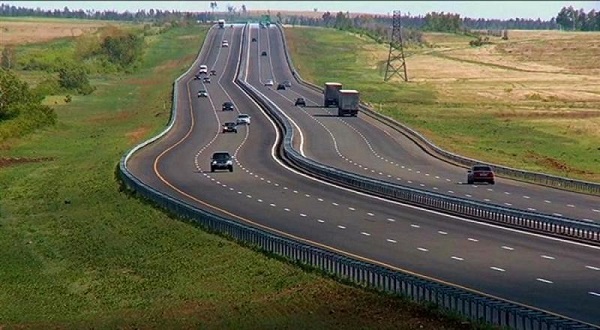
Central Asia has done something extraordinary in the past two decades: it has built. — From the high-speed rail that now links Almaty to Tashkent in hours instead of days, to the gleaming new terminals at Nursultan Nazarbayev and Tashkent International airports, the Turkmenbashy-Farab motorway of Turkmenistan, to the fiber-optic networks that have brought reliable internet to remote mountain villages, the region has invested with ambition and delivered results that would have been unthinkable in the 1990s.
Billions have flowed in from China, the European Union, the Gulf states, and multilateral banks. Trade volumes along the Middle Corridor have tripled. Cities are rising. Opportunities are multiplying.
This is a story of success — and of a region now perfectly positioned to take the next, even bolder step.
Because the very meaning of innovation has changed profoundly in the past twenty years. It is no longer just about building the tallest tower or the fastest train. Innovation today is the entire process: the way we imagine, finance, design, build, operate, and even decommission infrastructure.
It is fundamentally holistic. Everything is connected to everything else.
A road is not just asphalt and concrete; it is also the emissions it produces or avoids, the habitats it protects or destroys, the jobs it creates for women as well as men, the data it generates about traffic and weather, the solar panels that power its smart lighting, the way it enables small farmers to reach markets before their produce spoils. A hydropower dam is not just megawatts; it is also the sediment flow it manages to keep downstream fields fertile, the fish ladders it includes, the early-warning systems it funds for glacial-lake outbursts, the gender-balanced community committees that decide how its electricity revenues are spent.
This holistic understanding is not a luxury. It is the only way to build systems resilient enough to survive the challenges we already face — drought, flooding, supply-chain shocks, demographic pressure — and the ones we cannot yet foresee.
Central Asia is already proving it can do this.
Kazakhstan and Uzbekistan have opened their solar markets so effectively that new plants now deliver electricity cheaper than coal. Masdar is building one of Eurasia’s largest wind farms in southern Kazakhstan. The European Bank for Reconstruction and Development and the International Finance Corporation poured more than $1 billion into the region’s renewable and climate-resilient projects last year alone.
But the real breakthroughs are the ones that weave together atoms and bits, people and planet.
In the Kyrgyz Republic, new hydropower plants come with battery storage and smart-grid controls that balance solar from Uzbekistan. In Tajikistan, World Bank-financed irrigation systems use satellite data and soil sensors to reduce water consumption by up to 40 percent while boosting yields. Kazakhstan is testing autonomous-truck platoons on Middle Corridor routes, cutting both costs and emissions. These are not isolated experiments; they are the prototype for an entirely new infrastructure paradigm. Turkmenistan teaches alternative energies as a dedicated discipline in its institutions of higher learning.
The Asian Development Bank estimates Central Asia needs $39 billion a year in infrastructure investment through 2030. Only about half is currently funded. Yet if just 20 percent of new projects adopted high-quality, sustainable, digitally enabled designs, the region could gain an extra 1.5 percentage points of annual G.D.P. growth while slashing emissions intensity by a third.
The opportunity is even larger when we think holistically. Lay 5G and data centers along transit corridors, and global logistics companies will want their regional AI hubs in Central Asia. Build green hydrogen plants in Turkmenistan’s Karakum, and Europe will see Central Asia as an indispensable energy partner rather than a convenient transit route.
Every dollar spent on inclusive, climate-intelligent infrastructure multiplies its return because it creates decent jobs for women, reduces forced migration, strengthens food security, and preserves the glaciers that 70 million people depend on.
Remarkably, the region’s leaders already grasp this. President Mirziyoyev has made the digital economy central to Uzbekistan’s future. President Tokayev speaks of turning Kazakhstan into green economy. The presidents of Kazakhstan, Uzbekistan, and Azerbaijan have agreed to lay a power cable under the Caspian to export clean electrons to Europe — a project that is technically simple, economically obvious, and geopolitically transformative. President Serdar Berdimuhamedov and the national leader Gurbanguly Berdimuhamedov of Turkmenistan have declared innovative development as their important priority.
What is needed now is to make the holistic, innovative approach the default, not the inspiring exception.
Every new road should be EV-ready and lined with solar noise barriers. Every new dam should have real-time ecological monitoring and community benefit-sharing. Every logistics park should include co-located data centers powered by nearby renewables and workplaces designed for women and men alike. Gender parity, environmental protection, digital integration, and long-term climate resilience should not be add-ons; they should be the starting point of every feasibility study.
Central Asia stands at a rare historical inflection point. It has the land, the sun, the wind, the human capital, the political will, and — most important — the lived experience of what happens when systems are built in silos. It knows, better than most, that fragmented thinking leads to fragile outcomes.
The 21st century will not reward the countries that build the most infrastructure. It will reward the ones that build the smartest, wisest, most connected, most responsible systems — the ones that serve this generation without robbing the next, that turn geographical challenges into global assets, that prove prosperity and planetary care are not trade-offs but partners.
Central Asia has already shown it can build at scale. Now it can show the world how to build with vision, courage, and genuine innovation — we build for eternity. /// nCa, 10 December 2025