


nCa Report
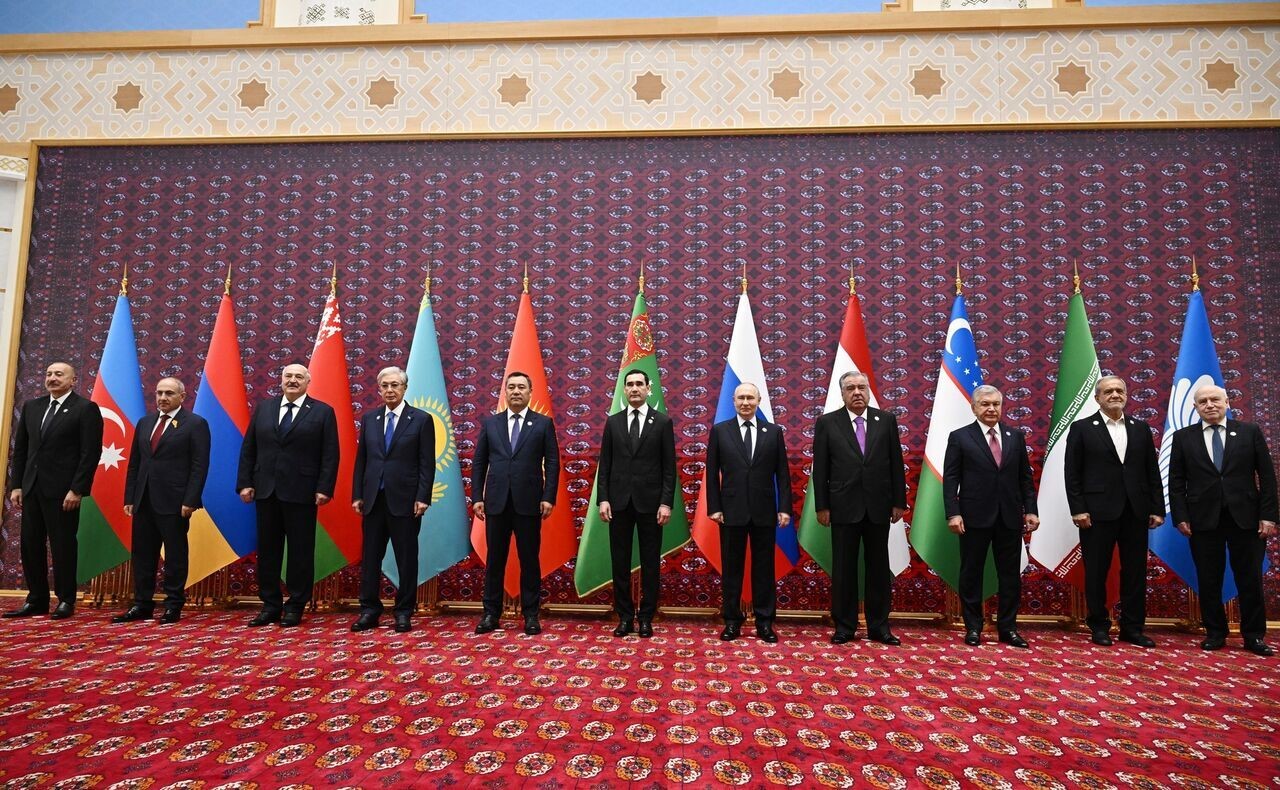
The most useful way to document the diplomatic activity at Awaza is to treat the three summits as one connected diplomatic occasion, while distinguishing the meetings held in connection with each gathering. This matters because bilateral talks can serve several purposes simultaneously: strengthening political relations, advancing trade and transport projects, coordinating regional positions, and addressing security or environmental concerns.
The report will therefore identify the leaders or senior officials who met, briefly describe the subjects discussed, and distinguish confirmed meetings from encounters for which public reporting is incomplete. The aim is a comprehensive record, not simply a selection of the most prominent meetings.
1. Findings at a glance
The review of official presidential and foreign-ministry reporting, supplemented by national news agencies, has identified the following publicly reported bilateral meetings associated with the Awaza gatherings.
| Date | Participants | Principal subject |
| 8 October | Serdar Berdimuhamedov — Shavkat Mirziyoyev | Turkmen-Uzbek strategic partnership; new high-level council |
| 8 October | Serdar Berdimuhamedov — Ilham Aliyev | Political, economic, transport, transit and Caspian cooperation |
| 8 October | Serdar Berdimuhamedov — Kassym-Jomart Tokayev | Bilateral relations and regional cooperation |
| 8 October | Serdar Berdimuhamedov — Sadyr Japarov | Turkmen-Kyrgyz relations and regional cooperation |
| 8 October | Serdar Berdimuhamedov — Emomali Rahmon | Bilateral relations and regional cooperation |
| 8 October | Serdar Berdimuhamedov — Nikol Pashinyan | Turkmen-Armenian relations and cooperation within the CIS |
| 8 October | Serdar Berdimuhamedov — Vladimir Putin | Political, economic, cultural and humanitarian ties |
| 8 October | Serdar Berdimuhamedov — Sergey Lebedev | CIS cooperation and Turkmenistan’s 2026 chairmanship |
| 8 October | Shavkat Mirziyoyev — Nikol Pashinyan | Trade, investment, industrial cooperation and transport links |
| 8 October | Vladimir Putin — Masoud Pezeshkian | Iran-related conflict, diplomacy and regional issues |
| 9 October | Ilham Aliyev — Masoud Pezeshkian | Bilateral relations and the Aghband–Kelaleh border-connectivity project |
The first eight meetings are documented in Turkmenistan’s official reporting; the three additional encounters are documented by the Uzbek, Russian or Azerbaijani side and independent news agencies. Sources: Turkmenistan’s Ministry of Foreign Affairs, Uzbekistan meeting, Azerbaijan meeting, Kazakhstan meeting, Kyrgyzstan meeting, Tajikistan meeting, Armenia meeting, Russia meeting and CIS Secretary General meeting; Uzbekistan–Armenia talks; Putin–Pezeshkian meeting; Azerbaijan–Iran meeting.
This is a verified public-reporting list, not proof that no other private or informal conversations occurred. In particular, the absence of a published account should not be interpreted as evidence that two leaders did not speak.
2. Detailed record of bilateral meetings
A. Meetings hosted by President Serdar Berdimuhamedov
1. Serdar Berdimuhamedov — Shavkat Mirziyoyev (Uzbekistan)
8 October 2026 · Turkmenistan MFA report · Uzbekistan presidential report
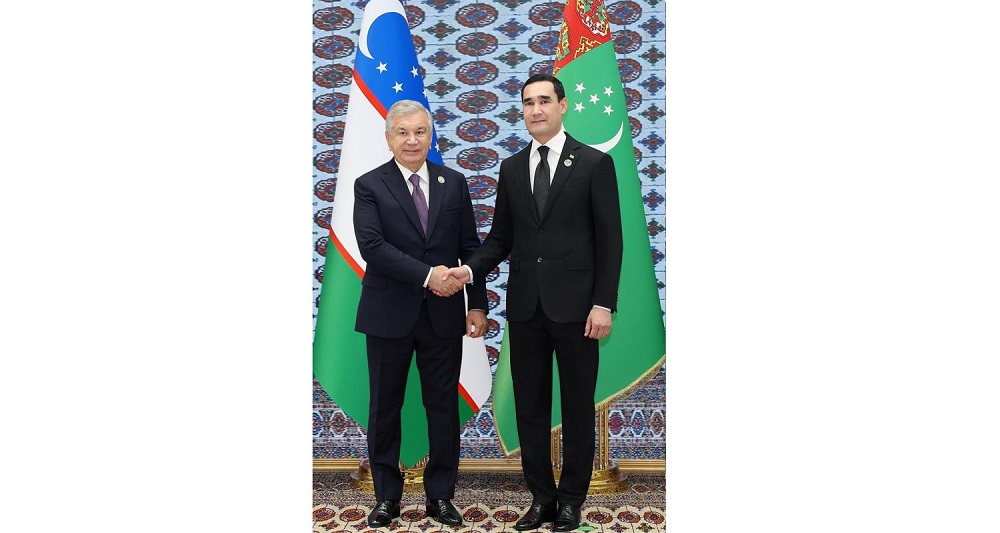
The two presidents discussed the further development of Turkmen-Uzbek strategic partnership and opportunities for practical cooperation. Both emphasized the importance of sustained high-level dialogue and coordination in international organizations, including the UN, ECO and CIS. The most consequential outcome was Uzbekistan’s announcement that the talks had resulted in an agreement to establish a High-Level Strategic Partnership Council, providing a new institutional mechanism for coordinating bilateral cooperation.
2. Serdar Berdimuhamedov — Ilham Aliyev (Azerbaijan)
8 October 2026 · Azerbaijani presidential report · Turkmenistan MFA report
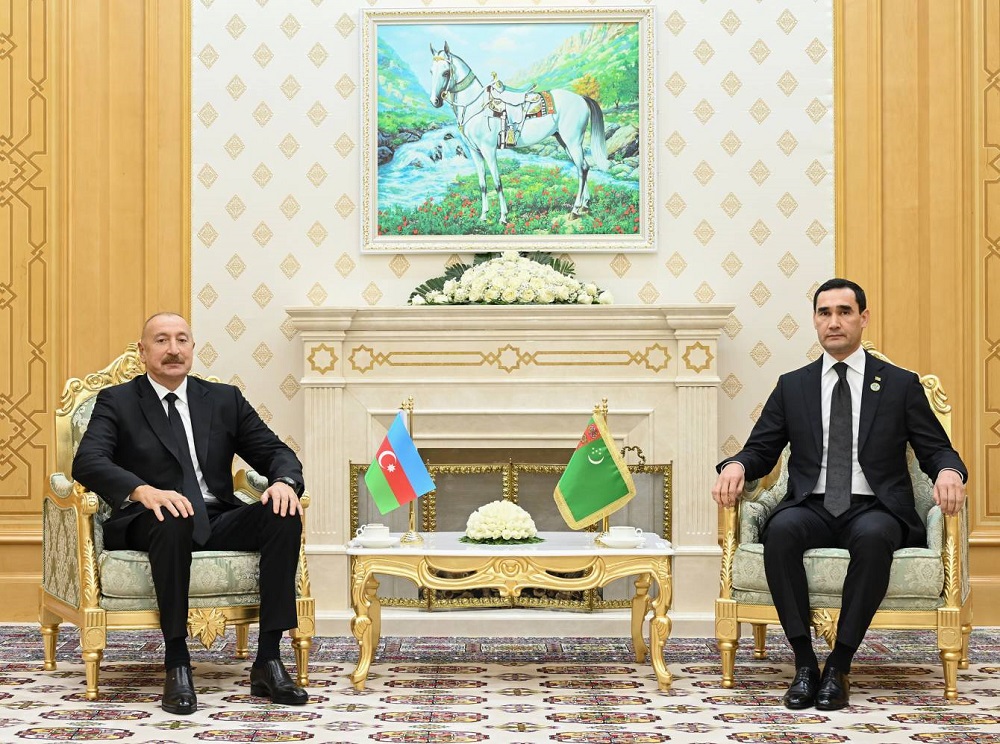
The presidents reviewed the rapid development of bilateral relations, recalling reciprocal high-level visits, including visits to Garabagh. They discussed cooperation in politics, trade and the economy, transport, transit, logistics, culture and humanitarian affairs, as well as Caspian Sea issues and collaboration in international organizations. Aliyev highlighted the importance of Azerbaijan’s participation in the six-country Central Asia–Azerbaijan consultative format, following its accession as a full participant in November 2025.
3. Serdar Berdimuhamedov — Kassym-Jomart Tokayev (Kazakhstan)
8 October 2026 · Turkmenistan MFA report
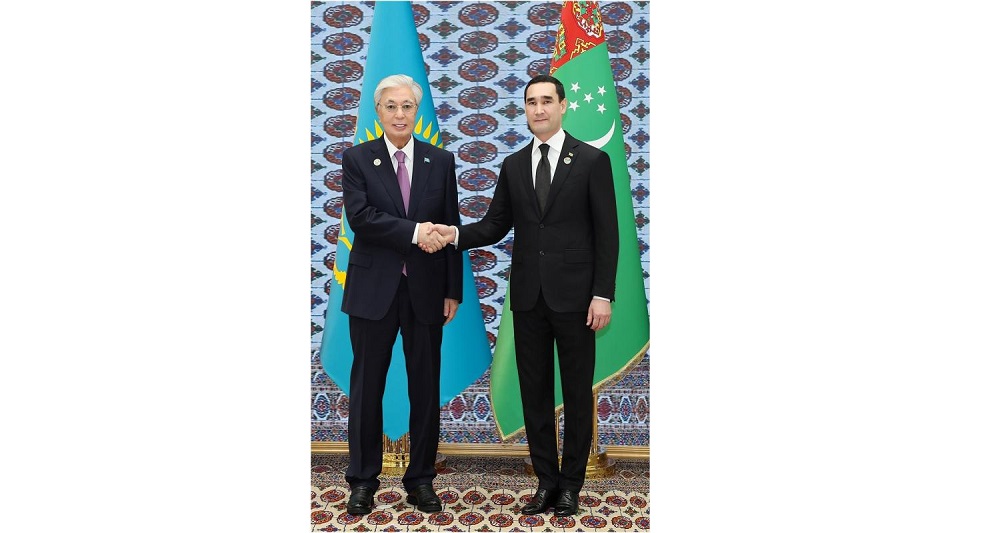
The two presidents held talks during Tokayev’s visit for the three international gatherings. Their public remarks emphasized bilateral relations, regional cooperation and the importance of the Awaza summit. Tokayev congratulated Berdimuhamedov on the successful organization of the meeting and conveyed greetings to Gurbanguly Berdimuhamedov, Chairman of Turkmenistan’s Halk Maslahaty. The public account available in the reviewed material gives limited detail about specific new bilateral agreements or projects.
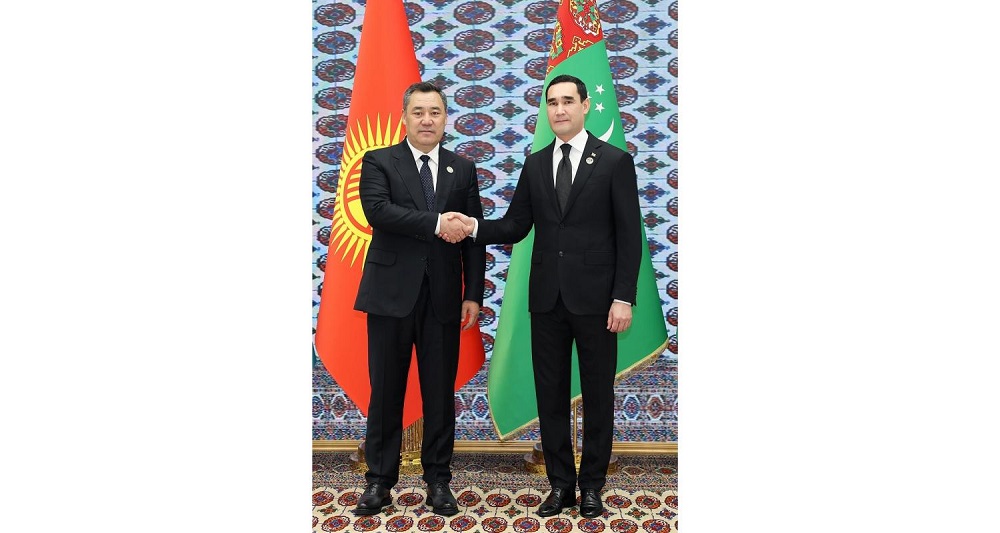
4. Serdar Berdimuhamedov — Sadyr Japarov (Kyrgyzstan)
8 October 2026 · Turkmenistan MFA report
The presidents discussed the development of Turkmen-Kyrgyz relations and regional cooperation. Both highlighted their constructive political dialogue and cooperation through the UN, CIS and other international organizations. Berdimuhamedov recalled his July 2026 visit to Kyrgyzstan for the informal Central Asia–Azerbaijan consultative meeting in Cholpon-Ata, thanking Japarov for the hospitality and noting that the encounter had helped advance bilateral partnership.
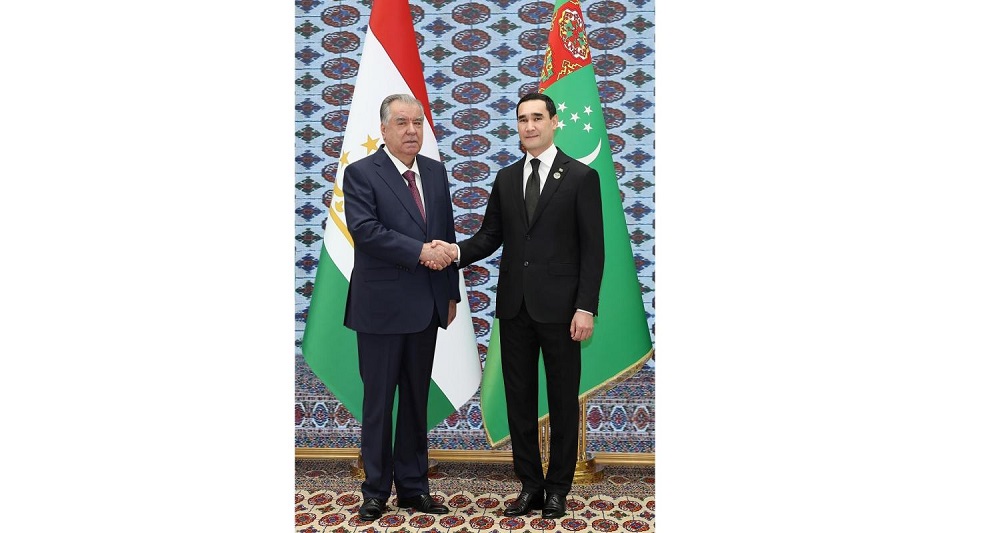
5. Serdar Berdimuhamedov — Emomali Rahmon (Tajikistan)
8 October 2026 · Turkmenistan MFA report · Tajik presidential website
The presidents exchanged views on Turkmen-Tajik relations and opportunities to strengthen regional cooperation. Rahmon welcomed the importance of the Awaza gatherings in identifying priorities for mutually beneficial partnership and developing the full range of interstate relations. In his separate address to the Central Asia–Azerbaijan summit, Rahmon advocated stronger transport connectivity, a regional green-transition strategy, cooperation on water and climate challenges, and the establishment of a regional artificial intelligence centre in Dushanbe. Those were proposals to the wider group, rather than reported bilateral agreements.
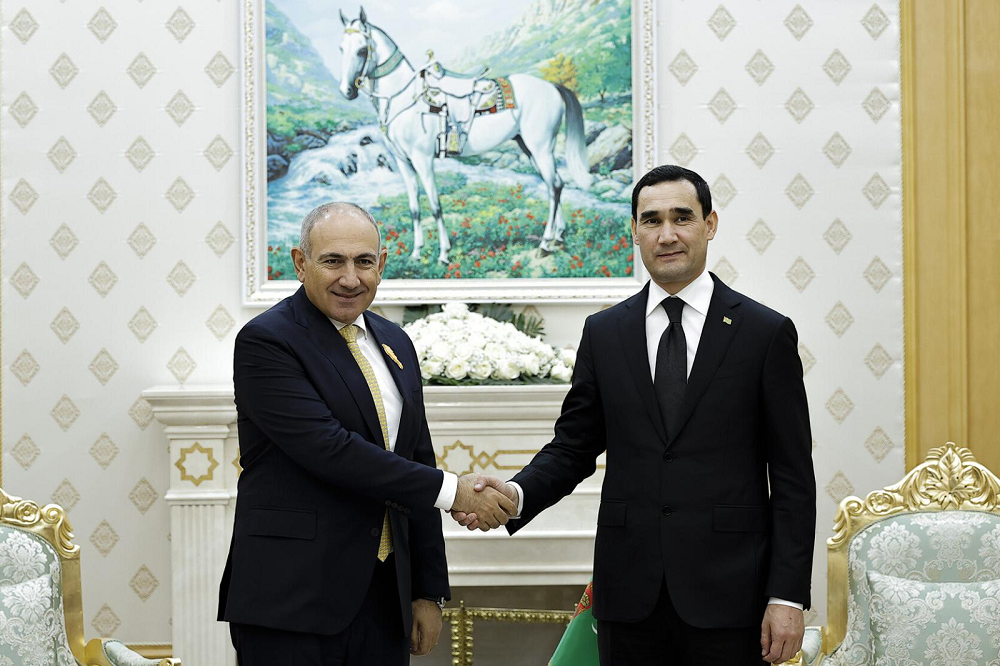
6. Serdar Berdimuhamedov — Nikol Pashinyan (Armenia)
8 October 2026 · Turkmenistan MFA report
The meeting focused on Turkmen-Armenian relations and the importance of the CIS summit as an opportunity to identify new areas of partnership and implement projects. Berdimuhamedov welcomed Armenia’s participation in the Commonwealth gathering. The public Turkmen account does not specify particular projects, commercial commitments or signed bilateral instruments arising from this meeting.
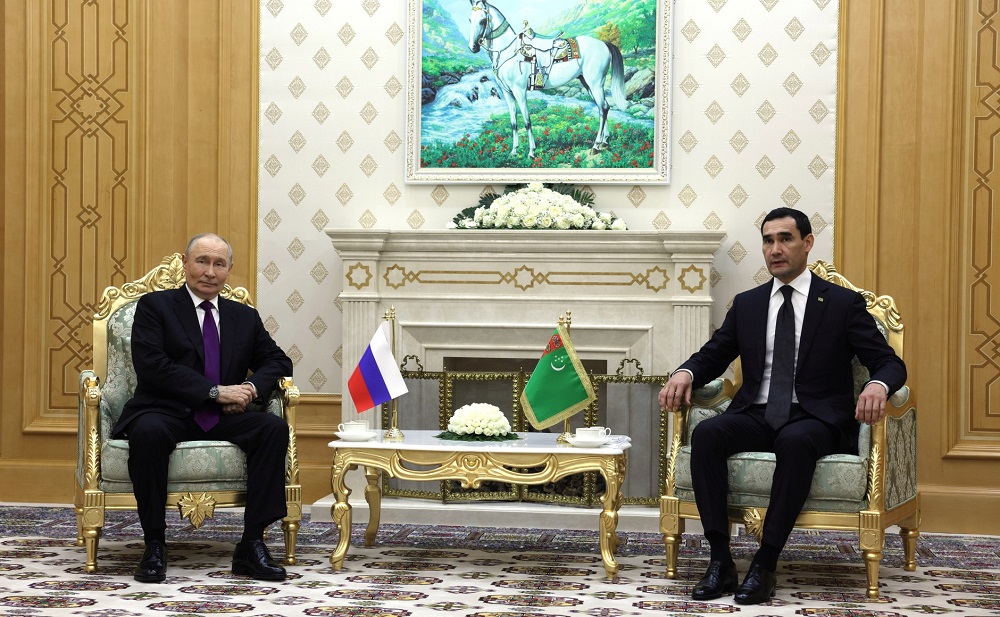
7. Serdar Berdimuhamedov — Vladimir Putin (Russia)
8 October 2026 · Turkmenistan MFA report
The presidents discussed the continued development of Turkmen-Russian relations. The published account identifies political and diplomatic interaction, trade and economic cooperation, and cultural and humanitarian ties—including education, healthcare, science and culture—as important areas of bilateral engagement. Both expressed confidence in the continued development of relations. The public summary did not identify a new bilateral agreement signed during this meeting.
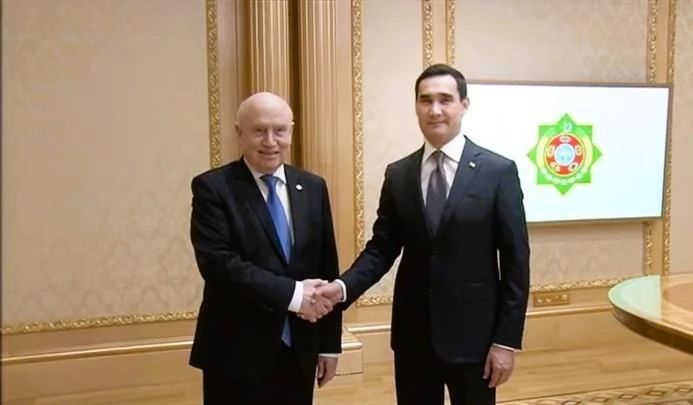
8. Serdar Berdimuhamedov — Sergey Lebedev (CIS Secretary General)
8 October 2026 · Turkmenistan MFA report
Berdimuhammedov received CIS Secretary General Sergey Lebedev, who was in Turkmenistan for the Council of Heads of State meeting. Lebedev praised Turkmenistan’s support for cooperation and dialogue within the Commonwealth and its active role in strengthening economic and humanitarian ties. He also conveyed greetings to Gurbanguly Berdimuhamedov and recognized his contribution to cooperation among CIS member states. This was an institutional leadership meeting rather than a bilateral presidential summit.
B. Other leaders’ meetings with one another
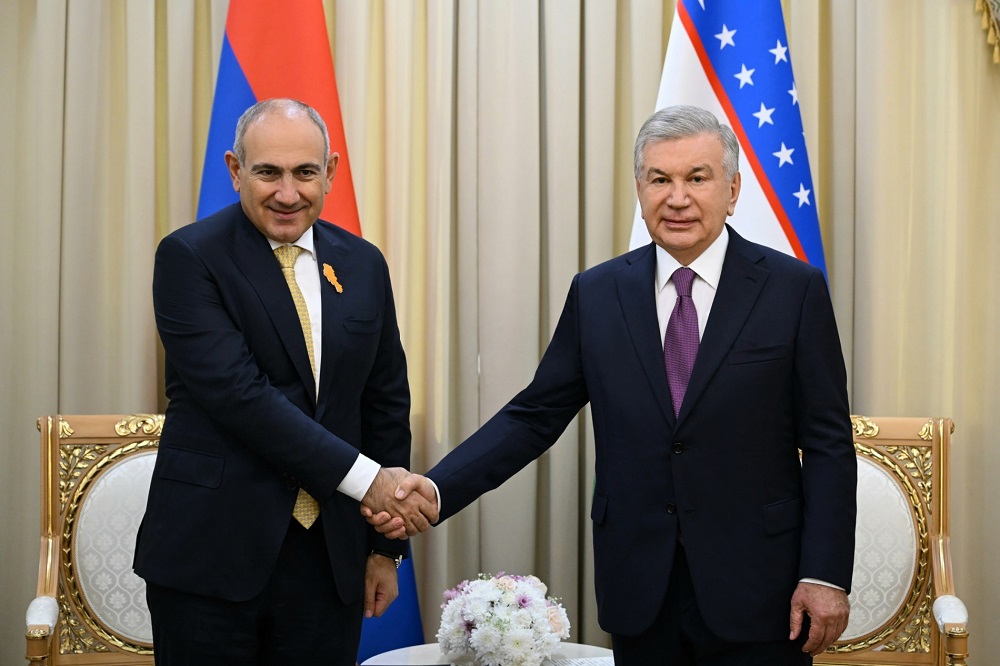
9. Shavkat Mirziyoyev — Nikol Pashinyan
8 October 2026 · Uzbekistan presidential report
The presidents of Uzbekistan and Armenia discussed expanding bilateral relations. They noted growing trade, active political contacts and the presence of 80 Armenian-capital enterprises operating in Uzbekistan, as well as direct air links between their capitals. They identified agriculture, jewellery, light industry, pharmaceuticals, chemicals and tourism as promising areas for cooperation. They also called for progress on the next meeting of their intergovernmental commission, joint business events and cooperation in multilateral organizations.
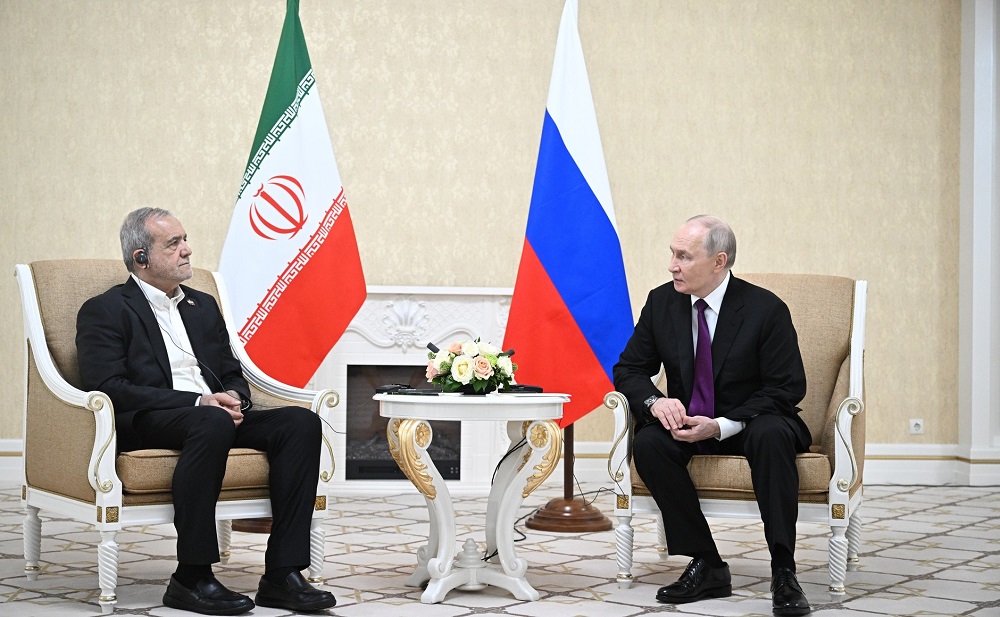
10. Vladimir Putin — Masoud Pezeshkian (Iran)
8 October 2026 · Associated Press report · EFE report
The Russian and Iranian presidents held talks on the sidelines of the Awaza events, with the regional conflict involving Iran and the United States central to their discussion. Putin said Moscow was prepared to help resolve the conflict peacefully and praised Tehran’s efforts to advance proposals for a settlement. Pezeshkian described the bilateral relationship positively, thanked Russia for its position against what he characterized as US unilateralism, and said Iran was working to advance proposals through intermediaries. This was one of the most geopolitically significant bilateral meetings reported during the gatherings.
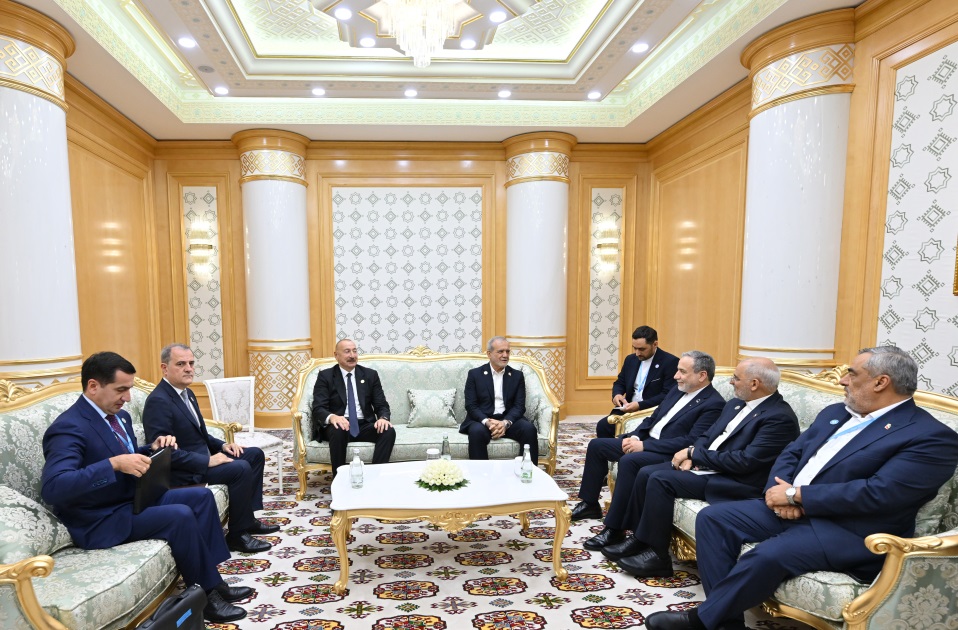
11. Ilham Aliyev — Masoud Pezeshkian (Iran)
9 October 2026 · Azerbaijan Television report · APA news agency report
The presidents reviewed previous meetings and telephone conversations, including the recent visit of an Azerbaijani delegation to Iran. Pezeshkian emphasized historical ties of friendship and kinship and thanked Azerbaijan for its position as a friendly neighbour during the events in Iran. They also discussed Iran’s participation in the CIS gathering as a non-member guest. A concrete point was progress on the Aghband–Kelaleh project, which the sides said had reached its final stage. They reaffirmed the need to implement matters discussed at their previous meeting in Bishkek and continue developing bilateral cooperation. /// nCa, 10 October 2026