


Tariq Saeedi
There is a particular kind of confidence that comes with dominance. It is the confidence of a power that has won — militarily, economically, culturally — and has begun, almost unconsciously, to regard its position as the natural order of things. Rome had it. Britain had it.
And for much of the twentieth century, the United States has had it too.
History, however, is not especially sentimental about such confidence. It keeps its own ledger, and what it records, with remarkable consistency across centuries and civilisations, is this: no superpower lasts forever in its original form. They rise, they peak, and they decline — not always dramatically, not always quickly, but with a kind of quiet inevitability that only becomes visible in retrospect.
The Pattern That Repeats
In 1987, the historian Paul Kennedy published The Rise and Fall of the Great Powers, a sweeping study of how dominant states have managed — and mismanaged — the relationship between wealth and military power over five centuries.
His central argument was elegant and unsettling: great powers tend to decline when their strategic commitments outgrow their economic foundations. They overextend. They spend too much defending too much. And as they strain under that weight, rivals who have been quietly growing begin to close the gap.
Kennedy called this “imperial overstretch,” and the term has lost none of its relevance since he coined it.
What makes his thesis compelling is not any single example but the sheer repetition of the pattern across wildly different civilisations, technologies, and eras. The mechanisms vary. The timelines differ. But the underlying logic — that dominance is expensive, and that the costs eventually exceed the returns — appears again and again.
Rome: The Long Unravelling
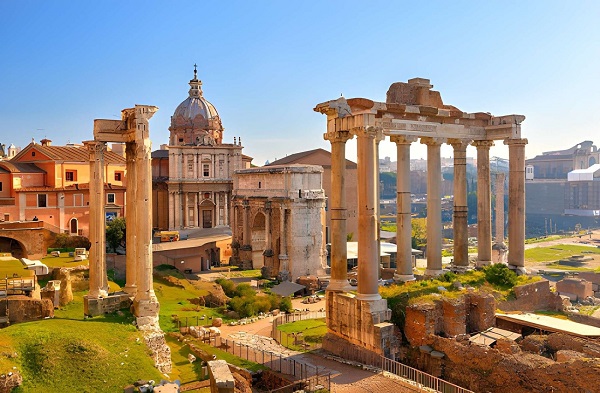
The Roman Empire is perhaps the most studied case of superpower decline in history, and it is instructive precisely because it was so slow. Rome did not fall in a day, or a decade. At its height, it was an administrative, military, and cultural achievement without parallel — a state that projected power from Scotland to Mesopotamia, that built roads still in use today, and that gave the Western world much of its legal and linguistic inheritance.
But Rome expanded until expansion itself became a burden.
Its borders grew too long to defend efficiently. Its armies, once composed of citizens with a stake in the Republic, became increasingly mercenary — loyal to their generals rather than to Rome itself.
The political centre grew unstable; in the third century alone, the empire cycled through dozens of emperors, many of whom died violently. Tax revenues could not keep pace with military costs. Inflation eroded savings and trade.
The Western Empire collapsed in 476 AD, overrun by peoples it had long kept at bay. The Eastern Empire — Byzantium — survived for another thousand years, a reminder that decline is not always total and that institutional adaptation can buy considerable time. But the Rome that had once bestridden the ancient world was gone.
The Ottomans: Slow Suffocation
The Ottoman Empire at its sixteenth-century peak was one of the most formidable states on earth — a vast, multi-ethnic, administratively sophisticated power that controlled the eastern Mediterranean, the Middle East, and much of North Africa. It was, for a time, the superpower that Europe feared.
Its decline was gradual and cumulative. Military reverses began to mount. The empire’s economy, reliant on tribute and conquest, struggled to adapt to a world where European powers were industrialising.
Internal administration grew increasingly corrupt and inefficient. Nationalist movements among its diverse subjects steadily eroded its territorial integrity. By the nineteenth century, it was still present, still technically sovereign, but hollowed out, propped up partly by the rivalries of the powers that surrounded it. It finally dissolved in the aftermath of the First World War, partitioned and transformed beyond recognition.
The Ottoman story is a lesson in how dominance can persist in name long after it has ebbed in substance.
The British Empire: The Closest Mirror
Of all historical precedents, the British Empire is arguably the most instructive parallel to the United States — and not merely because both are English-speaking maritime powers. Britain, at its Victorian peak, did what no empire before it had quite managed: it shaped the rules of the international system itself. Its navy kept the sea lanes open. Its banks financed global trade. Its language, law, and cultural exports spread to every continent. It was, in the truest sense, a hegemon.
The unravelling came faster than almost anyone expected.
Two world wars left Britain economically exhausted and morally complicated by the gap between its imperial ideals and its imperial realities. The debt was crippling.
The United States, once a British colony and then a junior partner, had become the world’s dominant economic power. Nationalist movements across Asia and Africa demanded — and won — independence. The Suez Crisis of 1956 was the moment of clarification: Britain attempted to act like an imperial power and was firmly reminded by Washington that those days were over.
What followed was not oblivion but transformation. Britain retrenched. It joined alliances. It leveraged soft power — culture, language, diplomacy, the “special relationship” with the US — to maintain influence well beyond what its relative economic weight might suggest. It remained, and remains, a significant power. But the empire was gone, and with it the unquestioned primacy.
The Soviet Union: Collapse from Within
The Soviet case offers a different kind of warning. Here was a superpower brought down not by a rival on the battlefield but by its own internal contradictions — economic stagnation, a sclerotic political system, an ideology that had lost the faith of its own population, and the crushing cost of military competition with a wealthier adversary.
The USSR matched the United States missile for missile, tank for tank, through much of the Cold War. It projected power into Africa, Asia, and Latin America. It put the first satellite and the first human into space. By any measure of raw military capability, it was a superpower to its final day. And yet it dissolved in 1991 with a speed that stunned the world, including many of its own citizens.
Kennedy had seen the risk. An economy that devoted so disproportionate a share of its output to military spending, while failing to deliver prosperity to its people or to innovate in civilian technology, was building on sand. When the ideological legitimacy finally cracked — worn away by Solidarity in Poland, by glasnost, by the Afghan quagmire — there was nothing structural left to hold the edifice up.
America: Pressures Without Precedent, Pressures With Precedent
To apply these lessons to the United States is not to predict its collapse, nor to take any satisfaction in the difficulties it faces. It is simply to observe what the historical record makes difficult to ignore: that the pressures now acting on American primacy are not without precedent, and that they warrant sober attention.
The United States emerged from the Cold War as the world’s sole superpower — a genuinely unusual moment in modern history. Its economy was dominant, its military unmatched, its cultural reach extraordinary.
The 1990s were the unipolar decade. But the decades since have introduced complications that Kennedy, writing in 1987, might have recognised.
The fiscal arithmetic is challenging.
The United States maintains hundreds of military bases across the globe and has spent trillions of dollars on the post-September 11 wars in Afghanistan and Iraq — wars that achieved far less than their architects promised.
Federal debt has grown to levels that would have seemed extraordinary a generation ago. The cost of global dominance, in short, has been very high.
Competitors have grown. China’s economic expansion over the past four decades is without modern parallel — a country that was a largely agrarian economy in 1980 is now the world’s second-largest economy and a serious military power, with ambitions in technology, space, and global influence that are anything but modest.
Russia, diminished from its Soviet peak, has nonetheless reasserted itself with enough force to destabilise European security.
Internally, the United States is more divided than at almost any point since the Civil War. Trust in institutions — government, media, the judiciary — has fallen sharply. Political polarisation has made coherent long-term policy difficult to sustain. These are precisely the kinds of internal dynamics that historians identify in the later stages of great powers: not sudden crises but a slow erosion of the social and institutional cohesion that made national strength possible in the first place.
What History Does Not Say
It is worth being precise about what this historical pattern does and does not imply.
It does not imply that the United States is about to collapse, or that its decline is steep and irreversible. The United States remains, by most measures, the world’s leading economy, the dominant military power, and the hub of global technological innovation. It has remarkable institutional resilience and a track record of renewal that has surprised pessimists before — after Sputnik, after Vietnam, after the 1970s stagflation.
Perceptions of American decline have a long history of proving premature.
It does not imply that any rising power will necessarily fill a vacuum. History does not guarantee smooth transitions. Multipolarity can be messy, unstable, and dangerous, as the early twentieth century demonstrated at terrible cost.
And it does not imply a predetermined fate. Kennedy was careful about this. Choices matter. Fiscal discipline, strategic prioritisation, investment in education and innovation, the management of alliances, and the renewal of domestic cohesion — all of these can alter the trajectory.
Rome’s eastern half survived for a thousand years after the west fell. Britain, stripped of empire, remained a consequential power. Decline is not destiny.
The Lesson History Keeps Teaching
What the record does suggest — quietly, persistently, across the ruins of a dozen empires — is that dominance is a condition to be managed rather than assumed. Powers that treated their position as permanent, that confused present strength with permanent entitlement, that allowed their commitments to outrun their capacity and their internal divisions to fester — those powers did not tend to fare well.
The most likely trajectory for the United States is not collapse but transition: a gradual shift toward a more multipolar world in which America remains a leading power, perhaps the leading power, but no longer the unchallenged one. That is, broadly, the British experience — painful in the moment, more manageable in the long run than the alternatives.
How that transition unfolds — whether it is graceful or turbulent, managed or reactive — will depend on decisions not yet made and on a capacity for honest self-assessment that great powers historically find difficult precisely when they need it most.
History does not repeat itself exactly. But it rhymes, with a consistency that is hard to dismiss. /// nCa, 11 May 2026