


nCa Report
The modern economy runs on supply chains. Every product we use — from food and medicines to smartphones and automobiles — travels through a long network of producers, transporters, warehouses, ports, customs systems, wholesalers, retailers, and finally consumers.
For decades, supply chains were managed through paperwork, telephone calls, spreadsheets, and fragmented coordination. Today, however, the system is undergoing a profound transformation. Digital technologies, automation, and artificial intelligence (AI) are changing how goods move across the world.
Central Asia, because of its strategic position between Asia, Europe, the Middle East, and South Asia, is increasingly becoming part of this transformation.
What are supply chain technologies?
In simple terms, supply chain technologies are the digital tools and systems used to organize, monitor, and improve the movement of goods and services from one place to another.
Imagine a shipment of textiles leaving Uzbekistan for Türkiye, or electronic equipment moving from China through Kazakhstan toward Europe. In the past, many parts of this journey would be managed manually. Delays, paperwork errors, lack of communication, and poor tracking were common problems.
Today, technology allows companies and governments to monitor cargo almost in real time.
Supply chain technologies include a wide range of systems:
- GPS tracking systems for trucks, trains, and ships
- Digital warehouse management systems
- Barcode and RFID identification systems
- Smart customs and electronic documentation
- Cloud-based logistics platforms
- Automated inventory systems
- Data analytics tools
- Predictive maintenance systems
- Blockchain-based cargo traceability systems
- Artificial intelligence applications
These technologies allow companies to know where their cargo is, how fast it is moving, whether delays are developing, how much inventory is available, and what problems may emerge in advance.
The objective is not only speed. Modern supply chain technologies aim to reduce costs, improve reliability, minimize waste, increase transparency, and strengthen resilience against disruptions.
The importance of supply chain technologies became especially visible during the Covid-19 pandemic, when global transportation systems faced unprecedented pressure. Since then, governments and businesses worldwide have accelerated investments in logistics modernization and digital supply networks.
The growing role of AI in supply chains
Artificial intelligence is rapidly becoming one of the most important components of modern supply chain management.
Supply chains generate enormous amounts of data every minute. There are shipping schedules, fuel prices, weather conditions, border procedures, inventory levels, market demand patterns, transportation costs, and supplier performance indicators. Human managers alone cannot process all this information quickly enough, especially when disruptions occur.
This is where AI becomes useful.
AI systems can analyze large volumes of information, identify patterns, predict possible problems, and recommend solutions in real time.
One of the most important applications of AI is demand forecasting. Retailers and manufacturers use AI systems to estimate future demand based on previous sales patterns, seasonal changes, economic indicators, and consumer behavior. Better forecasting reduces both shortages and unnecessary overstocking.
Another important area is route optimization. AI can calculate the most efficient transport routes by considering traffic conditions, weather developments, border congestion, fuel prices, and delivery deadlines simultaneously. This helps reduce transportation time and operating costs.
AI is also improving warehouse management. Intelligent systems can determine where goods should be stored, how inventory should be distributed, and when supplies need replenishment.
Predictive maintenance is another growing field. AI systems monitor vehicles, machinery, railway systems, industrial equipment, and warehouse operations to identify possible technical failures before they occur. This reduces costly breakdowns and operational interruptions.
The role of AI becomes even more significant during disruptions. Whether caused by political instability, sanctions, natural disasters, pandemics, or transport bottlenecks, AI systems can quickly identify alternative routes, suppliers, and logistics solutions.
Increasingly, supply chains are evolving into what experts call “smart supply chains” — interconnected digital ecosystems where information flows continuously across borders, transport systems, customs agencies, logistics companies, and businesses.
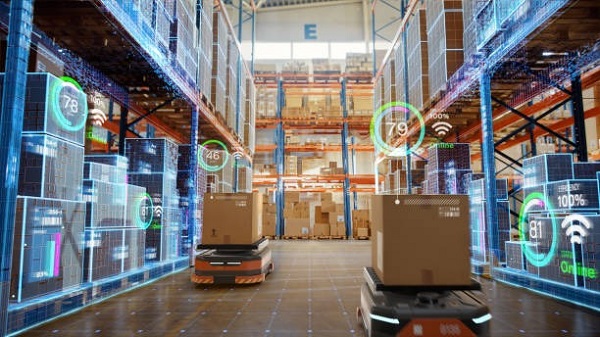
In some advanced logistics hubs around the world, AI-driven automation already controls warehouse robots, cargo sorting systems, autonomous vehicles, and predictive scheduling systems.
Although fully autonomous supply chains are still a future concept, the direction is clear: logistics is becoming more digital, more connected, and increasingly intelligent.
Central Asia’s supply chains are becoming more sophisticated
Central Asia is now experiencing its own logistics transformation.
For many years, the region’s geographical importance was obvious, but its transport and logistics systems were often constrained by infrastructure gaps, bureaucratic procedures, and fragmented regional coordination.
That situation is gradually changing.
The rapid expansion of Eurasian trade corridors, growing regional connectivity projects, and increasing transit flows between China, Europe, Russia, the Middle East, and South Asia are pushing Central Asian countries to modernize their supply chain systems.
Kazakhstan currently leads the region in digital logistics development.
The country has invested heavily in transport infrastructure, digital governance, industrial automation, and logistics modernization. Smart cargo management systems, digital freight platforms, route optimization technologies, and AI-assisted industrial operations are becoming increasingly common.
Kazakhstan’s mining sector has become one of the region’s early adopters of AI-driven logistics technologies. Autonomous heavy vehicles, predictive maintenance systems, and private industrial 5G networks are already being used in some large operations.
The country is also encouraging the development of local technology platforms focused on logistics optimization and digital freight management.
Uzbekistan is also moving rapidly in this direction.
The country has been investing heavily in customs modernization, digital trade systems, e-commerce logistics, and broader digital infrastructure. Government initiatives aimed at attracting technology investment and developing AI capabilities are gradually creating the foundation for more advanced supply chain management systems.
The development of regional transport corridors is also encouraging digitalization. Modern logistics corridors require synchronized customs systems, digital cargo documentation, real-time cargo tracking, and integrated transport management systems.
As trade volumes increase, the traditional methods of managing cargo flows become increasingly inefficient.
Elsewhere in Central Asia, progress is also visible, although at different speeds.
Kyrgyzstan and Tajikistan are gradually expanding digital customs systems, electronic trade documentation, and logistics modernization projects, often with support from international financial institutions and development agencies.
Turkmenistan, while moving more cautiously, has also shown growing interest in transport digitalization, especially in connection with regional transit corridors, port infrastructure, and multimodal transport development.
Across the region, the concept of “Logistics 4.0” is beginning to gain attention. This refers to the integration of digital technologies, AI, automation, cloud systems, and real-time analytics into logistics operations.
Several challenges remain.
Many remote areas still lack advanced digital infrastructure. Regional logistics systems are not yet fully integrated. There is also a shortage of AI specialists, limited private-sector investment in advanced technologies, and continuing cybersecurity concerns.
However, the overall direction is unmistakable.
Central Asia is no longer only a geographical bridge between major economic regions. It is increasingly becoming a digitally connected transit space where logistics modernization, intelligent transport systems, and AI-driven supply chain management are beginning to reshape the movement of trade across Eurasia.
As regional connectivity expands further, the sophistication of supply chain management in Central Asia is likely to grow rapidly over the coming decade. /// nCa, 11 May 2026