


Tariq Saeedi
I have long been struck by the quiet strength of Central Asia—a region that, in just over three decades, has transformed itself from the fragmented aftermath of an empire into a model of regional harmony.
As someone who has watched its evolution closely, I believe it is time to recognize Central Asia not merely as five independent nations, but as a sovereign region worthy of a permanent voice on the United Nations Security Council. This is not about upending the post-1945 order, but about adapting it to a world that has profoundly changed.
The case rests on the region’s demonstrated sovereignty, its commitment to peace and neutrality, its geographic and economic centrality, and its proven ability to foster stability in a turbulent era.
Sovereignty, at its core, is the supreme authority of a people to govern themselves without undue external meddling. It encompasses internal control— the ability to legislate and manage affairs—and external recognition by the community of nations. In Central Asia, this sovereignty is both de jure, rooted in the hard-won independence of 1991, and de facto, evident in the everyday exercise of power by its governments and citizens.
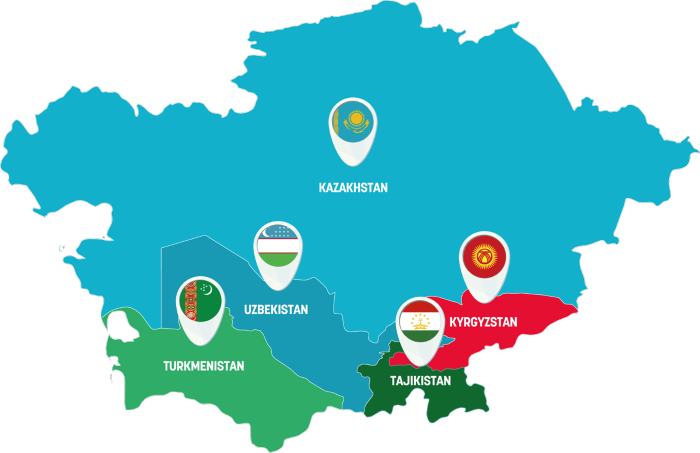
Yet what sets the region apart is how its five states—Kazakhstan, Kyrgyzstan, Tajikistan, Turkmenistan, and Uzbekistan—have layered an additional shell of collective sovereignty around their individual ones. They have not ceded authority to a supranational body, as in some more integrated unions elsewhere. Instead, through consultative summits, shared security frameworks, and joint initiatives, they have created a regional identity that amplifies their voices without diminishing their autonomy.
This approach to partnership is guided by principles of equality, mutual respect, and proportionality.
Ties with global powers—whether through the C5+1 dialogues with the United States, the European Union, or China—are calibrated to shared interests, never at the expense of others. It is a balanced multilateralism that accepts responsibilities as a region, much like a sovereign state would, while upholding the primacy of national sovereignty. In my view, this model offers a blueprint for a multipolar world, where regions collaborate without the zero-sum games of the past.
The region’s de facto neutrality further underscores its maturity. Central Asia has chosen to side not with blocs, but with principles—with truth, as it sees it, in international disputes. This stance is not isolationism but a deliberate policy of engagement on its own terms, fostering trust amid great-power rivalries. It echoes the wisdom of non-alignment, updated for the 21st century.
Consider the historical context. Thirty-five years since the Soviet Union’s dissolution may seem brief in the sweep of history, but it has been transformative. The arbitrary borders drawn under Stalin, which once pitted neighbors against each other like jagged edges, have given way to a remarkable cohesion. Brotherly coexistence has replaced suspicion, turning potential flashpoints into opportunities for dialogue.
Water-sharing agreements, cross-border trade, and cultural exchanges now bind the region more tightly than ever. This is no small feat in a neighborhood bordered by major powers and volatile frontiers.
At the heart of the argument for a permanent UNSC seat is the simple truth that Central Asia already functions as a sovereign region in every meaningful way. It exhibits the hallmarks of state-like authority: collective decision-making on security, economic coordination, and even cultural promotion. A permanent seat would formalize this reality, granting the region a dedicated platform to contribute to global peace and security.
And let us be clear: such a seat should not be reserved for the largest or most militarized powers alone. The world of 1945, scarred by world war and dominated by a handful of victors, bears little resemblance to today. In an era of climate crises, technological disruption, and shifting alliances, representation must reflect new realities—demographics, geography, and the capacity for constructive diplomacy.
No region better exemplifies this than Central Asia when it comes to peace.
It is the only part of the world where neighboring states have not waged war against one another in the post-independence era. Instead, it has pioneered preventive diplomacy through the United Nations Regional Centre for Preventive Diplomacy for Central Asia (UNRCCA), established in 2007 in Ashgabat—the first of its kind globally. This center has mediated border disputes, promoted confidence-building, and engaged youth and women in peace processes, yielding tangible successes in averting conflict.
A region that maintains such internal tranquility is uniquely positioned to help resolve conflicts elsewhere, from the steppes to the Sahel.
Geography, too, demands recognition. — Central Asia sits at the crossroads of the world’s largest contiguous landmass, the Eurasian heartland. As the British geographer Halford Mackinder observed over a century ago, control of this pivot shapes global destiny.
Today, that centrality is more evident than ever. The region is the hub of emerging trade corridors, like the Middle Corridor, which has surged in importance as an alternative route linking China to Europe amid disruptions elsewhere.
It is a vital link in energy and mineral supply chains, supplying the world with uranium, rare earths, and hydrocarbons essential for the green transition.
Formats like C5+1—engaging the United States, China, the EU, and others—underscore how the international community already views Central Asia as a unified actor. A UNSC seat would simply extend this acknowledgment into the chamber where decisions on peace and war are made.
Beyond these foundations, there are compelling reasons to elevate Central Asia’s role. The region boasts a youthful population—over half under 30—poised to drive innovation and economic growth. Its contributions to UN peacekeeping, particularly from Kazakhstan, which has deployed troops to missions in Lebanon, Mali, and beyond, demonstrate a commitment to global stability.
The region grapples with shared challenges that mirror global ones—water scarcity, climate vulnerability, and the need for sustainable development. By addressing these collaboratively, Central Asia offers lessons in resilience. Its cultural diversity, blending Turkic, Persian, and Slavic influences, promotes dialogue among civilizations, a counter to polarization.
Granting Central Asia a permanent seat would not dilute the Council’s effectiveness; it would enrich it. It would bring fresh perspectives from a region often overlooked yet indispensable. In a world weary of great-power deadlock, Central Asia’s voice—calm, principled, and forward-looking—could tip the scales toward solutions.
I am under no illusion that change comes easily. — Reforming the UNSC requires consensus among the powerful and the many. But the case is there, built on deeds, not declarations. As the region continues to consolidate—through security pacts, economic roadmaps, and a shared vision to 2040—the time is ripe.
Central Asia has earned its place at the table. The Security Council, and the world it serves, would be stronger for it. /// nCa, 3 March 2026