


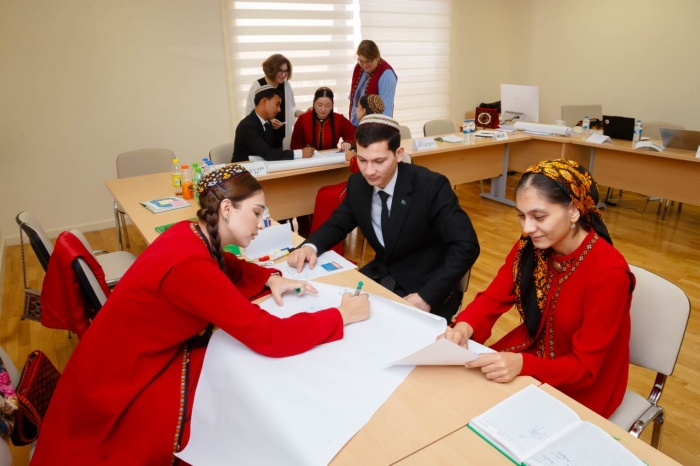
ASHGABAT, Turkmenistan, 20 October 2026 — Turkmenistan is strengthening its Bachelor of Social Work programme through a joint curriculum review that aligns social work education with national workforce needs, international standards and the country’s ongoing social service reforms, with technical support from UNICEF.
The Bachelor of Social Work programme was launched in 2023 at two of Turkmenistan’s oldest higher education institutions—Magtymguly Turkmen State University in Ashgabat, and Seyitnazar Seydi Turkmen State Pedagogical Institute in Turkmenabat. Since then, 125 students have enrolled, and the first 35 students are expected to graduate in the 2026–2027 academic year.
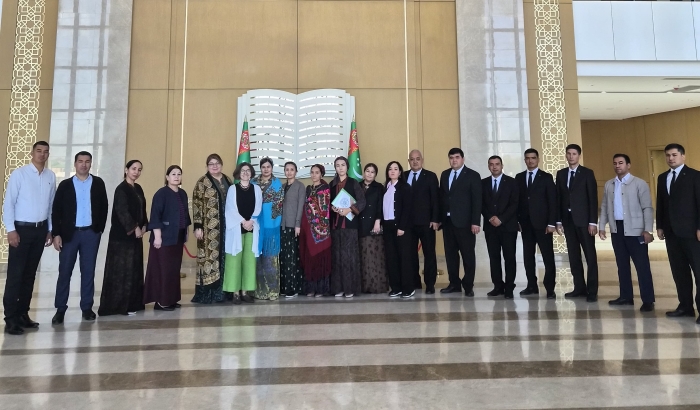
The curriculum revision formed part of an ongoing collaboration throughout 2026. Beginning in March, faculty from both institutions, representatives of the Ministry and social work practitioners participated in UNICEF-supported online consultations. These initially focused on developing a competency-based field practice programme and syllabi for students at different stages of study. From May, the partners advanced the joint revision of the four-year Bachelor curriculum and competency framework, while also strengthening faculty capacity in social work teaching methodology and preparing the ground for the in-person review.
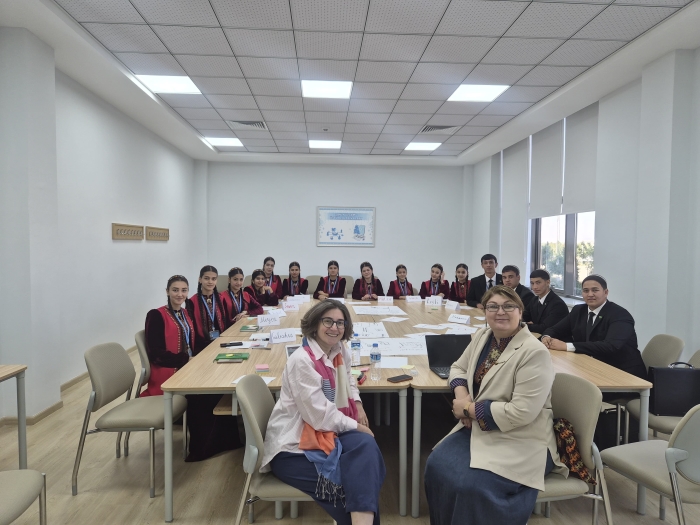
From 29 September to 10 October 2026, Dr Salome Namitcheishvili, UNICEF International Expert on Social Work Curriculum Development, worked with national partners in Turkmenabat and Ashgabat. The mission included a joint conference of the Seydi Institute and Magtymguly University on curriculum review, hosted by the Pedagogical Institute, as well as lectures for students and faculty at both higher education institutions.
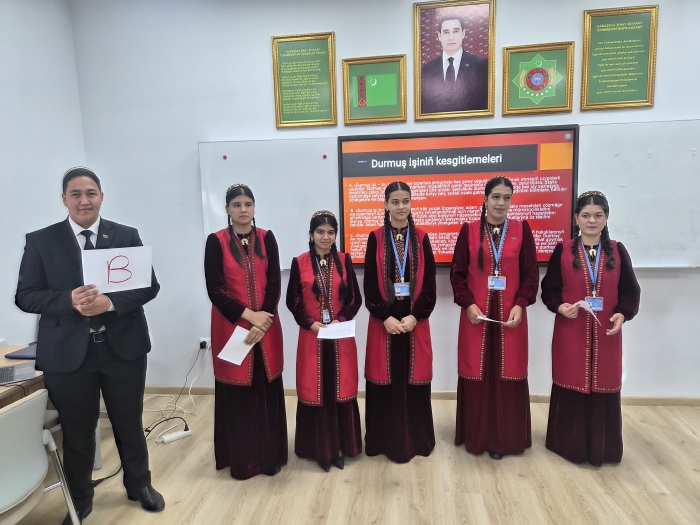
At the joint practical conference, “Developing Knowledge and Professional Education in Social Work in Turkmenistan,” participants reviewed the Bachelor programme’s competency framework, standards, core content, course sequencing and learning outcomes. Discussions drew on the evolution of social work education standards in Europe, the Americas, Asia, as well as the Central Asian region, while emphasizing national priorities, core professional knowledge and the development of Turkmen-language academic resources. A key area of discussion was ensuring coherent progression from foundational academic learning to specialized practice and strengthening competencies for work with individuals and families, groups, communities, organizations and systems. The review was guided by the global standards of the International Federation of Social Workers and the International Association of Schools of Social Work.
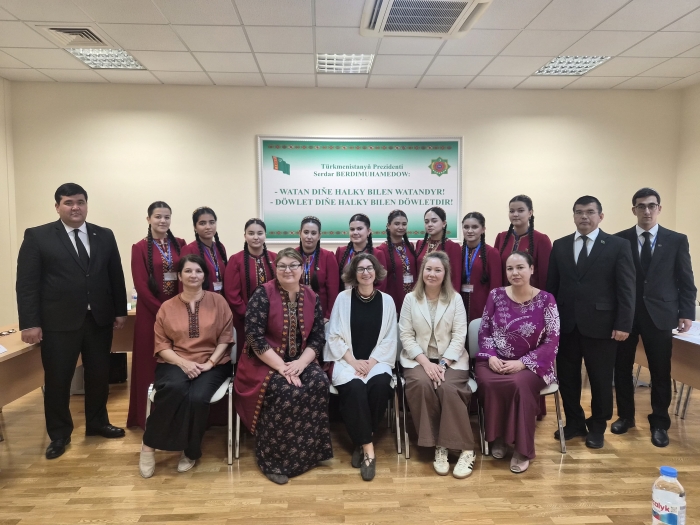
Practical learning was identified as a curriculum priority. The two institutions examined ways to strengthen field placements through closer partnerships with social service providers, structured supervision and regular practice seminars. The UNICEF expert also introduced a practice portfolio as a method to document and assess students’ developing competencies. A visit to a social service institution in Turkmenabat connected these recommendations with the realities of professional practice.
Building on the established practice of co-teaching with Turkmen faculty, the mission also supported preparations for courses that the first cohort—now in its fourth year—will take over the next two semesters. Topics included social work with children, young people and families; child protection; and work with groups, communities and organizations. Fourth-year students also received guidance on academic research, practical training and graduation theses, while first-year students attended sessions on the fundamentals of social work.
Shemshat Abdyyeva, Head of the Social Provision Department of the Ministry of Labour and Social Protection of the Population, said: “The Ministry appreciates the opportunity to participate in the curriculum review together with the faculty of the two higher education institutions. We believe that a quality education programme will help social work graduates develop the knowledge, professional values and practical skills needed to support children, families and communities and contribute to the development of Turkmenistan’s social service system”.
UNICEF will continue to support national partners in strengthening social work education and developing a qualified workforce capable of delivering quality services for children and families across Turkmenistan. ///nCa, 20 October 2026 (in cooperation with UNICEF Turkmenistan)