


Turkmenistan’s construction sector is entering a new stage as digital technologies, advanced engineering, domestic industrial capacity and human capital become increasingly integrated into urban and infrastructure development.
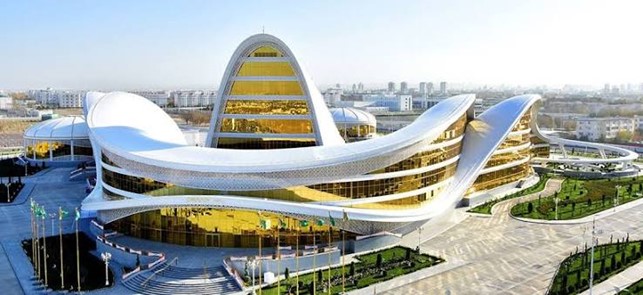
The country continues to implement major projects across housing, transport, industry and social infrastructure. More than 900,000 square metres of housing, along with new educational and social facilities, are planned for commissioning during the year.
The emerging development model extends beyond the scale of construction. Greater attention is being given to the long-term efficiency of buildings and infrastructure, including their energy performance, maintenance requirements, operational reliability and ability to adapt to changing needs.
Digital tools are becoming central to this transformation. Building information modelling (BIM), digital twins, artificial intelligence, automated control systems and intelligent monitoring technologies are increasingly shaping how projects are designed, built and operated.
These technologies allow architects, engineers, contractors and facility operators to work with integrated project data throughout the full lifecycle of an asset. For buildings, roads and industrial facilities designed to operate for decades, this can improve decision-making, reduce maintenance costs and strengthen safety and reliability.
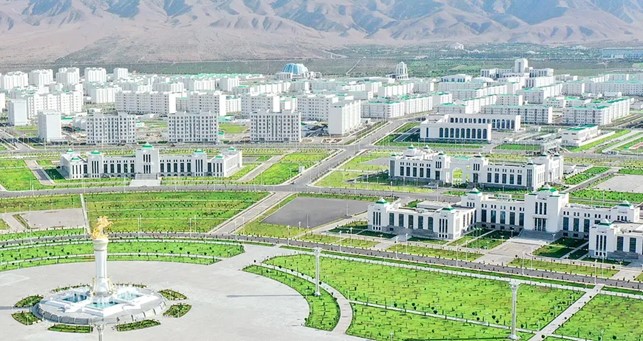
The city of Arkadag is among the most visible examples of Turkmenistan’s new approach to urban development. Designed around the concept of a smart city, it combines modern architecture with digital communications, environmentally oriented solutions and intelligent urban infrastructure.
The first phase of Arkadag included 336 facilities, among them residential buildings, schools, healthcare centres, cultural and sports institutions, and municipal infrastructure. More than 220 facilities are under construction as part of the second phase, including housing, educational institutions and industrial enterprises.
Smart transport technologies, automated traffic management, digital utility systems, electric vehicles, intelligent metering and smart-home solutions are already being introduced in the city. The experience gained in Arkadag could support the wider application of digital solutions in future urban projects across Turkmenistan.
Transport infrastructure is also undergoing significant development. In April 2026, the opening of the Mary–Turkmenabat section completed the 600-kilometre Ashgabat–Turkmenabat motorway. Implemented by domestic companies, the six-lane road strengthens connectivity between the capital and the country’s eastern regions.
The motorway also strengthens Turkmenistan’s domestic east–west connectivity and could support the country’s wider role in regional transport and transit corridors linking Central Asia with the Caspian region and markets further east and west.
Domestic private companies are playing a growing role in major construction programmes. At the same time, Turkmenistan is expanding the production of building materials from local raw materials and modernising industrial facilities.
This creates demand across a broad supply chain encompassing cement, glass, metal products, electrical equipment, engineering systems, machinery, logistics and professional services. International partnerships can further support the sector through technology transfer, workforce training and localisation of production.
The next stage will also require investment in human capital. Architects, engineers, urban planners and project managers increasingly need expertise in digital design, data analysis, intelligent infrastructure and sustainable construction.
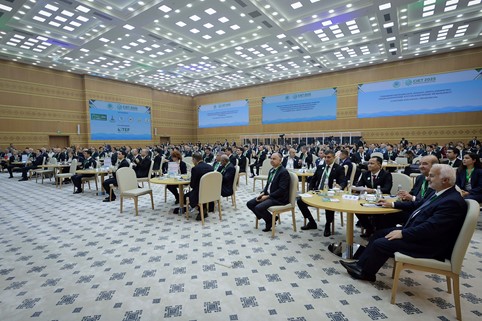
These issues will be discussed at CIET 2026 — the International Conference and Exhibition on the Development of the Construction, Industrial, Chemical and Energy Sectors of Turkmenistan — scheduled for 3–5 November 2026 in Ashgabat.
The forum will bring together government representatives, international companies, investors, financial institutions, architects, engineers, manufacturers and technology providers. Its programme will address construction, industry, infrastructure, investment, smart cities, digitalisation and workforce development.
A specialised session will focus on digital construction, smart cities and the skills required for the future, including the practical application of artificial intelligence, BIM, digital twins, automation and robotics.
Zaha Hadid Architects will be among the international architectural practices participating in CIET 2026. Director Manuela Gatto will contribute international experience in contemporary architecture, sustainable design, urban development and the delivery of complex projects.
As Turkmenistan expands its cities, transport networks and industrial infrastructure, the next phase will increasingly depend on how effectively physical construction is combined with digital technologies, advanced engineering and professional skills. ///nCa, 23 September 2026 (the material was provided by the CIET 2026 Organizers)