


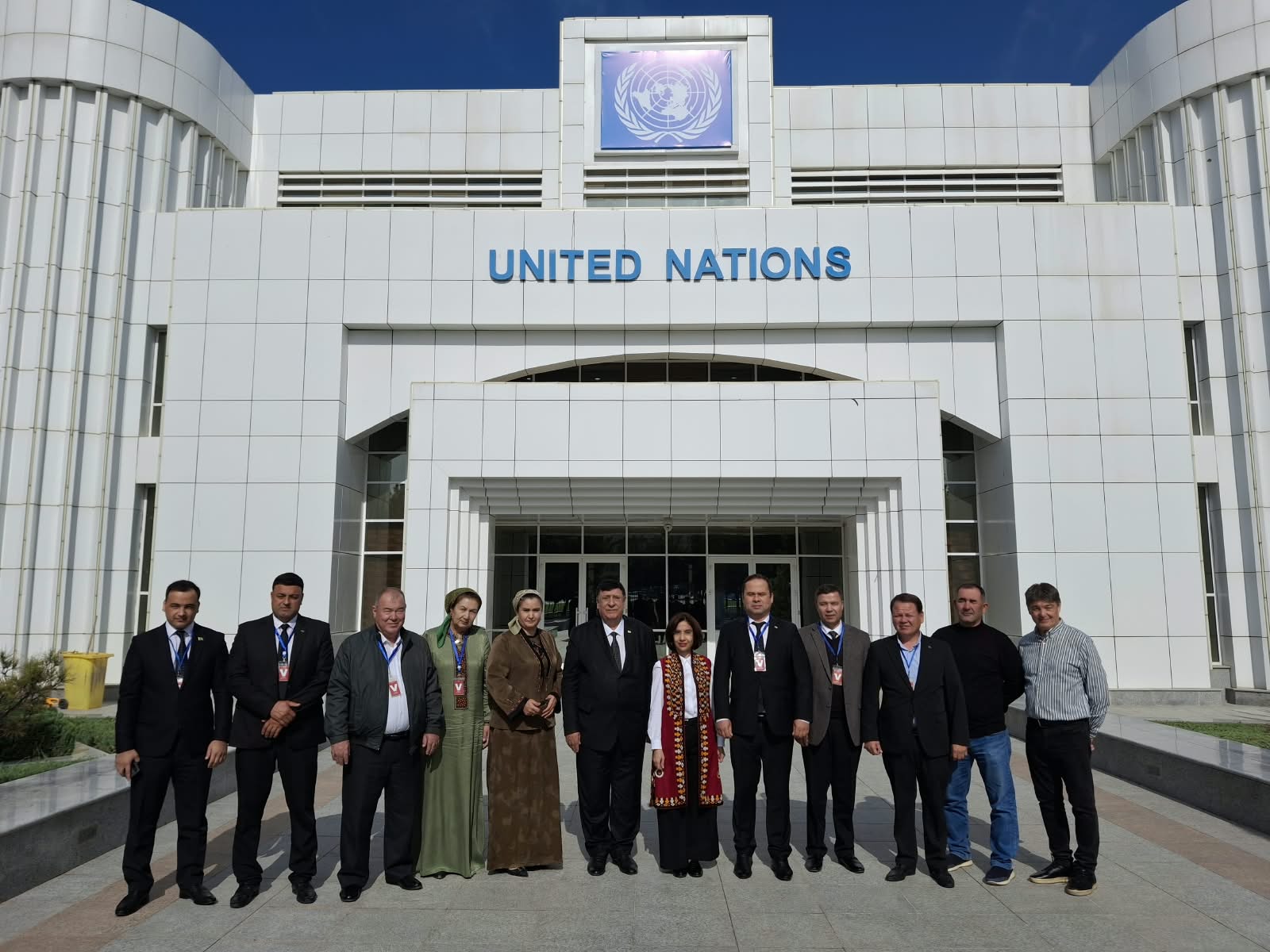
Certification Council of the joint Ministry of Education and UNICEF “Green School” Programme awards certification levels to 18 pilot schools following assessments and school visits across five velayats and the city of Ashgabat.
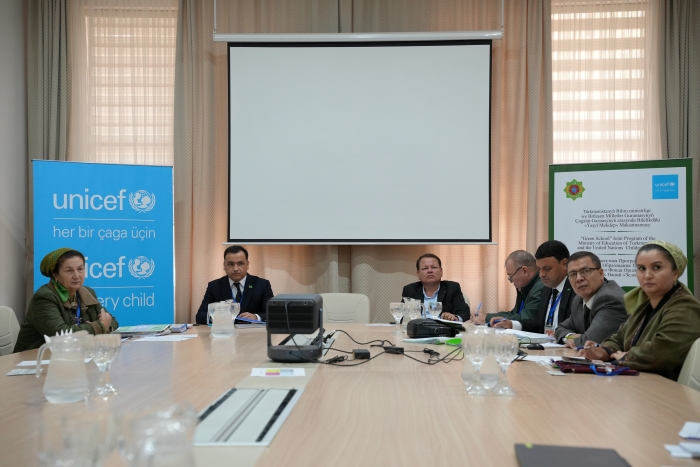
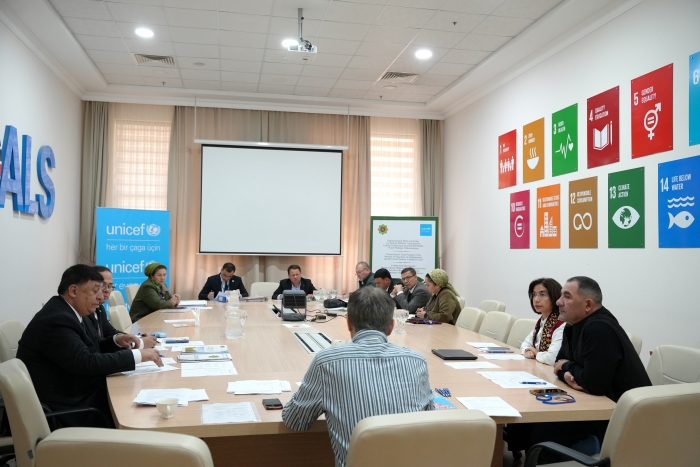
ASHGABAT, 5 November 2026 – The Certification Council of the “Green School” Programme, a joint programme of the Ministry of Education of Turkmenistan and UNICEF, met last week at the UN Building in Ashgabat and certified 18 pilot schools as the country’s first Green Schools: six at Level II and twelve at Level I. This completes the first national round of “Green School” certification.
“Every child has the right to learn in a safe, healthy and sustainable environment. These 18 schools show what that looks like in practice: students leading eco-initiatives, schools preparing for emergencies and school grounds turning green. UNICEF will continue to support the Ministry of Education in helping these schools reach the next level and in bringing the programme to more schools across Turkmenistan,” said Jalpa Ratna, UNICEF Representative in Turkmenistan.
The programme’s pilot schools began preparing when the Green School Programme was signed in 2025. Located in Ahal, Balkan, Dashoguz, Lebap and Mary velayats and in the cities of Ashgabat and Arkadag, they have since made visible changes in how they teach, manage their buildings and involve students. Eighteen of the pilot schools applied for certification in this first round. Preparations have included:
- Eco-clubs set up in the schools, giving students a leading role in environmental activities;
- Infrastructure projects carried out to make school buildings and grounds more climate-resilient;
- A Green Skills competition held among the pilot schools;
- A disaster risk reduction (DRR) competition held with the participation of all Green Schools across Turkmenistan.
The expert reports presented to the Council described how the programme looks in practice. In Lebap, “green leaders” in each class draw their classmates into environmental activities and clean-up days. In Dashoguz, students bring and plant seedlings. In Ashgabat, one school has set aside plots where guests plant trees and flowers.
“Climate change education is at the heart of a Green School. In Dashoguz, students plant and care for the trees on their school grounds themselves, and they practice what to do in an emergency. Our next step is to make ecology part of everyday learning and to bring parents in,” said Guvanch Kurbanov, specialist, Department of General Secondary Education, Dashoguz Velayat Education Department.
“This first round of certification shows that the Green School approach is taking root in schools across the country. We thank the velayat and city education departments for organizing the assessments on the ground, and UNICEF for its support. The certified schools now have a clear path to the next level,” said Sapargeldy Durdyev, National Coordinator of the Green School Programme.
All certified schools received recommendations from experts. The most common were to expand separate waste collection and recycling, involve parents and the local community more closely, and hold regular practical evacuation drills. The velayat and city education departments will monitor how the recommendations are put into practice.
About certification
Certification took place in several steps, first in the velayats and then at national level:
- Self-assessment. Each school assessed itself against five areas: management and implementation; climate-resilient infrastructure; environmental and climate education; DRR; and participation of children and the school community.
- Portfolio and application. Schools gathered evidence of their work in a portfolio and submitted it with their application to the education department of their velayat or city.
- External assessment. Specialists of the velayat and city education departments reviewed the documents, scored each school against the certification criteria and visited the schools. Council members noted that the on-site visits proved especially useful and recommended keeping them as a standard part of all future certification rounds.
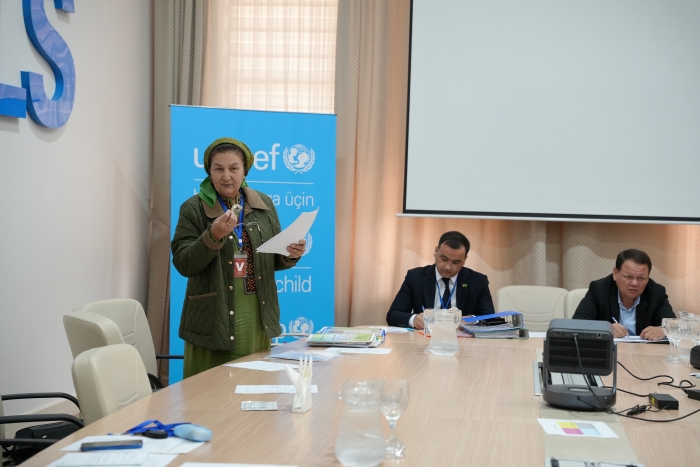
- Certification Council decision. The Council reviewed the expert reports and discussed each school. Members then voted individually on the level to be awarded. The Council brings together the Ministry of Education, the National Institute of Education, the velayat and city education departments, UNICEF and the Nature Protection Society of Turkmenistan.
Schools could be certified at one of three levels, depending on their scores out of 100. Of the 18 schools that applied:
| Level | Status awarded | Schools |
| Level I | Certified Green School | 12 |
| Level II | Green and Sustainable School | 6 |
| Level III | Sustainable Development Leader School, with the Green Flag | 0 |
The highest Level III can be considered once a school has consistently implemented all provisions of the Green School Programme for two years, so the first Sustainable Development Leader Schools are expected in two to three years. ///nCa, 7 November 2026 (in cooperation with UNICEF Turkmenistan)