


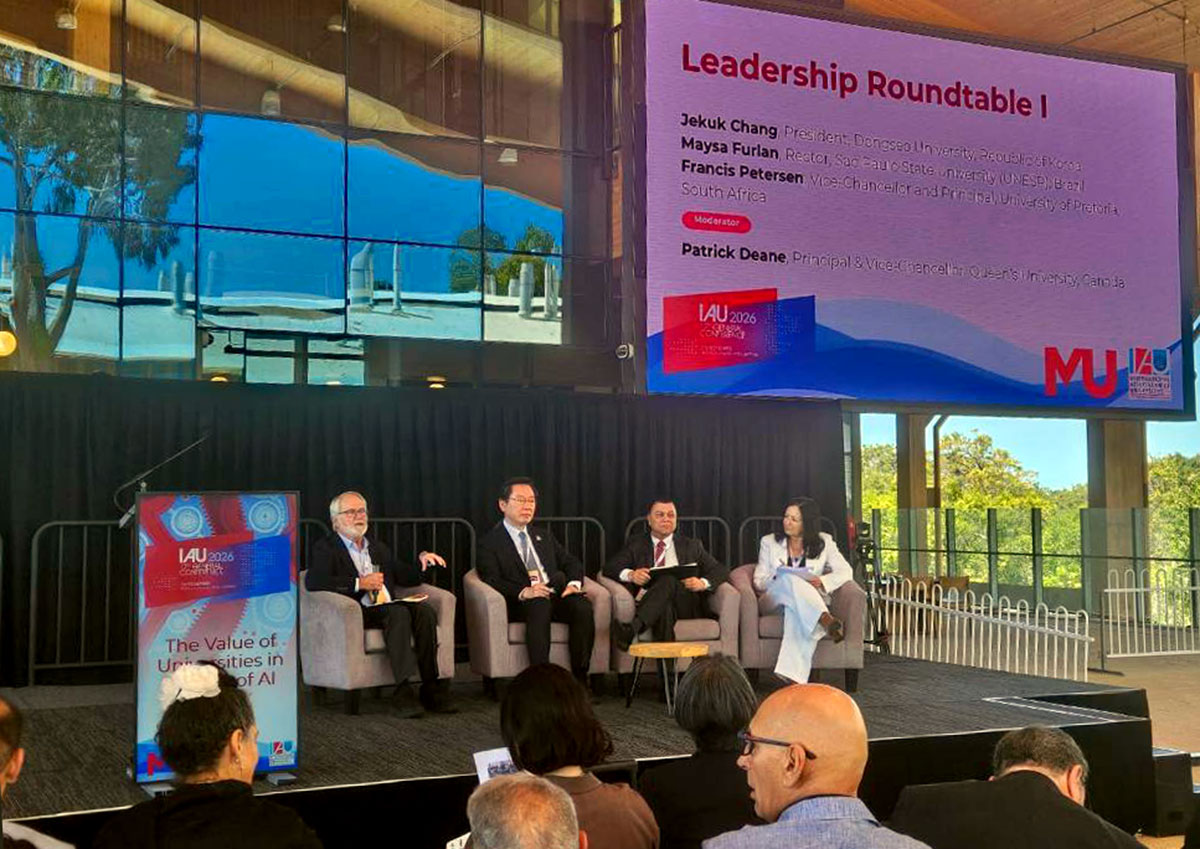
Rectors from two of Turkmenistan’s leading higher education institutions have joined around 400 university delegates from over 80 countries in Western Australia for a major international conference on the future of higher education.
The delegation—comprising leaders from the Yagshygeldi Kakayev International University of Oil and Gas and the Turkmen State Institute of Economics and Management—is participating in the 17th General Conference of the International Association of Universities (IAU).
Hosted from November 3 to 6 at Murdoch University’s Perth campus, this year’s four-day summit is centered on the theme: “The Value of Universities in the Era of Artificial Intelligence”.
The Host Perspective: Perth as a Global Academic Hub
Hosted at Murdoch University in Western Australia, the gathering marks a major moment for Perth as an international hub for global educational leadership.
The IAU General Conference, which convenes only once every four years, serves two key functions:
- Strategic Governance & Elections: Delegates gather to elect the incoming IAU President and Administrative Board members for the 2026–2030 term while setting global strategy.
- The AI Imperative: Sessions explore how artificial intelligence is transforming teaching, research, and campus infrastructure, while balancing the role of universities in advancing the UN Sustainable Development Goals.
IAU Secretary General Dr. Hilligje van ‘t Land delivered a comprehensive report outlining the association’s global initiatives and strategic milestones achieved across the 2023–2026 period.
Turkmenistan’s Strategic Focus: International Mobility & AI Integration
For the Turkmen delegation, participation in Perth forms part of a broader national effort to boost the international competitiveness of Turkmenistan’s higher education system.
With several Turkmen institutions maintaining active IAU membership, representatives used the conference’s bilateral sessions to engage directly with foreign university leaders. Key areas of focus for potential collaboration include:
- Academic Mobility: Establishing exchange pathways for both undergraduate students and academic staff.
- Joint Research Projects: Partnering on scientific and technological innovation, particularly energy, economics, and digital systems.
- AI & Digitalization: Adapting curriculum frameworks to prepare graduates for an AI-driven global economy. /// nCa, 6 November 2026