


Tariq Saeedi
The latest US midterm results make one thing clear: the standard two-party playbook is wearing thin, especially for those under 40 who have spent their entire adult lives watching the same institutional gridlock.
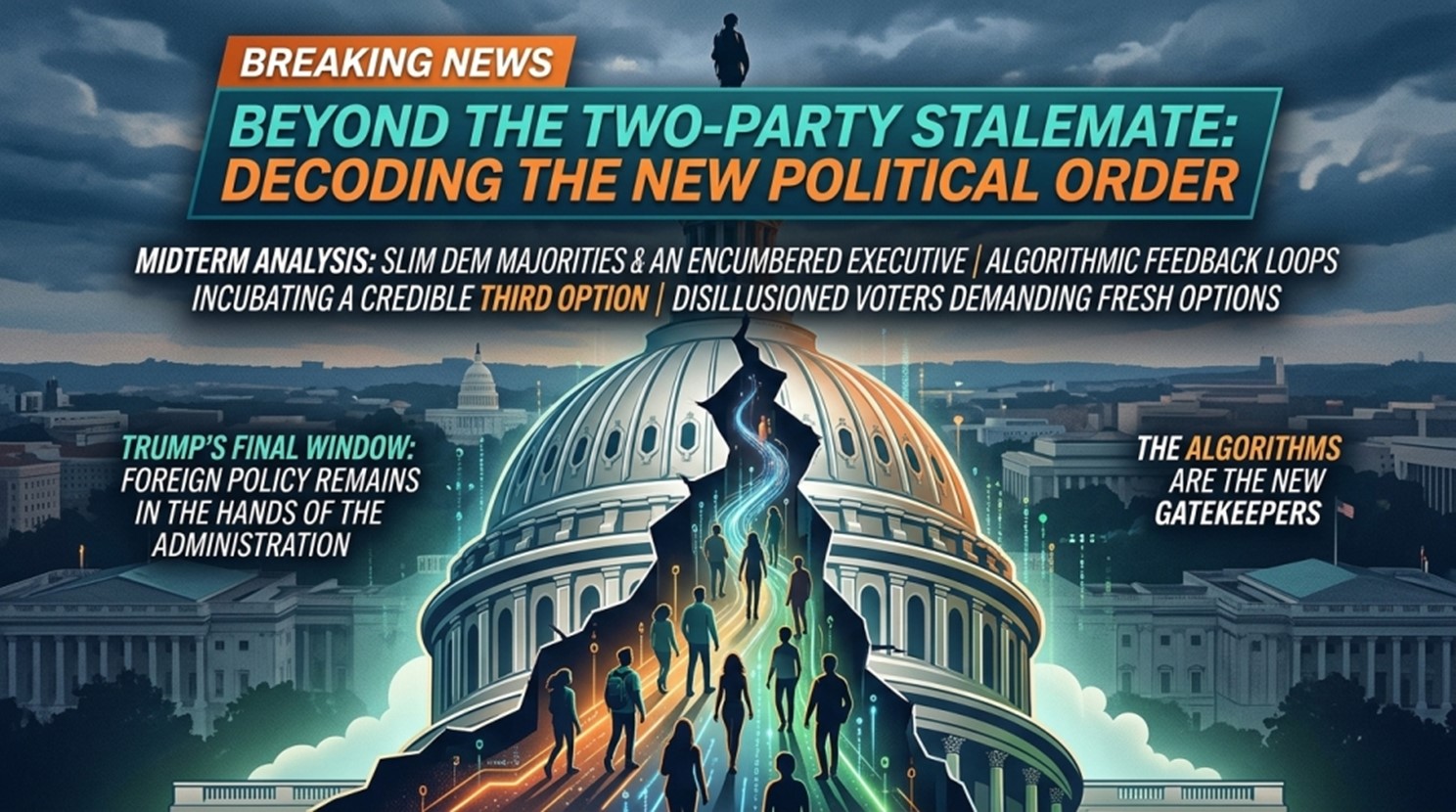
While Congress might technically shift hands with slim margins, the real story isn’t about who holds committee gavels or how constrained the Trump administration will be on foreign policy over its remaining window.
The true shift is happening in the minds of voters who are visibly exhausted by business as usual. The surprising wins across diverse constituencies weren’t accidental—they were a quiet vote of no confidence in the establishment, signaling a deep, collective hunger for something genuinely different.
What is driving this change isn’t traditional party machinery or massive war chests of political capital.
The game has moved entirely to the information ecosystem, but not in the way old-school political analysts think. It’s no longer just about general social media platforms where public debates get noisy and diluted. The real engine of modern voter behavior is the algorithmic feedback loop.
These hyper-tailored content channels don’t just reflect what people think; they curate hyper-specific narratives that match individual frustrations, bypassing mainstream media gatekeepers entirely. Big money and entrenched power no longer hold a monopoly on public opinion when an algorithm can build consensus around new ideas organically, overnight, directly on a user’s screen.
This algorithmic landscape is becoming the incubator for a viable third political option.
The midterm outcomes showed us that voters—particularly younger generations who digest the world through decentralized digital feeds—are already convinced that a third choice is necessary. The appetite is there, and the disillusionment with the dual legacy options is real.
The only piece missing right now is the emergence of a credible third-party alternative and the seamless flow of smartly packaged information to unify voters around it. Once a fresh movement learns to speak fluently through these customized digital channels, it won’t need the permission of old-guard power brokers to mobilize millions and reshape American politics from the ground up. /// nCa, 7 November 2026