


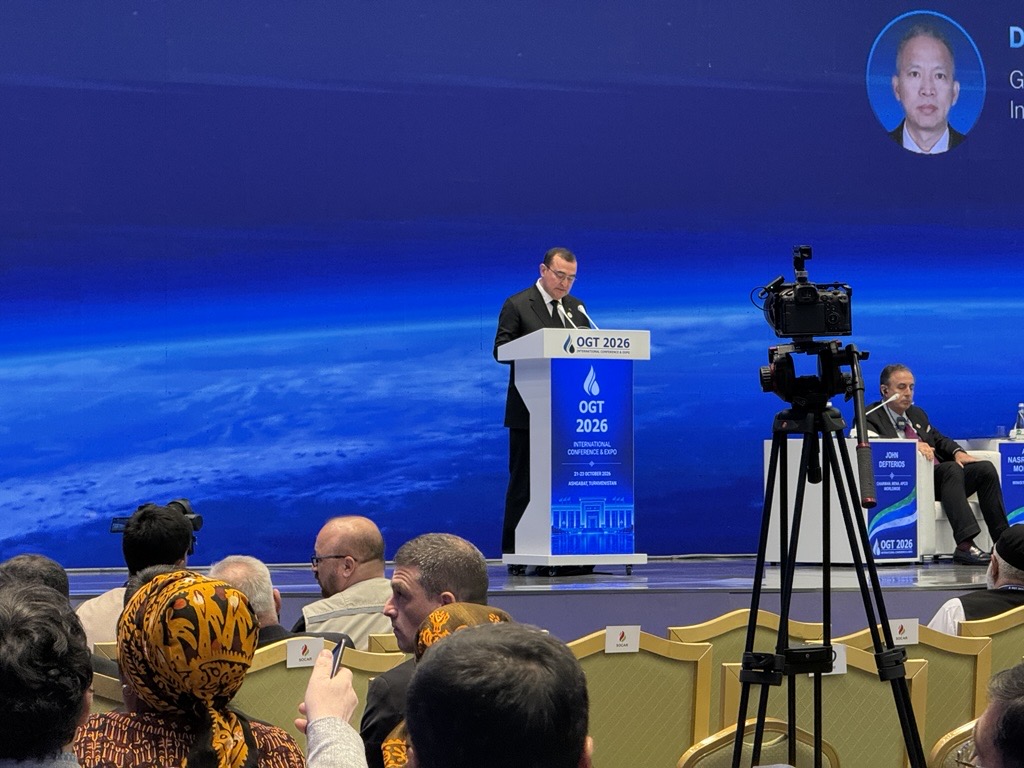
The 31st International Conference and Exhibition “Oil and Gas of Turkmenistan – OGT 2026” in Ashgabat hosted a plenary session focused on the future of global energy, projects and technologies. The keynote address was delivered by Maksat Babayev, State Minister of Turkmenistan and Chairman of the State Concern Turkmengas. He outlined the key priorities for developing the country’s fuel and energy sector under the energy policy pursued by President Serdar Berdimuhamedov.
A Reliable Supplier in an Era of Global Change
Opening his address, the head of Turkmengas noted that the global energy sector is undergoing a far-reaching transformation. Industrialisation, population growth and the rapid expansion of the digital economy and artificial intelligence are placing greater demands on the stability of energy supplies. As market participants seek to balance cost, environmental sustainability and supply reliability, Turkmenistan, with its vast natural gas reserves, positions itself as a responsible and predictable energy supplier.
The sector’s long-term priorities are set out in Turkmenistan’s Oil and Gas Industry Development Programme through 2030. The programme covers not only increased production but also the modernisation of infrastructure, improved environmental performance and expanded international cooperation.
Galkynysh: The Foundation of a Long-Term Strategy
The giant Galkynysh gas field remains the cornerstone of Turkmenistan’s resource base. According to an independent assessment by auditing firm Gaffney, Cline & Associates, its reserves, together with those of the Garakol and Yashlar structures, amount to 27.4 trillion cubic metres of natural gas.
Key milestones in the field’s development include the launch of its first phase in 2013, with an annual capacity of 30 billion cubic metres of marketable gas, and the start of its fourth development phase. A ceremony marking the launch of large-scale operations took place on 17 April this year in Mary Region, attended by Gurbanguly Berdimuhamedov, National Leader of the Turkmen People, and Ding Xuexiang, First Vice-Premier of China’s State Council.
The project is being implemented in cooperation with China National Petroleum Corporation (CNPC). It includes drilling wells and building a gas treatment plant with an annual capacity of 10 billion cubic metres of marketable gas. The new phase is expected to create more than 1,000 jobs and open up significant opportunities for technology partners and equipment suppliers.
Diversifying Exports: From China to the TAPI Project
Exports remain central to Turkmengas’s strategy.
- The Chinese market: China is the largest importer of Turkmen natural gas. “The Turkmenistan–China gas pipeline has been in operation since December 2009, and as of 1 October this year, more than 477 billion cubic metres of gas had been delivered through it,” Babayev said.
- The TAPI project: The transnational Turkmenistan–Afghanistan–Pakistan–India (TAPI) gas pipeline, designed to carry up to 33 billion cubic metres of gas annually, remains a strategic priority. Turkmengas is actively building the Afghan section of the pipeline from Serhetabat to Herat, with commissioning scheduled for 2027.
A practical step towards strengthening regional ties was Gurbanguly Berdimuhamedov’s working visit to Afghanistan’s Herat Province on 10 August 2026. During the visit, Turkmengas and the Afghan state-owned company Afghan Gas signed a memorandum on gas cooperation and fuel supplies.
Technology, Environmental Protection and the Investment Climate
In his address, Babayev emphasised the transition towards technological modernisation. Improving the sector’s efficiency is directly linked to digitalisation, the introduction of automation systems and the use of intelligent technologies for field management. At the same time, environmental priorities remain in focus, particularly reducing methane emissions and ensuring the responsible use of natural resources.
“We highly value our established partnerships with energy companies, international organisations and financial institutions. Decisions in our sector shape developments for decades. That is why long-term commitments, project financing and partners willing to share responsibility for results are important to us. We build cooperation on clear principles: equal conditions for partners, transparent procedures and strict compliance with contractual obligations,” Babayev emphasised. ///nCa, 21 October 2026