


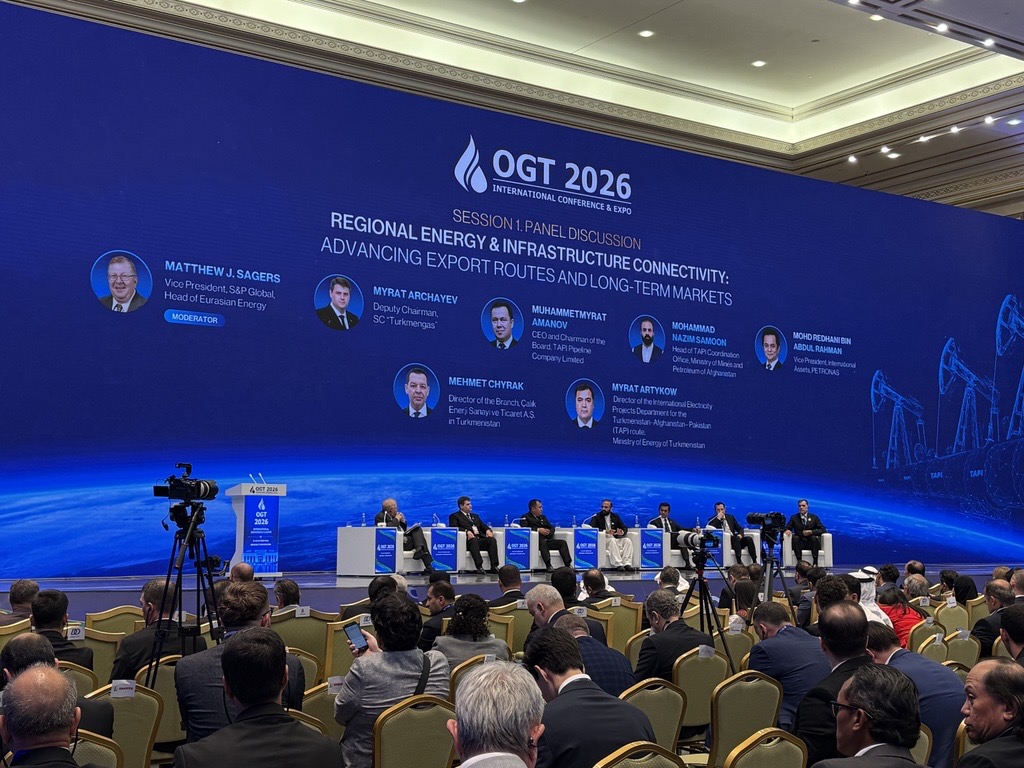
Turkmenistan is implementing projects to develop transboundary power transmission lines that will increase electricity supplies to Afghanistan and create conditions for further expanding regional energy cooperation. This stems from the statement by Murat Artykov, Director of the Department for International Power Engineering Projects along the Turkmenistan–Afghanistan–Pakistan route of the Ministry of Energy of Turkmenistan, who spoke at the International Conference “Oil and Gas of Turkmenistan – 2026” (OGT 2026) in Ashgabat.
According to Artykov, consistent investment in the power sector over more than ten years has made it possible to significantly increase exports of Turkmen electricity. Among the key areas of international cooperation, he highlighted the Turkmenistan – Afghanistan – Pakistan (TAP) high-voltage power line project, designed to strengthen energy ties between countries of the region.
Power Lines and New Infrastructure
The TAP project is to be implemented in three stages. Under its concept, 220 kV lines will be laid to Afghanistan, while a 500 kV line is envisaged for transmitting electricity to Pakistan.
Turkmenistan has already created the necessary power generation base for the project. In 2018, a 1,574 MW combined-cycle power plant was commissioned on the site of the Mary State Power Plant.
A significant part of the work on the Turkmen section of the project’s first stage has been completed. In August 2021, a 259 km double-circuit 220 kV power line was built from the Mary State Power Plant to the Turkmen-Afghan border. The line is ready to be connected to Afghanistan’s power system.
In addition, double-circuit 220 kV lines have been built from the Serhetabat substation to the Gushgy substation (35 km) and from the Serhetabat substation to the state border (46 km). According to Artykov, these facilities created the conditions for forming a ring power system in Mary province.
In 2021, the existing power line on the Serhetabat – Herat route was also upgraded. This made it possible to transmit electricity at 220 kV and improve the efficiency of the system.
An important milestone was the commissioning, on 11 September 2024, of the Nur ul-Jihad substation in Afghanistan’s Herat Province. According to Artykov, the launch of the facility doubled the volume of electricity supplied from Turkmenistan to the province.
The customer for the works was Afghanistan’s state-owned energy company Da Afghanistan Breshna Sherkat (DABS), and the construction was carried out by the Türkmenenergogurluşyk concern of Turkmenistan’s Ministry of Energy.
In the future, a 200 MVA synchronous compensator is planned to be installed at the Nur ul-Jihad substation. The Afghan side also intends to build an 80 km, 220 kV power line connecting the Pul-e-Hashemi, Nur ul-Jihad and “24 Hoot” substations in Herat Province.
Next Steps in Expanding Energy Cooperation
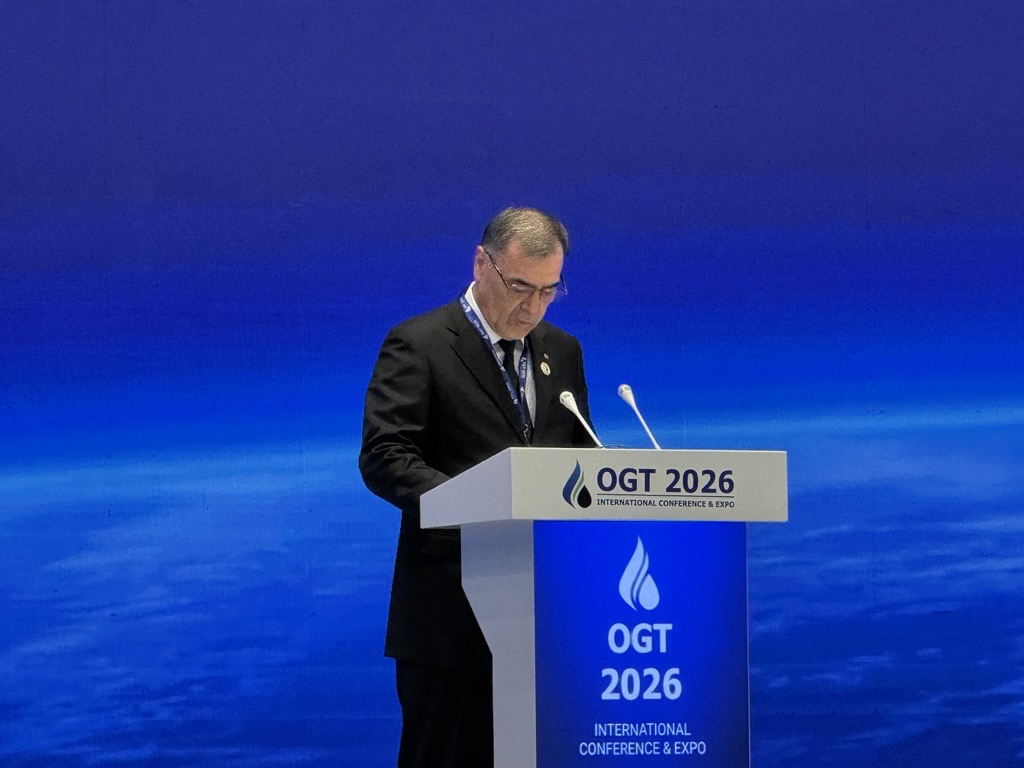
According to Artykov, the contractual and legal framework of the TAP project is also being strengthened: more than 50 documents have been signed between the participating countries and investors. A roadmap for further work on Afghan territory is expected to be agreed in the near future between Turkmenistan’s Ministry of Energy and Afghanistan’s Ministry of Energy and Water.
Another major infrastructure project is the construction of the 500 kV Kerki – Kabul power line, with a total length of 711 km.
Construction of the Sheberghan – Dasht-e-Alvan section is expected to be completed in the coming months. The section from the Dasht-e-Alvan substation to the Arghandi substation in Kabul Province is scheduled to be commissioned in June 2027.
As Artykov noted, implementation of the project will allow Turkmenistan to supply up to 800 MW of electricity to Afghanistan from technical point of view and will create additional opportunities for meeting Kabul’s energy needs.
In his words, the development of cross-border energy infrastructure is aimed not only at increasing electricity supplies. Such projects are intended to raise living standards, create conditions for the development of industry and social infrastructure, and strengthen the role of energy in the region’s economic development./// nCa, 22 October 2026