


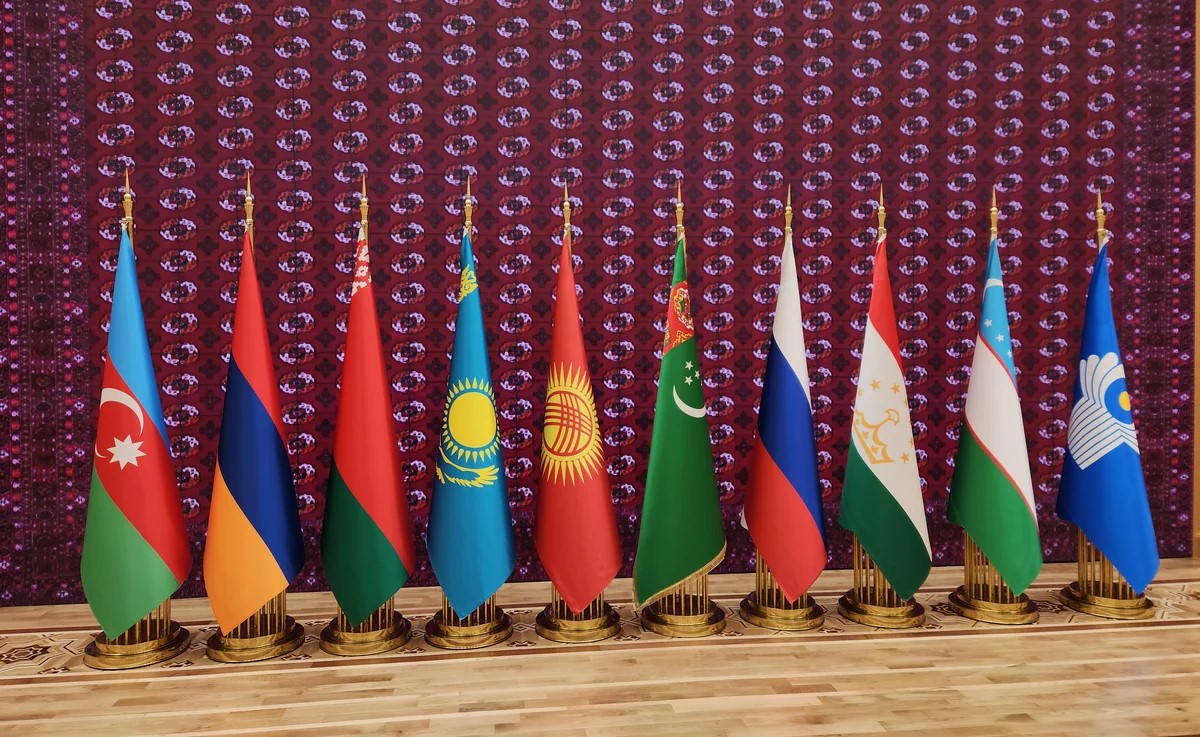
AVAZA, Turkmenistan – October 7, 2026 — The Commonwealth of Independent States has agreed to declare 2029 the Year of Transport Connectivity of the CIS, adopting the decision on the initiative of Turkmenistan at a meeting of the CIS Council of Foreign Ministers in Avaza on Wednesday.
The decision is one of the most concrete outcomes to emerge from the first day of the three-day diplomatic programme being hosted by Turkmenistan under its 2026 CIS chairmanship.
The CIS foreign ministers signed a package of documents following their meeting, including the decision on the 2029 Year of Transport Connectivity. They also adopted a plan for multilevel political consultations among the foreign ministries of CIS member states and a decision concerning preparations for the CIS Year of Legal Literacy in 2027. A protocol decision was also adopted on the next meeting of the CIS Council of Foreign Ministers.
For Turkmenistan, the transport decision gives a multilateral dimension to one of the country’s principal priorities during its CIS chairmanship: improving connectivity between the member states and strengthening the wider transport and logistics potential of the CIS space.
Turkmenistan has consistently presented its geographical position between Central Asia, the Caspian region, the Middle East and the wider Eurasian transport network as an opportunity for developing transit routes and improving links between regional markets. In a report submitted to the United Nations earlier this year, Ashgabat said it intended to propose declaring a CIS Year of Transport Connectivity and linked the initiative to its broader call for a UN Decade on Sustainable Transport for 2026–2035.
The adoption of the 2029 decision therefore converts that earlier proposal into a formally agreed CIS initiative.
The decision does not, by itself, announce a new transport corridor or a list of infrastructure projects. Its significance is broader: it provides a future CIS-wide political and institutional framework around which member states can develop discussions on transport links, logistics, infrastructure and connectivity.
That distinction is important because the practical value of the initiative will depend on what individual countries subsequently put into the programme for 2029.
Beyond transport
The foreign ministers’ meeting also addressed the broader CIS agenda, including political cooperation and current international issues, as well as cooperation in culture and humanitarian affairs, tourism, physical culture and sport, and youth affairs. The meeting also took note of the 35th anniversary of the CIS, which is being marked in 2026.
The additional decision on multilevel political consultations could provide another mechanism for regular contacts among CIS foreign ministries, while preparations for the 2027 Year of Legal Literacy add a separate institutional and humanitarian dimension to the programme emerging from the Avaza meeting.
The transport initiative nevertheless stands out because it connects the CIS’s political agenda with the practical movement of goods and people across a region whose economies are increasingly concerned with reliable and diversified transport routes.
It also fits the broader transport diplomacy taking place in Avaza this week. — On the sidelines of the CIS meetings, Turkmen Foreign Minister Rashid Meredov discussed with Iranian Minister of Roads and Urban Development Farzaneh Sadegh the expansion of transit opportunities, development of transport infrastructure and more effective use of the two countries’ transit potential.
The 2029 initiative is therefore likely to remain relevant well beyond the current Avaza meetings. Its immediate achievement is not the creation of a new route, but the establishment of a future CIS-wide focus on transport connectivity as an area of collective cooperation. /// nCa, 7 October 2026