


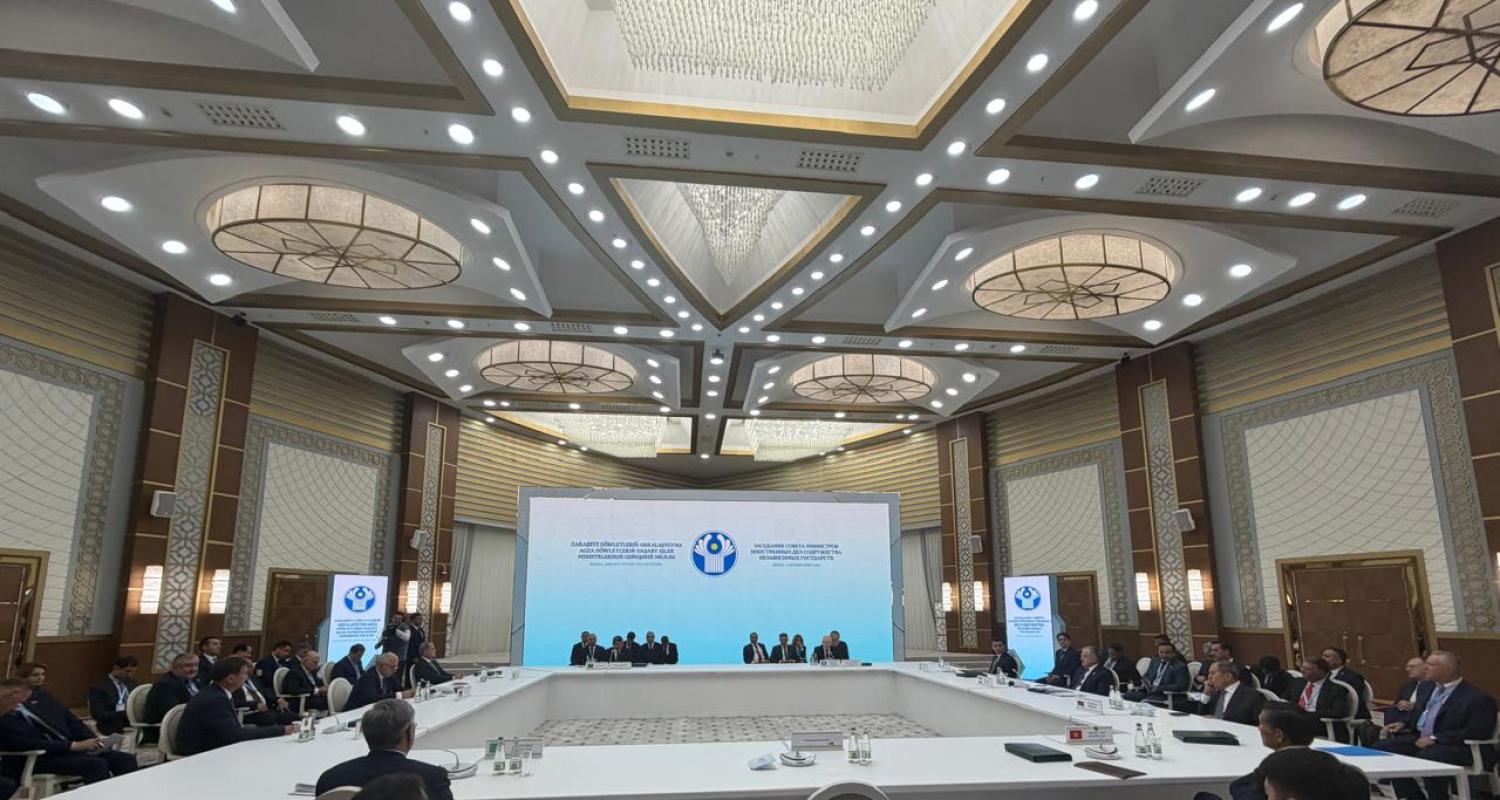
AVAZA, Turkmenistan – Foreign ministers of the Central Asian states and Azerbaijan have completed preparations for Thursday’s high-level Consultative Meeting of the Heads of State, agreeing the draft agenda and the list of documents expected to emerge from the leaders’ meeting in Avaza.
The ministerial meeting on October 7 brought together representatives of Kazakhstan, Kyrgyzstan, Tajikistan, Turkmenistan, Uzbekistan and Azerbaijan ahead of the eighth Consultative Meeting of the Heads of State of Central Asia and Azerbaijan, scheduled for October 8.
According to Tajikistan’s Foreign Ministry, the ministers discussed strengthening political contacts and developing cooperation in trade and the economy, transport and communications, and cultural and humanitarian affairs. They also exchanged views on the international agenda and agreed the draft agenda and list of outcome documents for the leaders’ meeting.
The preparatory meeting gives tomorrow’s summit a defined negotiating framework rather than leaving the agenda at the level of broad regional consultations.
Connectivity at the centre
Azerbaijan’s Foreign Minister Jeyhun Bayramov placed particular emphasis on connectivity, describing the Middle Corridor as an increasingly important element of sustainable East–West connections and international trade.
He called for expanded trade and mutual investment and highlighted cooperation in transport and energy, including the production and transmission of green energy as well as transport and digital connectivity projects.
The emphasis is notable in the context of the wider regional effort to strengthen connections among Central Asia and the South Caucasus. Azerbaijan became a full participant in the Consultative Meeting format last year, expanding the mechanism from a Central Asian grouping into a broader regional platform linking Central Asia with the Caspian and South Caucasus space. Bayramov said the expanded format reflects the countries’ historical and cultural ties as well as their shared interests.
For Turkmenistan, hosting the meeting places Avaza at the intersection of several regional connectivity discussions. The country has been promoting its own transport and transit potential while participating in wider efforts to develop connections across the Caspian and Central Asia.
The ministers’ discussions also covered environmental questions, adding another dimension to tomorrow’s agenda.
Water, the Aral Sea and the Caspian
Bayramov raised concerns over climate change, the condition of the Aral Sea and regional water resources, as well as the continuing decline in the level of the Caspian Sea and its consequences for coastal infrastructure and the environment.
He called for a systematic scientific approach, information exchange and regional cooperation in addressing those challenges.
These issues are particularly relevant to the wider programme in Avaza this week. Water management is being discussed separately in a high-level meeting devoted to the rational use of the Amu Darya and Syr Darya, while the Caspian environmental agenda will receive further attention during meetings scheduled for October 9.
The convergence of transport, energy, water and environmental questions means that Thursday’s leaders’ meeting is likely to address several issues that are closely interconnected in practical terms.
From ministerial preparation to political decisions
The October 7 meeting was essentially preparatory, and the ministers’ agreement on the draft agenda and outcome documents leaves the final political decisions to the heads of state.
That makes the October 8 meeting potentially more consequential than a routine consultative gathering. The participating governments have already identified the main fields of cooperation, while the outcome documents will provide the formal record of what the leaders decide.
For Turkmenistan, the meeting also represents an important element of its broader 2026 diplomatic programme in Avaza. The country is simultaneously hosting the CIS Council of Heads of State meeting on October 9 and the Caspian Environmental Summit, making the three-day sequence an unusually concentrated gathering of regional leaders.
The immediate focus, however, now shifts to Thursday’s Central Asia–Azerbaijan meeting, where the ministers’ preparatory work will be placed before the heads of state. /// nCa, 7 October 2026