


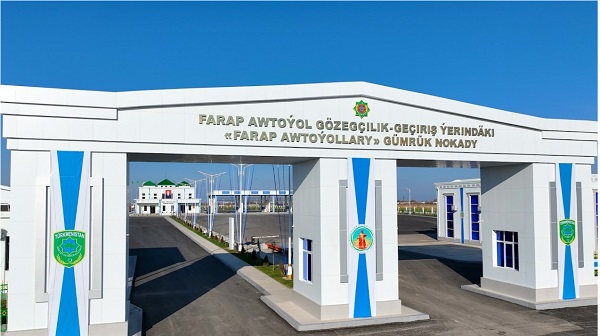
Turkmenistan and Uzbekistan aim to boost freight traffic along key transport corridors, focusing on both the development of border infrastructure and the expansion of the Caspian maritime route. The growth of road transport through the Farap–Alat border checkpoints is accompanied by discussions on modernizing infrastructure on the Uzbek side, as well as agreements to increase the utilization of the Turkmenbashi International Seaport.
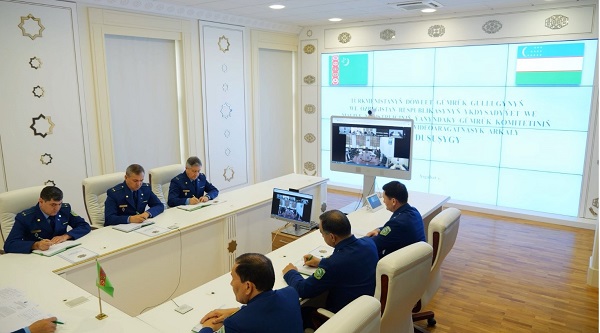
On 6 November 2026, a working meeting was held via videoconference between representatives of the State Customs Service of Turkmenistan and the Customs Committee under the Ministry of Economy and Finance of the Republic of Uzbekistan. The meeting focused on increasing transit freight volumes by maximizing the throughput capacity of the Farap and Alat customs posts located on the Turkmen-Uzbek state border, according to the State Customs Service of Turkmenistan. According to the Uzbek Ministry of Transport, over 243,000 vehicles crossed the Farap-Alat border in January–October 2026, a 2.3-fold increase compared to 2022 figures.
Currently, up to 1,200 vehicles per day pass through this checkpoint in both directions. One factor behind the growth in traffic was Turkmenistan’s modernization of the “Farap Avtoyollary” customs checkpoint, which doubled its throughput capacity.
In response to the growing freight traffic, Uzbekistan also intends to upgrade the infrastructure of the Alat checkpoint.
According to the Ministry of Transport of Uzbekistan, the heads of the Customs Committee, the Ministry of Transport, and the Automobile Roads Committee recently visited Alat. Uzbek officials raised the issue of constructing a new bridge over the Yomonjar canal, which connects the neutral zones of Turkmenistan and Uzbekistan. The existing bridge was built in 1978 and no longer meets modern technical requirements.
As a solution, it is proposed to build a new bridge designed for significantly heavier traffic—with at least two lanes for freight transport in each direction. This will speed up vehicle transit, reduce congestion in the border zone, and improve travel conditions for trucks, passenger cars, and pedestrians alike.
According to the Uzbek Ministry of Transport, the proposal to build the new bridge will be reviewed by relevant agencies, with a feasibility study expected to be developed at the next stage.
The Farap and Alat border checkpoints play a crucial role not only in facilitating cargo transportation for foreign trade between Turkmenistan and Uzbekistan, but also in handling transit shipments along the East–West international transport corridor and other global routes.
In addition to land transport, Uzbekistan and Turkmenistan intend to strengthen cooperation in maritime logistics. Last week, Uzbek business representatives visited the Turkmenbashi International Seaport on the Caspian Sea to explore new markets and alternative transport routes. Following the visit, an agreement was reached with the port administration to further increase cargo volumes and strengthen practical ties between the business communities of both countries.
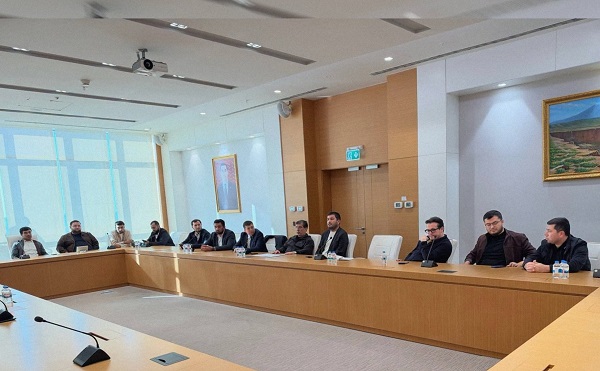
Currently, according to the Chamber of Commerce and Industry of Uzbekistan, Uzbek entrepreneurs are granted a number of preferences at the port, including discounts on storage, loading, unloading, and cargo transportation services. These measures help reduce logistics costs for import and export operations.
Overall, transport cooperation between Turkmenistan and Uzbekistan is developing simultaneously across multiple fronts. Enhancing the capacity of the land crossing, modernizing border infrastructure, and expanding freight transportation through the port of Turkmenbashi are creating new opportunities for bilateral trade and transit. ///nCa, 8 November 2026