


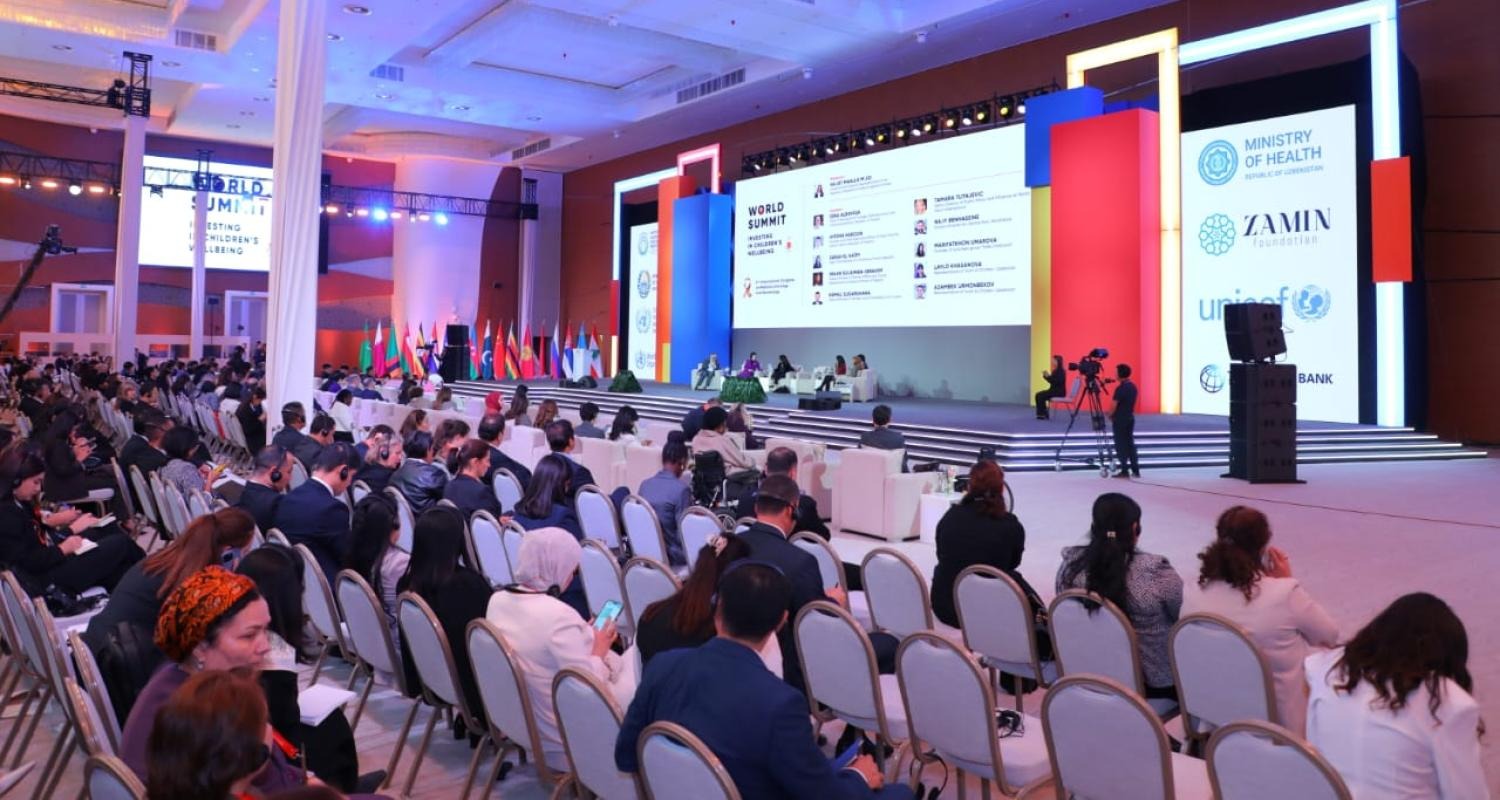
A delegation from Turkmenistan participated in the World Summit on “Investing in Children: Towards a Sustainable and Equitable Development for Future Generations,” held in Samarkand, Uzbekistan, on October 21–22. The gathering brought together representatives of more than 100 countries to discuss practical measures to improve children’s health, education, social protection and safety.
According to the State News Agency of Turkmenistan (TDH), the summit was organized at Uzbekistan’s initiative in cooperation with the UN Secretary-General’s Special Representative on Violence against Children, UNICEF, the World Health Organization (WHO) and the World Bank. Its programme included plenary meetings, specialized sessions, the Second International Congress on Childhood Cancer and related events.
The summit opened with an address by Uzbek President Shavkat Mirziyoyev. Participants also heard a message from UN Secretary-General António Guterres, while Khalilur Rahman, President of the 81st session of the UN General Assembly, and other international and Uzbek representatives addressed the gathering.
The discussions focused on the need to treat investment in children as a foundation of sustainable development. Priorities included early childhood development, access to quality education and healthcare, social protection for vulnerable families, and stronger mechanisms to prevent violence against children, including online exploitation and abuse. Participants also considered how governments could improve coordination between services and ensure that policy commitments were backed by adequate and sustained financing.
Childhood cancer received particular attention through the specialist congress held alongside the summit. WHO’s Global Initiative for Childhood Cancer aims to raise worldwide survival rates to at least 60% by 2030. Achieving this target requires earlier diagnosis, access to effective treatment and essential medicines, and stronger healthcare systems, particularly in countries where resources remain limited.
The summit concluded with the adoption of the Samarkand Declaration, which reaffirms commitments under the UN Convention on the Rights of the Child and the 2030 Agenda for Sustainable Development. The document calls for stronger child-protection systems, wider access to inclusive education and early childhood development, more resilient healthcare services, and improved support for parents and caregivers. It also emphasizes the importance of prioritizing children in public budgets, improving the effectiveness of social spending and establishing measurable targets to assess progress.
For Turkmenistan, participation provided an opportunity to engage in international discussions on policies directly relevant to the wellbeing and development of future generations. The summit’s agenda offers scope for continued cooperation in preventive healthcare, education, family support and the protection of vulnerable children.
The practical significance of the summit will ultimately depend on how participating countries translate the declaration’s broad principles into funded programmes, stronger institutions and measurable improvements in children’s lives. /// nCa, 23 October 2026