


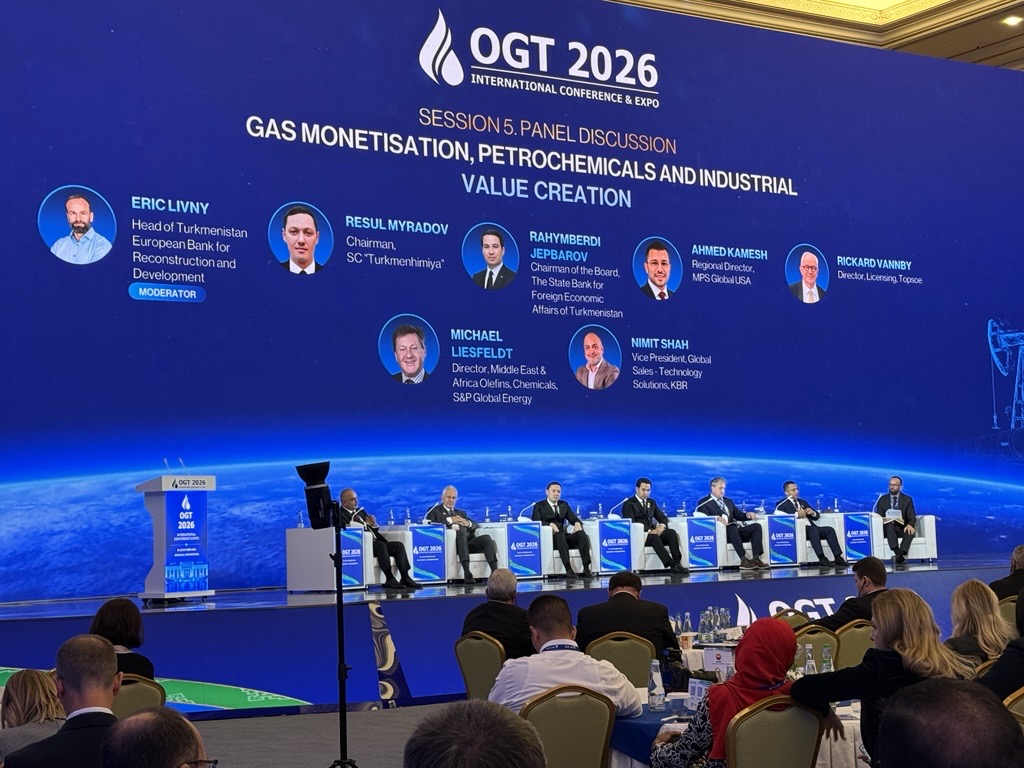
Financial institutions play a crucial role in driving the modernization and industrial diversification of Turkmenistan’s oil and gas sector by mobilizing both domestic and international resources. This was emphasized by Rahymberdi Jepbarov, Chairman of the Board of the State Bank for Foreign Economic Affairs of Turkmenistan, during the panel session “Gas Monetisation, Petrochemicals and Industrial Value Creation” at the 31st International Conference and Exhibition “Oil and Gas of Turkmenistan” (OGT 2026).
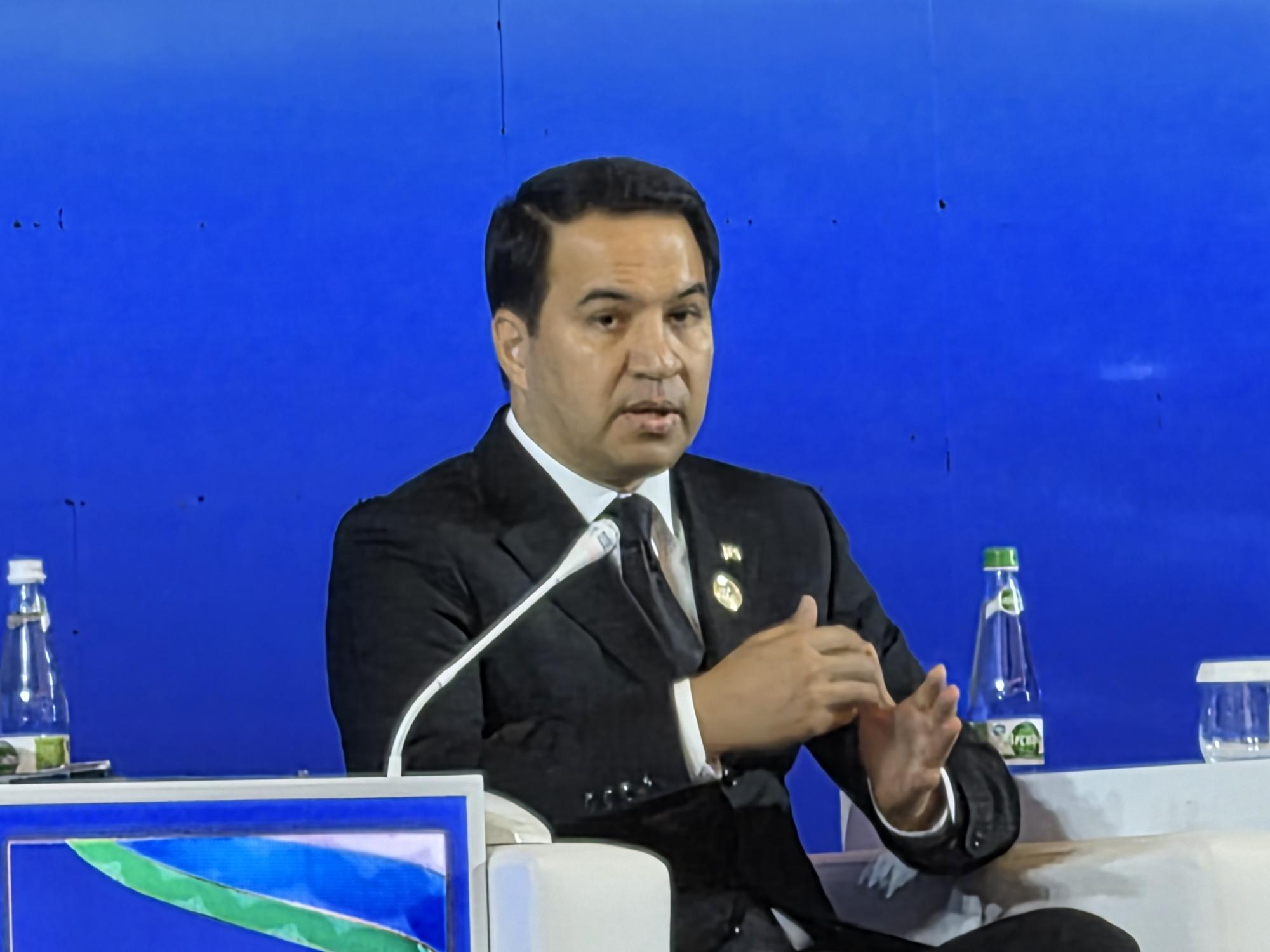
Highlighting the banking sector’s ongoing integration with the global financial system, Jepbarov stated:
“In the context of modernization of the oil and gas sector of Turkmenistan, the financial sector is playing a very important role. The banking sector has strong relations with external financial structures, such as international financial institutions and commercial banks from all over the world,” he said.
He noted that Turkmenistan’s banks maintain relationships with international financial institutions and commercial banks worldwide. The sector is also upgrading its reporting systems, with the country having recently transitioned to IFRS 9, the international accounting standard for financial instruments.
Addressing a question regarding practical experience in structuring large-scale projects alongside European, Japanese, and Korean investors, Jepbarov explained that funding decisions are made based on feasibility studies for each project using internationally recognized mechanisms.
Depending on the project, funding may come from external or domestic sources, while internationally established financing instruments are used in either case.
He cited previous oil and gas projects structured around project-finance principles, with support from export credit agencies. These agencies provide insurance coverage to suppliers and contractors, helping financial institutions extend financing for project implementation.
Jepbarov referred to Japan’s Nippon Export and Investment Insurance (NEXI) and export credit agencies in South Korea and Germany as examples of institutions involved in supporting international partnerships.
In addition, Turkmenistan maintains active cooperation with major multilateral lenders: “At the same time, we closely cooperating with the IFIs, international financial institutions, such as Asian Development Bank, Islamic Development Bank, European Bank for Reconstruction and Development, and others.”
Addressing the impact of geopolitical tensions and volatility in global oil, gas and petrochemical markets on financing decisions, Jepbarov said Turkmenistan’s banking sector places particular emphasis on compliance and transparency in international transactions.
“First of all, I would like to underline that banking sector in Turkmenistan, in its daily day operations, dealing only with the first-class banks, also which has very strong requirements on the compliance. So understanding that regional situation is challenging, the banking sector is really concentrated on the avoiding of the restricted sanctions,” he stressed.
He highlighted the strategic deployment of modern technology to safeguard financial workflows:
“So we are dealing only in the transparent way, the banking sector investing into the new technologies that allows to make daily operations transparent, so it’s sanction screening operations. Those softs are making possible to monitor daily transactions to avoid any.”
The OGT 2026 conference brings together government representatives, energy companies, investors and financial institutions to discuss opportunities for cooperation across Turkmenistan’s oil and gas sector, including hydrocarbon processing and the development of higher-value industrial products. ///nCa, 22 October 2026