



Elvira Kadyrova
How can newsrooms harness artificial intelligence without compromising factual accuracy, editorial quality, and audience trust? This question took center stage during the closing session of the second day at the Central Asia Media Conference, hosted by the Office of the OSCE Representative on Freedom of the Media in Bishkek on 9–10 October 2026.
Panelists showcased real-world examples of integrating AI into newsroom workflows, examined the capabilities and limitations of current language models, and offered practical guidance on how journalists can adapt to an evolving technological landscape.
The session featured Azat Seyitmuhammedov, Founder and CEO of Arzuw News (Turkmenistan); Dina Maslova, Founder and Director of Kaktus Media (Kyrgyzstan); Khurshed Qurbonshoev, a lawyer and digital rights and digital well-being specialist at the Public Organization “Digital Resilience Development” (Tajikistan); and Askhat Yerkimbay, a lecturer at SDU University (Kazakhstan).
Turkmenistan: AI for Translation and News Monitoring
Azat Seyitmuhammedov, Founder and CEO of Arzuw News (Turkmenistan) and IT specialist, shared how a lean team of four leverages artificial intelligence to manage daily newsroom operations.
The outlet primarily publishes in Russian. According to Seyitmuhammedov, the remarkable progress of language models over the past few years has unlocked new opportunities for content translation.

To tackle its extensive archive, the team developed a simple plugin connected via API to a language model. This tool translated a massive backlog—the publication’s archive contains roughly 16,000 to 17,000 articles, many ranging from 1,500 to 3,000 characters. While the AI handles the heavy lifting, translations undergo rigorous editorial review, and English-language pieces are published only after a human editor gives the green light.
“I wouldn’t hesitate to say that, in about 99% of cases, it gets everything right, clear, and correct,” Seyitmuhammedov noted, emphasizing that human verification of facts, figures, and proper names remains essential.
Arzuw News also employs AI for source monitoring. A custom plugin tracks designated media outlets and government websites. Once a new article appears, the system processes it instantly; for long-form reads, it generates a concise summary and forwards it directly to an internal Telegram group.
Editors can review the material and decide whether to edit, publish, or reject it without ever leaving the messaging app.
By automating translation and primary processing, AI allows the compact team at Arzuw News to focus their energy on core editorial decisions.
Kyrgyzstan: Automation Does Not Bypass Editorial Responsibility
Dina Maslova, Founder and Director of Kaktus Media, offered an alternative perspective. Her newsroom consists of roughly 30 staff members, with the publication reaching a monthly audience of over one million unique visitors.
At Kaktus Media, artificial intelligence is deployed selectively. Maslova highlighted the transcription of audio and video recordings—particularly long-form interviews—as one of the most useful AI applications.
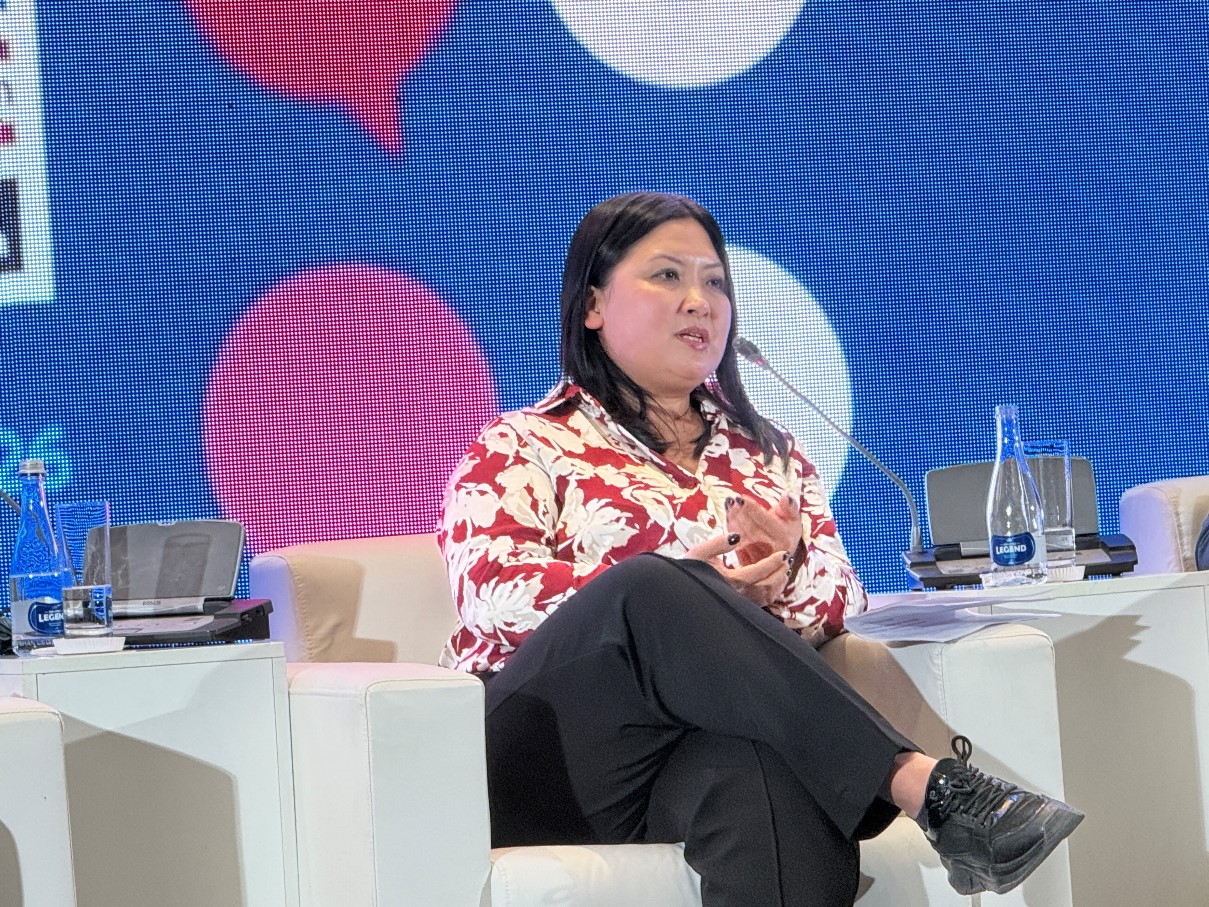
AI tools are also periodically utilized for translations between Russian and Kyrgyz. However, Maslova noted that the quality of these translations still requires substantial editorial refinement.
The newsroom maintains a cautious stance toward automated voiceovers as well. Errors in geographic names or numerical values can erode audience trust and trigger backlash from readers—missteps that are especially costly for a major news outlet.
Image generation is used even more sparingly. Kaktus Media prioritizes original photography and on-the-ground reporting. AI-generated images or collages are reserved for select articles where abstract illustrations are appropriate.
Furthermore, AI has not proven to be a silver bullet for other newsroom workflows. According to Maslova, video production remains more efficient when handled by professional video editors, while experiments with chatbots for the advertising department and automated tools for administrative accounting yielded unsatisfactory results.
Certain tools, including Gemini and Claude, are used by the social media team to condense long-form articles into brief carousel posts. Yet all copy and headlines, regardless of how they are generated, undergo strict editing and proofreading.
The experience at Kaktus Media demonstrates that adopting AI does not mean automating every conceivable process. The newsroom evaluates tools strictly based on their practical utility, refusing to dispense with human oversight where errors could compromise editorial quality or the media outlet’s reputation.
Does AI Actually Save Time and Unlock Creativity?
Askhat Yerkimbay, a lecturer at SDU University in Kazakhstan, pointed out that the perceived efficiency of artificial intelligence does not always translate into real time savings.
According to him, media theory features a distinct “efficiency trap”: using AI creates the illusion of accelerated workflows, yet journalists end up spending extra time verifying the generated outcomes and facts.
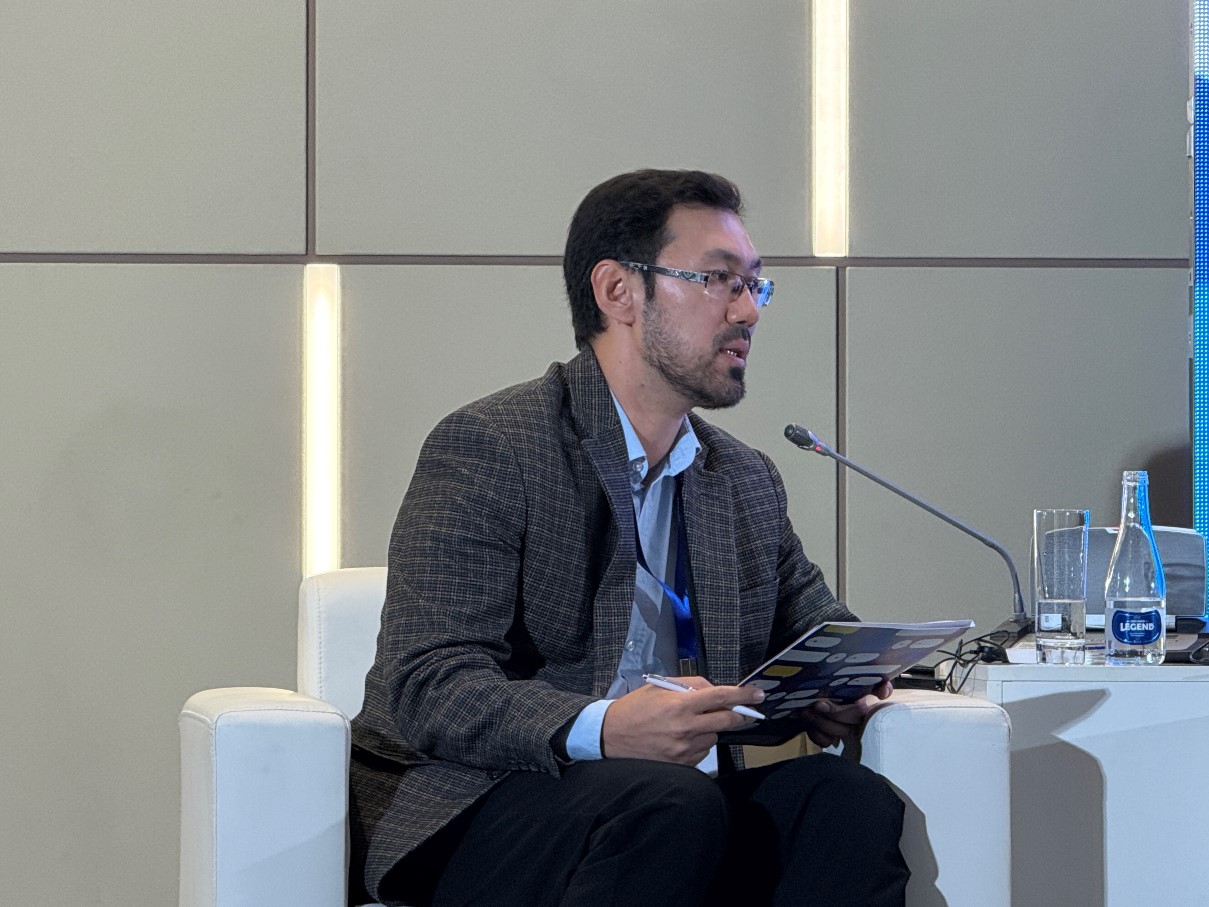
As an illustration, Yerkimbay cited his own regional news monitoring tools, which he calls “radars”. The system daily gathers regional publications in three languages, after which a language model evaluates the materials and compiles a concise digest for the editorial team on Telegram.
The speaker noted that such a tool costs roughly two dollars a month. This example demonstrates that certain monitoring tasks can be automated at a relatively low cost.
Dina Maslova, representing Kyrgyzstan, also addressed the deceptive nature of AI service efficiencies. In her view, offloading routine tasks to AI does not mean that the freed-up time will be spent by journalists on human interaction and creative endeavors. “In reality, the brain is lazy, and we will simply get dumber. I don’t think we will turn into artists,” the Director of Kaktus Media shared her concerns.
What Journalists Should Consider When Working with AI
In the final part of the session, drawing from their positive and negative experiences, the panelists outlined several recommendations for newsrooms and journalists navigating the widespread adoption of artificial intelligence:
Account for Language Inequality: Askhat Yerkimbay highlighted disparities in language model performance when handling languages with varying amounts of digital data. The state languages of Central Asia fall into the low-resource category, meaning AI currently understands them less effectively than English or Russian. This imbalance increases the risk of errors and widens the digital divide.
Prepare for Automated Disinformation: Yerkimbay warned that as automation advances, the creation and dissemination of disinformation could take on a mass, conveyor-belt scale. Journalists must look beyond traditional fact-checking principles and understand the inner workings of AI systems, models, and algorithms.
Use AI as an Assistant: Automation should absorb repetitive, routine tasks, liberating reporters to engage directly with communities, gather human stories, and conduct field reporting.
Preserve the Human Touch: Khurshed Qurbonshoev emphasized the enduring necessity of quality journalism. At a certain point, readers will grow weary of synthetically generated content and crave authentic human resonance, even in short-form articles. Newsrooms must maintain their unique voice and brand identity while developing convergent skillsets that combine writing, visual storytelling, and digital tool operation.

Refine Technology While Maintaining Quality Control: Dina Maslova voiced optimism regarding the ongoing evolution of translation, voiceover, and editorial automation tools, provided that human editorial judgment remains non-negotiable.
Acknowledge Inevitable Professional Shifts: Describing himself as a technological radical, Azat Seyitmuhammedov predicted the disappearance of roles such as rewriting and copyediting within a few short years. The arrival of singularity—when AI begins training itself—will mark a point of no return where computer-bound tasks will be completely automated. However, he offered a brighter outlook for outlets producing original field coverage: “News agencies generating primary coverage on the ground with reporters and camera crews will endure, because someone still needs to produce original news,” the Turkmen representative noted.
The overarching conclusion of the session is that a newsroom AI policy cannot be reduced to a simple binary of permitting or banning specific tools. Every editorial team must define which tasks can be automated, how outputs are verified, and who ultimately bears responsibility for published content.
The experience of these Central Asian media outlets shows that AI already streamlines several functions—such as translation, source monitoring, and audio transcription—yet its capabilities vary significantly depending on the task. Where documentary accuracy, verified facts, and reader trust are paramount, human editorial oversight and distinctive prose continue to hold sway over synthetic intelligence.
Technology may accelerate the speed of news production, but accountability for content, quality, and the public interest still rests firmly in human hands. /// nCa, 13 October 2026
Our materials on OSCE Central Asia Media Conference 2026 (#CAMC2026):