


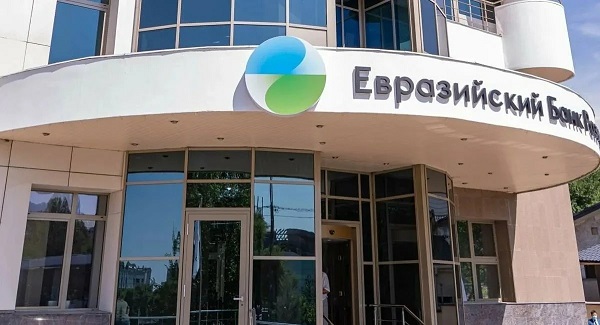
The Eurasian Development Bank (EDB) is moving toward a significant broadening of its membership, with the bank’s Council having approved the potential addition of 11 countries, EDB Chairman Nikolay Podguzov announced at the institution’s annual meeting and business forum.
The prospective new members span a wide geographic arc, encompassing Mongolia, Azerbaijan, Georgia, Türkiye, and Turkmenistan, alongside five Gulf states — Bahrain, Oman, Qatar, Saudi Arabia, and the United Arab Emirates.
Podguzov framed the expansion as central to the bank’s ambition to function as a genuine regional development institution. “Opening our Abu Dhabi office last year was no accident,” he said, noting that food security is a major concern for Gulf states, which also bring substantial expertise in irrigation technology. He added that while not all 11 candidates would necessarily take on full membership, three new shareholders are scheduled to come on board within the next strategic period.
The EDB was established as a multilateral development bank serving the Eurasian region. Its current paid-up members include Russia, Kazakhstan, Armenia, Belarus, Kyrgyzstan, Tajikistan, and Uzbekistan.
Russia remains the largest single shareholder, holding a 44.79% stake — down from a controlling share of nearly 66% before a deliberate redistribution of capital in December 2022, a move widely understood as an effort to dilute Moscow’s majority control and reduce the institution’s exposure to Western sanctions.
The bank is headquartered in Almaty.
By the close of 2025, the EDB’s cumulative investment portfolio encompassed 326 projects with a combined value of approximately US$19.6 billion, with priority sectors including transport infrastructure, digital systems, green energy, agriculture, and industrial development.
The push to bring in Middle Eastern shareholders is seen as strategically significant. Gulf sovereign wealth and institutional capital, if channelled through an expanded EDB framework, could help bridge a long-standing investment gap across Central Asia, where infrastructure and development financing needs remain substantial.
According to Russia’s Pivot to Asia, which first reported on the announcement, Podguzov positioned the expansion not merely as a membership exercise but as a structural step toward making the EDB a meaningful conduit between Gulf capital and Eurasian project pipelines. /// nCa, 30 June 2026