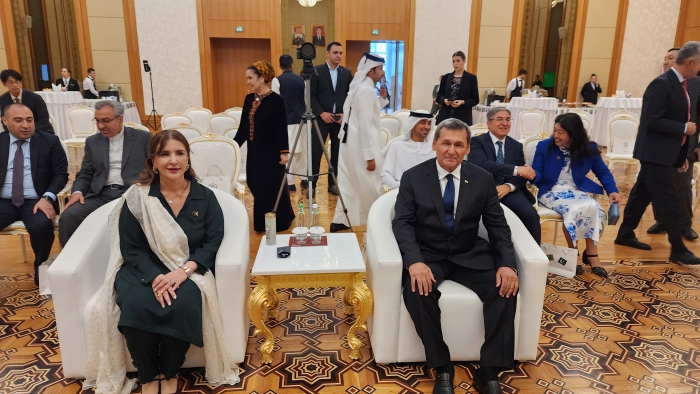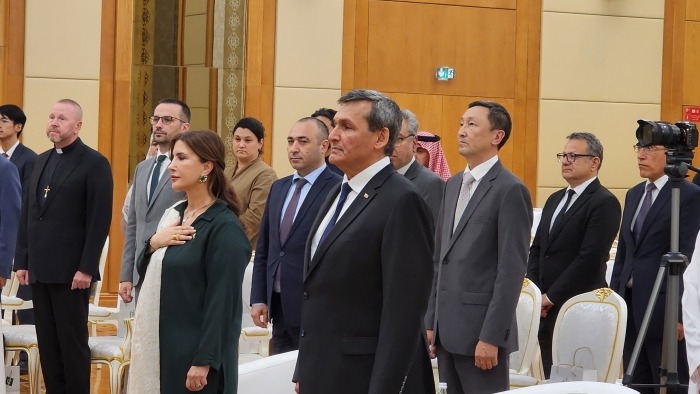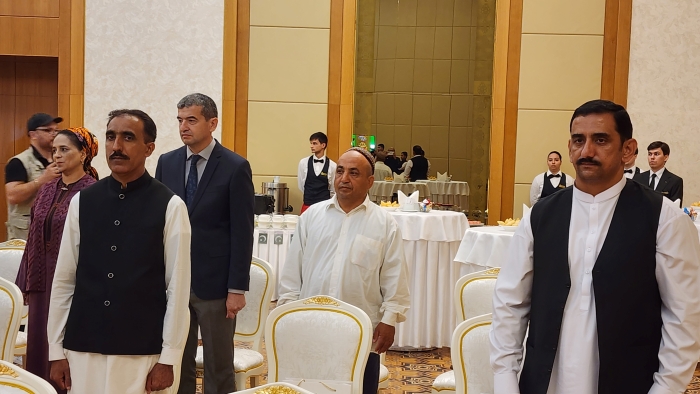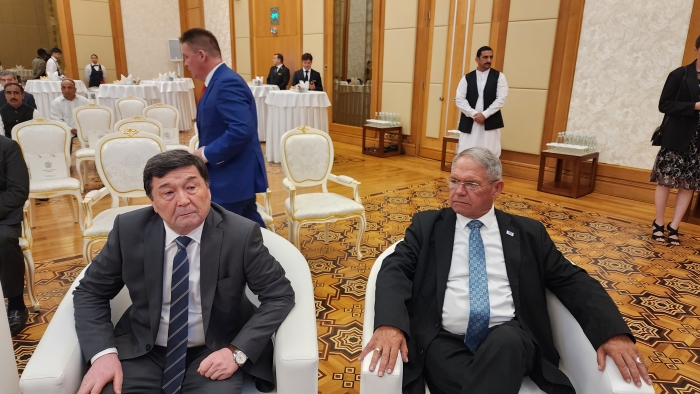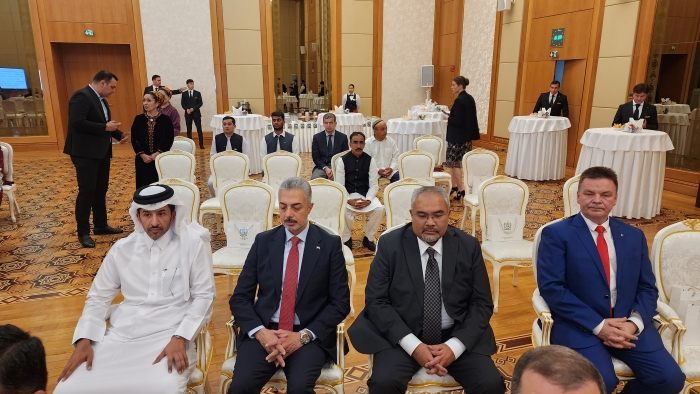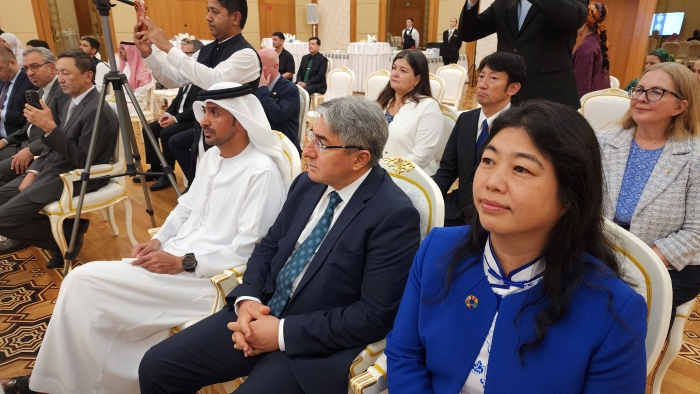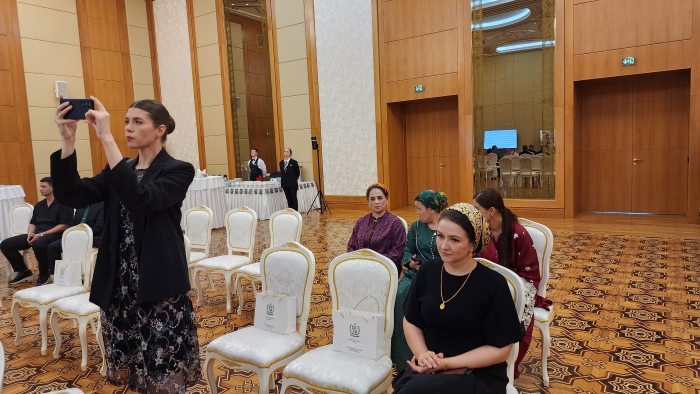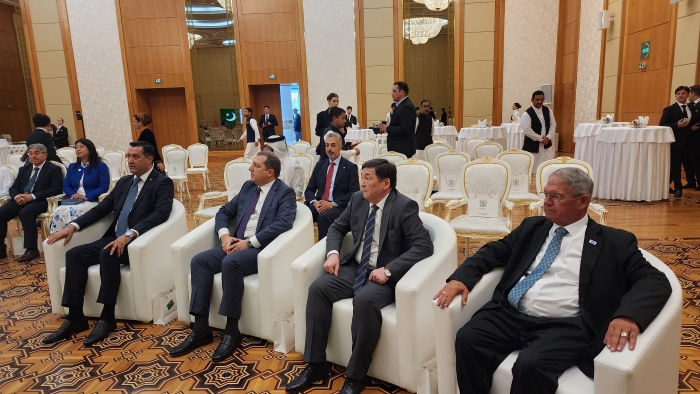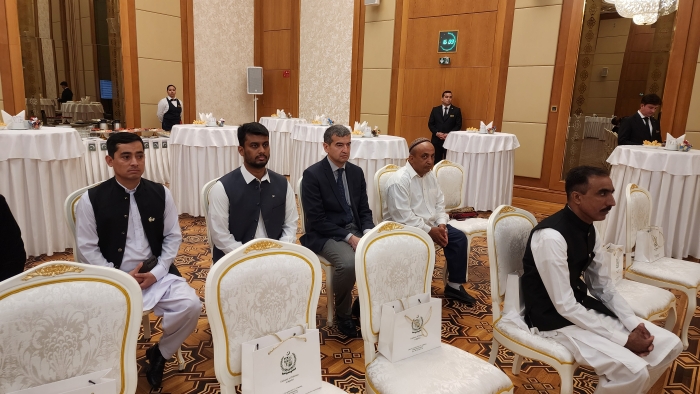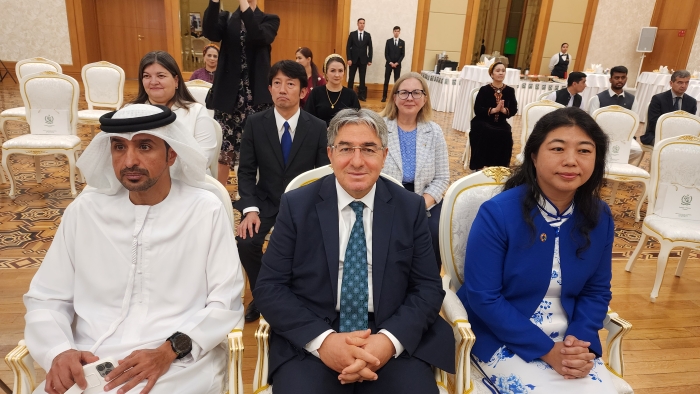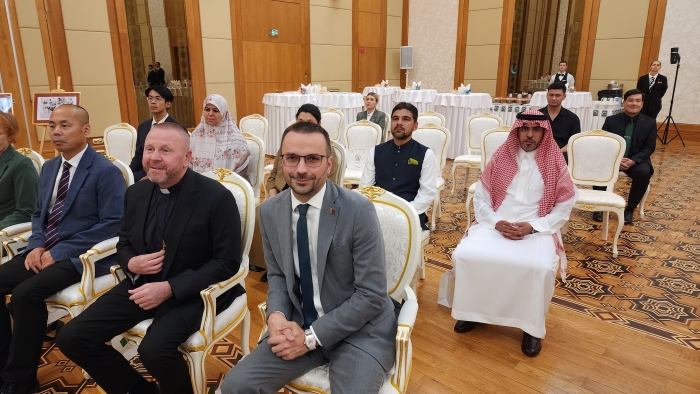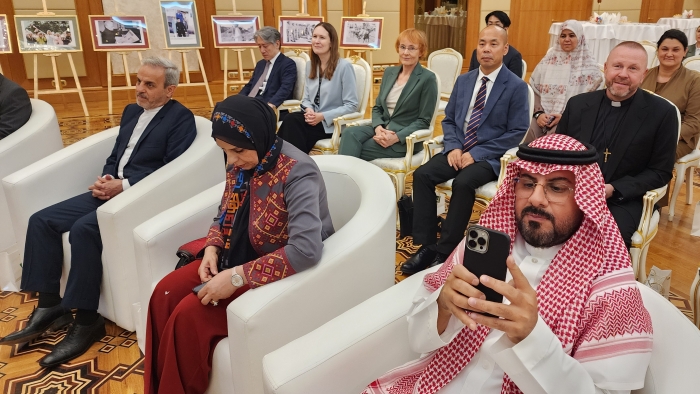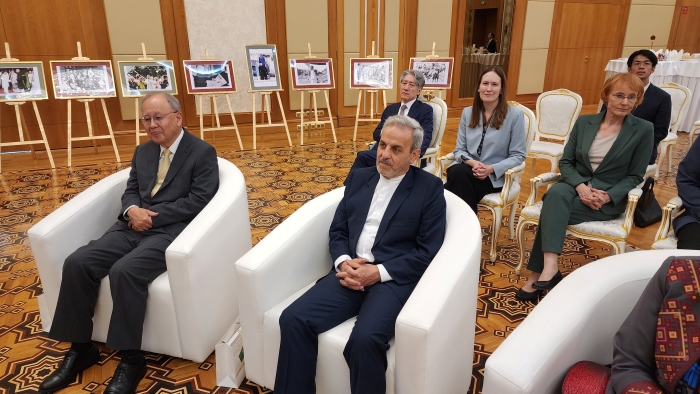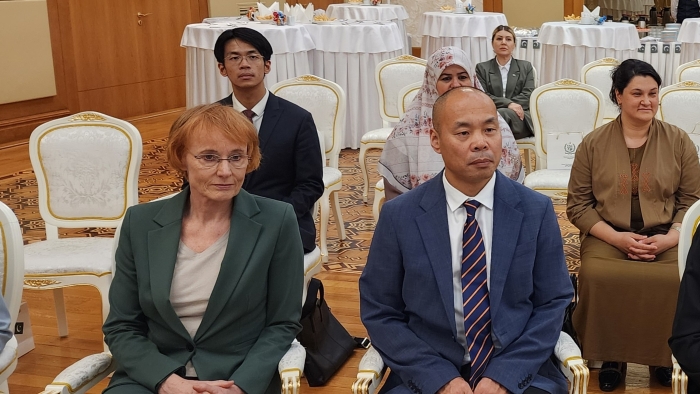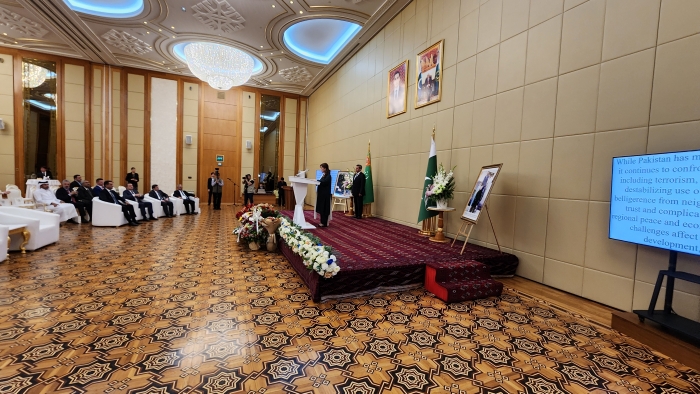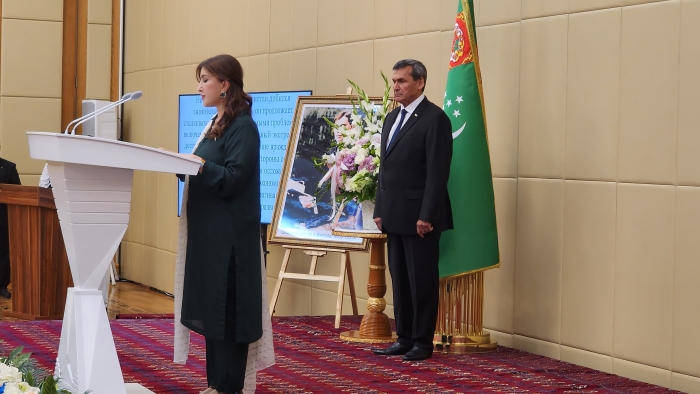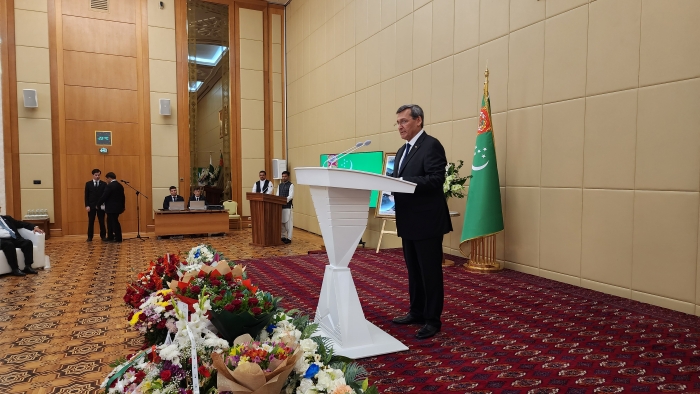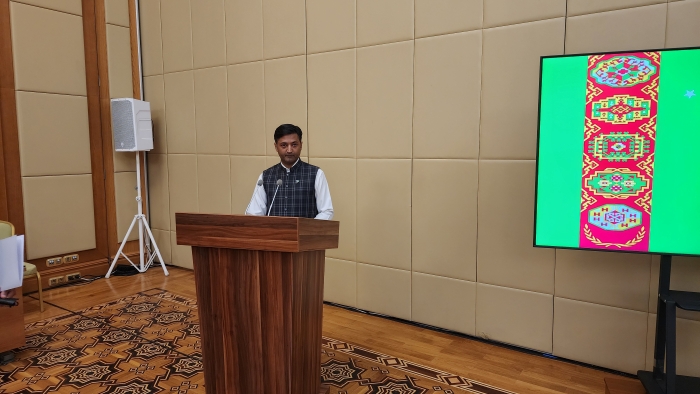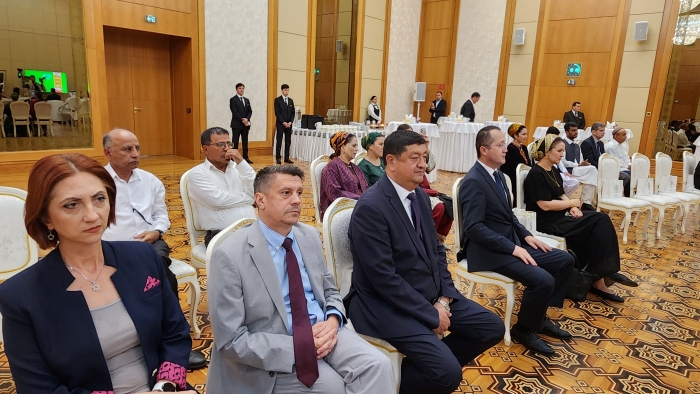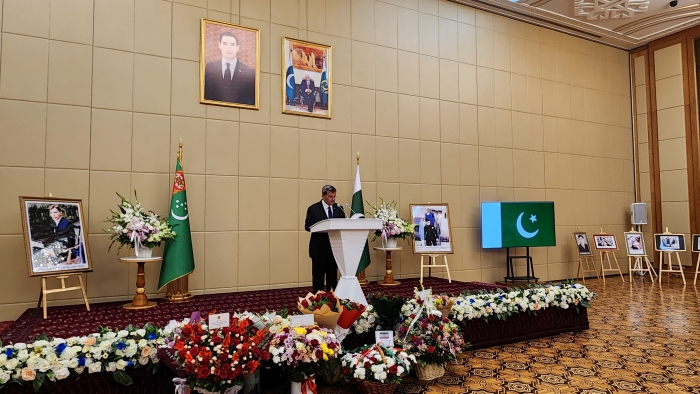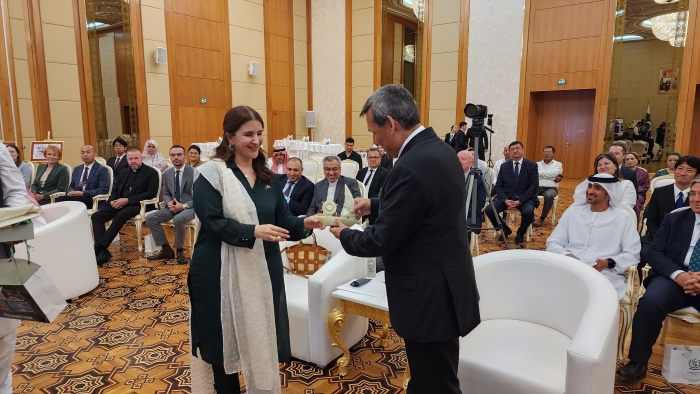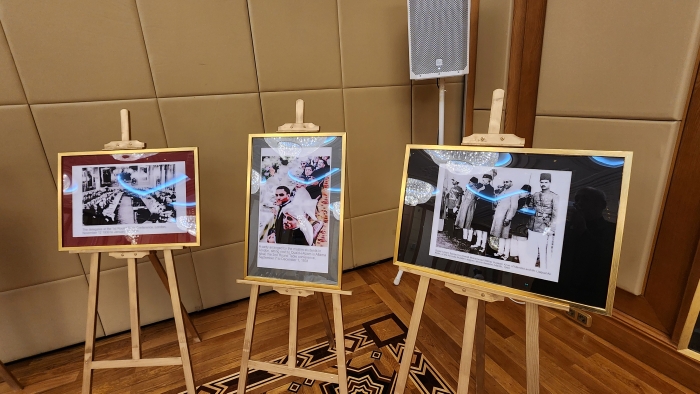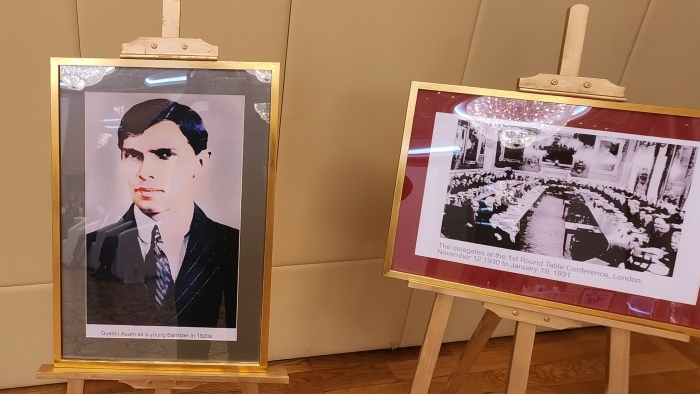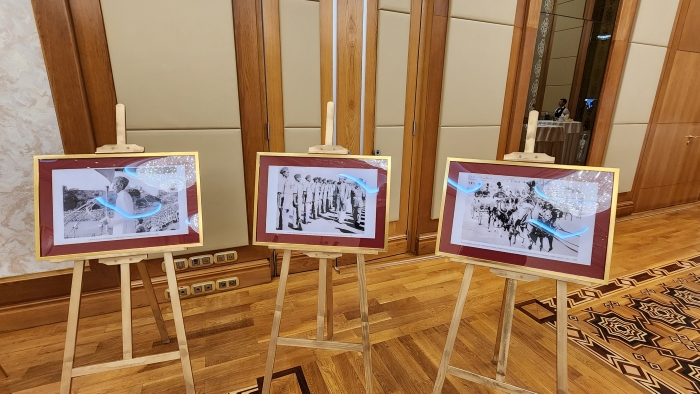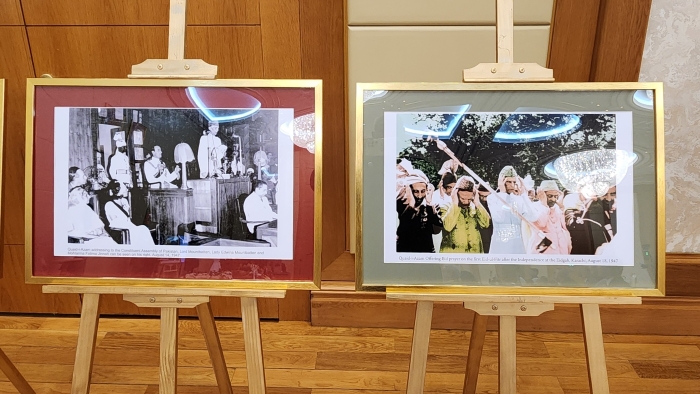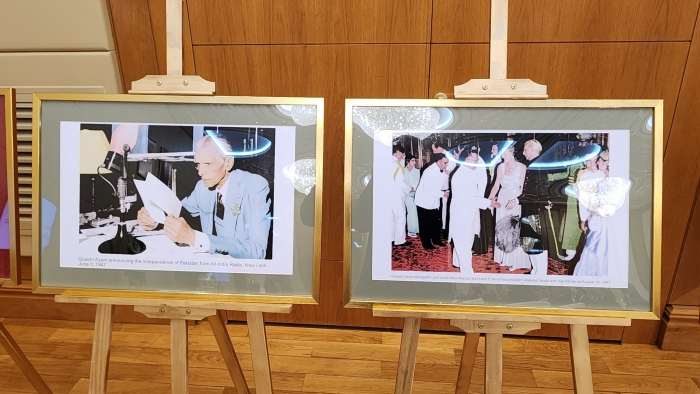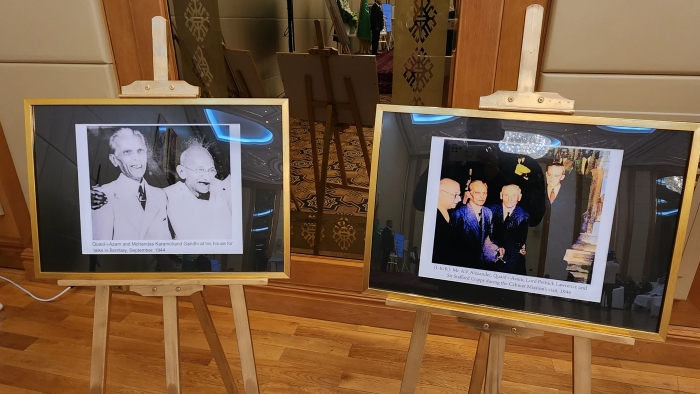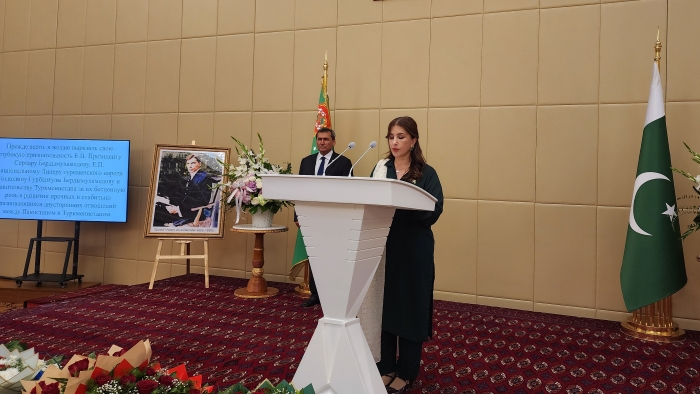
On August 14, 2026, the Ambassador of Pakistan to Turkmenistan, Dr. Faryal Leghari, hosted a reception in Ashgabat commemorating Pakistan’s 79th Independence Anniversary and the 150th birth anniversary of the country’s founder, Quaid-e-Azam Muhammad Ali Jinnah.
On the Turkmen side, the diplomatic reception was attended by Deputy Chairman of the Cabinet of Ministers and Minister of Foreign Affairs of Turkmenistan, Rashid Meredov.
Welcoming the guests, Ambassador Faryal Leghari expressed her appreciation to President Serdar Berdimuhamedov, National Leader Gurbanguly Berdimuhamedov, and the Government of Turkmenistan for their invaluable role in nurturing the strong and steadily advancing bilateral relations between Pakistan and Turkmenistan.
“These relations are rooted in mutual respect, shared civilizational affinities, and a common commitment to peace, stability, energy security, and regional connectivity,” she said.
The diplomat emphasized that Pakistan “commends Turkmenistan’s policy of Permanent Neutrality and its consistent support for peaceful dialogue. Pakistan, too, remains firmly committed to peace. We believe that disputes must be resolved through diplomacy, dialogue, respect for international law, and the sovereign equality of states.”
Highlighting the outstanding role of Quaid-e-Azam Muhammad Ali Jinnah in the history of the Islamic Republic, the Ambassador stressed that “through peaceful political struggle and unwavering resolve, he transformed the aspirations of millions of South Asian Muslims into the reality of an independent homeland. The Quaid’s enduring message of unity, faith, and discipline continues to guide Pakistan’s national journey.”
“As we mark Pakistan’s Independence Day, we also look to the future with optimism. The Pakistan of Jinnah’s vision is a nation confident in its identity, committed to peace, open to partnership, and determined to secure prosperity for its people. In this endeavour, Pakistan sees Turkmenistan as a valued friend and partner—with whom we share aspirations for regional connectivity, stronger energy partnership, stability, and a future shaped by trust,” Dr. Faryal Leghari underlined.
Here is a full text of the Ambassador’s speech:
Your Excellency, H.E. Mr. Rashid Meredov, Deputy Chairman of the Cabinet of Ministers and Minister of Foreign Affairs of Turkmenistan, distinguished guests, dear friends, ladies and gentlemen,
It is a distinct privilege to address this distinguished gathering as Pakistan commemorates its 79th Independence Anniversary and the 150th birth anniversary of the Founder of Pakistan, Quaid-e-Azam Muhammad Ali Jinnah, here in the beautiful city of Ashgabat, Turkmenistan.
At the outset, I wish to express my deep appreciation to H.E. President Serdar Berdimuhamedov, H.E. the National Leader Mr. Gurbanguly Berdimuhamedov, and the Government of Turkmenistan for their invaluable role in nurturing the strong and steadily advancing bilateral relations between Pakistan and Turkmenistan. These relations are rooted in mutual respect, shared civilizational affinities, and a common commitment to peace, stability, energy security, and regional connectivity.
Pakistan was the second country to recognize Turkmenistan in 1992. It was also in Islamabad that Turkmenistan’s policy of Neutrality was announced and received support at the ECO Summit in 1995. Pakistan deeply values its friendship with Turkmenistan and the two countries’ constructive political and diplomatic engagement, including cooperation and mutual support in international organizations.
We also commend Turkmenistan’s policy of Permanent Neutrality and its consistent support for peaceful dialogue. Pakistan, too, remains firmly committed to peace. We believe that disputes must be resolved through diplomacy, dialogue, respect for international law, and the sovereign equality of states.
As you are aware, Pakistan’s civilian and military leadership, particularly Prime Minister Muhammad Shehbaz Sharif and Field Marshal General Asim Munir, have worked tirelessly to support mediation efforts aimed at a peaceful resolution of the US-Iran conflict. Recognizing the immense dividends of regional peace, we must continue to encourage dialogue, rebuild confidence where relations have been strained, and hope that commendable mediation efforts bring all stakeholders closer to a just and lasting resolution.
Today, as we mark Pakistan’s 79th Independence Anniversary, we remember Quaid-e-Azam Muhammad Ali Jinnah not only as the founder of a nation, but as a statesman of exceptional intellect, discipline, and moral courage. Through peaceful political struggle and unwavering resolve, he transformed the aspirations of millions of South Asian Muslims into the reality of an independent homeland. The Quaid’s enduring message of unity, faith, and discipline continues to guide Pakistan’s national journey.
Jinnah envisioned Pakistan as a democratic, progressive, and inclusive state where all citizens could live with dignity, security, and equal opportunity. He believed in constitutional governance, the rule of law, tolerance, and the protection of all communities. As we celebrate his 150th birth anniversary, we do more than honour a historic leader; we renew our commitment to the ideals he placed before us.
Pakistan’s birth was marked by immense challenges, as history clearly testifies. From the outset, the country faced grave territorial, security, and economic challenges. While Pakistan has made significant progress, it continues to confront complex challenges, including terrorism, violent extremism, the destabilizing use of hostile proxies, and belligerence from neighbours that undermines trust and complicates the prospects for regional peace and economic prosperity. These challenges affect lives, livelihoods, development, and security.
Pakistan also faces an alarming threat to one of the most essential foundations of human security: water. India’s suspension of the Indus Waters Treaty and attempts to weaponize water following its failed attacks against Pakistan in the wake of the false flag operation at Pahalgam, remain matters of grave concern.
The Indus Basin sustains Pakistan’s agriculture, food security, ecology, and millions of livelihoods. Shared waters must never be weaponized; they must remain a bridge of cooperation, managed in accordance with international law, good faith, and equitable principles.
Water is not merely a resource; it is a lifeline and a shared trust. Its fair and responsible use is central to peace, prosperity, and sustainable development. This message has particular resonance in Central Asia, where states are deeply aware of the importance of equitable sharing of water resources and cooperative regional management of transboundary rivers.
Yet, despite internal and external challenges, Pakistan stands tall with resilience and courage. Our people have endured hardship, but they have never surrendered hope.
Our institutions continue to strengthen, while our economic and development trajectory is being advanced through reform, connectivity, innovation, and the energy of a dynamic population.
Pakistan faces its challenges with unwavering faith in itself and with confidence in its security forces, who have made immense sacrifices for national and regional peace.
Pakistan seeks peace, not confrontation; dialogue, not escalation; and cooperation, not conflict. However, any attempt to derail Pakistan’s progress, destabilize its society, or undermine its security and development trajectory will be met with a strong, resolute, and proportionate response.
Peace must never be mistaken for weakness, nor restraint for lack of resolve.
As we mark Pakistan’s Independence Day, we also look to the future with optimism. The Pakistan of Jinnah’s vision is a nation confident in its identity, committed to peace, open to partnership, and determined to secure prosperity for its people. In this endeavour, Pakistan sees Turkmenistan as a valued friend and partner—with whom we share aspirations for regional connectivity, stronger energy partnership, stability, and a future shaped by trust.
May the friendship between Pakistan and Turkmenistan continue to flourish. May the ideals of Quaid-e-Azam Muhammad Ali Jinnah continue to guide us. And may Pakistan, with unity, faith, and discipline, continue to move forward with dignity, strength, and peace.
Thank you.///nCa, 14 August 2026
Here are some photos from the event: