


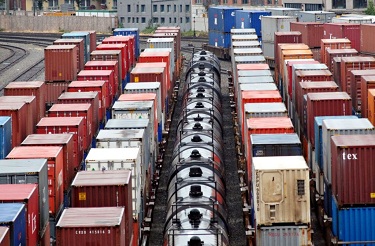
Rail freight traffic between Kazakhstan and Turkmenistan has recorded robust growth in the first months of 2026, underscoring the strengthening of regional trade links and the expanding role of the eastern branch of the North-South International Transport Corridor.
According to Kazakhstan Temir Zholy (KTZ), the national railway operator, bilateral rail cargo volumes with Turkmenistan rose by 31% in the first quarter (January–March) of 2026 compared to the same period in 2025. This contributed to a broader 34% increase in Kazakhstan’s rail freight with all Central Asian countries during that timeframe. More recent data points to even stronger momentum, with traffic between the two nations up to 46% higher in the first five months of the year.
While absolute bilateral tonnage figures remain limited in public reporting (reflecting commercial sensitivities and aggregate regional statistics), the percentage gains represent a meaningful uptick from previously modest baselines on this route.
The growth aligns with infrastructure enhancements, tariff incentives, and efforts to boost capacity along the Kazakhstan-Turkmenistan-Iran rail corridor, which forms a key segment of the North-South route with potential for several million tons annually in the medium term.
Commodity Drivers Behind the Rise
The increase is powered by a mix of Kazakh exports, reverse flows, and transit cargo. Reliable breakdowns from KTZ reports on Central Asian trade (of which Turkmenistan is a notable and growing component) highlight several key goods:
- Grain and agro-industrial products: Exports surged, with grain volumes reaching 2.08 million tons in Q1 2026 across Central Asia routes — a 50% year-on-year increase. Kazakhstan, a major grain producer, continues to leverage rail for reliable deliveries to regional partners.
- Ferrous metals: Up 43% to 442,000 tons in the same period, reflecting industrial demand.
- Petroleum products: Modest but steady growth of 6% to 212,000 tons in exports.
- Reverse and transit flows: Chemical products (e.g., soda ash) doubled to 36,000 tons; fruit and vegetable shipments grew 50% to 28,000 tons; non-ferrous ores rose 10%. Transit of petroleum products and ferrous metals also posted strong gains.
Container traffic has shown parallel strength, consistent with Turkmenistan’s reported near-doubling of overall container volumes in late 2025, much of it tied to North-South routes.
Optimism Tempered by Caution
This momentum is a positive signal for economic integration in Central Asia and beyond, promising shorter delivery times, diversified trade routes, and new opportunities for exporters and logistics providers. Officials from both countries have emphasized infrastructure upgrades and streamlined border procedures as enablers of sustained growth.
However, experts advise measured optimism. While the eastern North-South branch has seen capacity expansions, challenges such as directional imbalances in cargo flows, infrastructure bottlenecks on certain segments, and broader regional geopolitical or economic variables could influence longer-term trajectories.
Maintaining this pace will require continued investment in rail capacity, digitalization of customs, and balanced two-way trade development.
As Kazakhstan and Turkmenistan deepen cooperation within multilateral frameworks, the rail link stands as a promising artery for regional prosperity — one that, if nurtured carefully, could deliver lasting benefits for trade and connectivity. /// nCa, 27 June 2026