


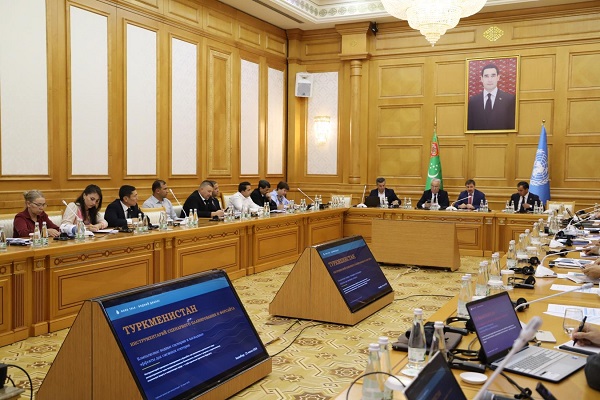
Government representatives of Turkmenistan, the United Nations, development partners and international financial institutions convened today for a high-level joint expert dialogue to discuss integrated water scenarios and cascading effects on related sectors across water and food security, agriculture, jobs and livelihoods, social protection, environment and biodiversity.
Held in the format of a hardtalk, the dialogue, titled “Water Scenarios & Foresight for Turkmenistan (2026–2050)”, explored long-term water availability trends and water resource management in Turkmenistan at times of uncertainty and their impact on the country’s development trajectory across various domains through forward-looking scenario analysis with the aim to identify coordinated responses to emerging risks.
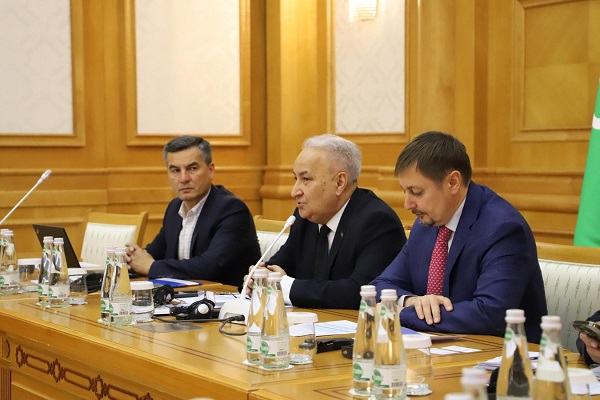
Opening the session, Mr. Dmitry Shlapachenko, UN Resident Coordinator in Turkmenistan, emphasized that water management is not only a sectoral issue but a cross-cutting driver of economic, social, and environmental outcomes. Changes in water availability, he noted, have direct implications for agriculture, employment, income, and ecosystems, underscoring the need for integrated and forward-looking policy approaches.
The event served a dual purpose: as a capacity-building exercise that for the first time introduces strategic foresight and scenario planning to the national partners, and as a policy dialogue to support joint decision-making in response to water-related risks facing Turkmenistan in the coming decades.
The UN consultants presented the methodological toolkit and findings of the analysis where Turkmenistan’s water situation can be potentially heading, shared plausible scenarios (business as usual, moderate and optimistic) with changes cascading through dependent sectors, and suggested follow-up adaptation actions and adjustments both in UN programming and Government measures including improved water governance, enhanced efficiency measures, and better alignment of policies, investments, and institutional frameworks.
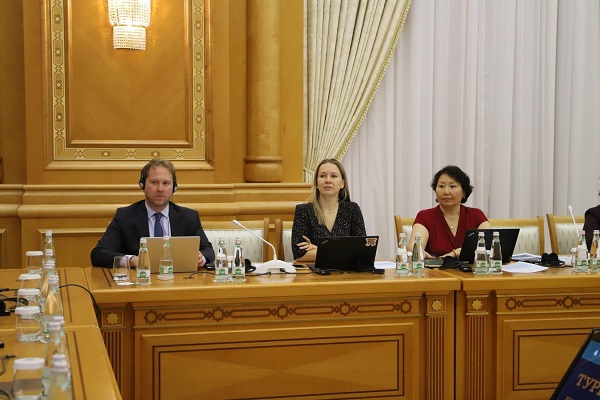
Having examined different scenarios across nexus domains up to 2050, the hardtalk participants recognized that future water challenges will depend not only on resource availability, but also on the efficiency of water use, cross-sectoral coordination, and investment choices. They also highlighted the practical benefits of strategic foresight and scenario planning for policy making and long-term sustainable development, as well as the need for the continuous capacity building in this area.
On their part, the UN agencies, including UNDP, FAO, UNOPS, UNESCO, UNECE, UNEP, and the World Bank shared their perspectives on current initiatives and potential areas for strengthened collaboration, including under the auspices of the Regional Center for Climate Change Technologies in Central Asia to be established by the Government of Turkmenistan.
The meeting concluded with agreement on developing a joint roadmap and conducting a follow-up meeting to review scenarios and related indicators in an integrated manner.
The United Nations reaffirmed its commitment to supporting Turkmenistan in advancing inclusive, evidence-based, and forward-looking water governance, in line with national priorities and the Sustainable Development Goals. /// nCa, 25 June 2026 (in cooperation with UN RCO Turkmenistan)