


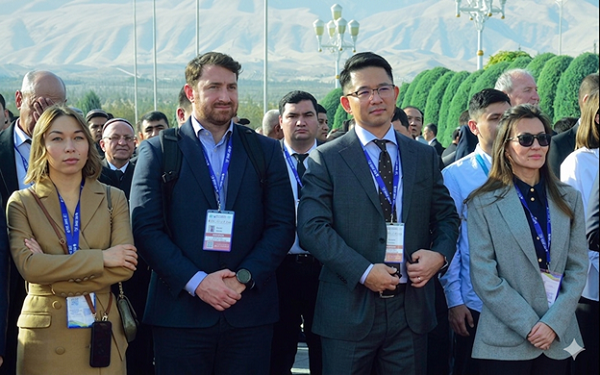
The long-term development of Ashgabat as a resilient, smart and globally connected capital will be a key focus of the XXV Multi-sector International Exhibition and Conference White City Ashgabat 2026 (WCA 2026), scheduled for 24–25 May in Ashgabat, the capital of Turkmenistan.
According to the latest registration figures, the event is expected to welcome more than 650 delegates from 55 countries, reflecting broad international participation across both public and private sectors. More than 100 international companies are expected to take part in the conference and exhibition programme, representing a wide range of industries connected to urban development, infrastructure, energy, construction technologies and investment cooperation.
The Strategic Plenary Session, titled “Building a Resilient, Smart and Globally Connected Capital,” will bring together senior government officials, representatives of international organisations, development institutions, investors, urban planners, architects, engineers and industry leaders to review Ashgabat’s strategic urban development trajectory and future transformation.
The session will address the evolving role of cities in a global context where integrated infrastructure systems, energy efficiency, digital transformation, sustainable mobility and improved urban liveability are increasingly central to national development strategies. Within this framework, Ashgabat’s development vision is positioned as part of broader international discussions on future-ready urban growth models.
Discussions will focus on the alignment of urban planning, infrastructure development, industrial expansion, energy systems and environmental sustainability within a unified and coordinated development framework. Particular emphasis will be placed on the transition from strategic planning to implementation mechanisms capable of supporting investment-ready and scalable urban projects.
The Ashgabat 2045 vision is expected to further strengthen the city’s transformation into a modern administrative, economic and cultural centre supported by advanced infrastructure, efficient urban systems, digital governance tools and high-quality public services. Key priorities include transport connectivity, engineering infrastructure, residential development, digital platforms and sustainable urban management systems.
The plenary will also highlight Ashgabat’s growing role as a regional platform for investment, innovation and international cooperation, facilitating engagement between global companies, financial institutions, engineering firms and technology providers. This engagement is expected to support the development of integrated infrastructure initiatives and long-term urban projects.
A key focus of the session will be the shift from conceptual urban planning to practical implementation, including integrated infrastructure delivery, energy-efficient construction solutions, digital city systems and environmentally responsible development approaches. The discussion will also reflect global trends in urban governance, where effective development increasingly depends on coordinated action among public authorities, private sector stakeholders and international partners.
WCA 2026 is positioned as a platform that supports such multi-stakeholder cooperation and project-oriented dialogue, contributing to the exchange of expertise and investment engagement in the field of urban development.
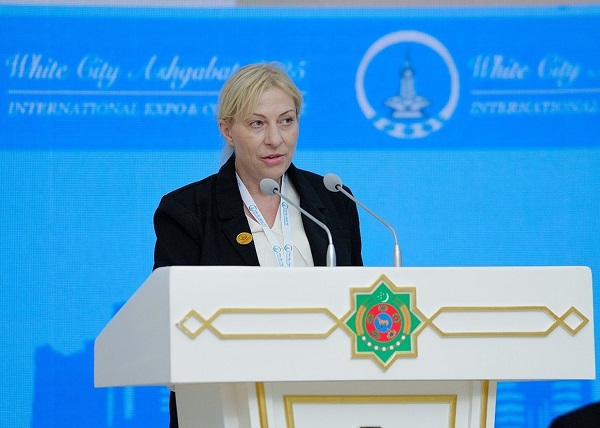
“For the European Union, issues of sustainable urban development and a green economy are priorities. We see Ashgabat as a vivid example of how a city can develop by integrating innovations while preserving its unique identity. Forums like White City Ashgabat strengthen mutual understanding between countries and create fertile ground for new partnerships, ultimately contributing to the prosperity of all participants.”
— Beata Peksa, Ambassador Extraordinary and Plenipotentiary of the European Union to Turkmenistan
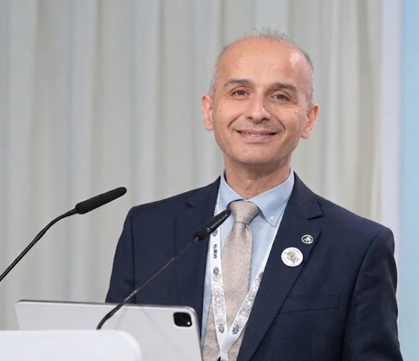
“Integrated urban planning, digital transformation and sustainable infrastructure are shaping the future of resilient and internationally connected cities. Real progress happens when strategy, investment and implementation come together — turning long-term urban visions into practical and deliverable projects.”
— Erfan Ali, Regional Director for Eastern Europe and Central Asia, UN-Habitat
By placing the Ashgabat 2045 vision at the centre of its programme, WCA 2026 underscores the importance of long-term planning, integrated infrastructure development and international partnership in shaping sustainable, resilient and competitive cities of the future.
Detailed information about the conference agenda, exhibition participation and sponsorship opportunities is available on the official event website: White City Ashgabat 2026 Official Website
///nCa, 19 May 2026 (the material provided by WCA 2026 Organizers)