


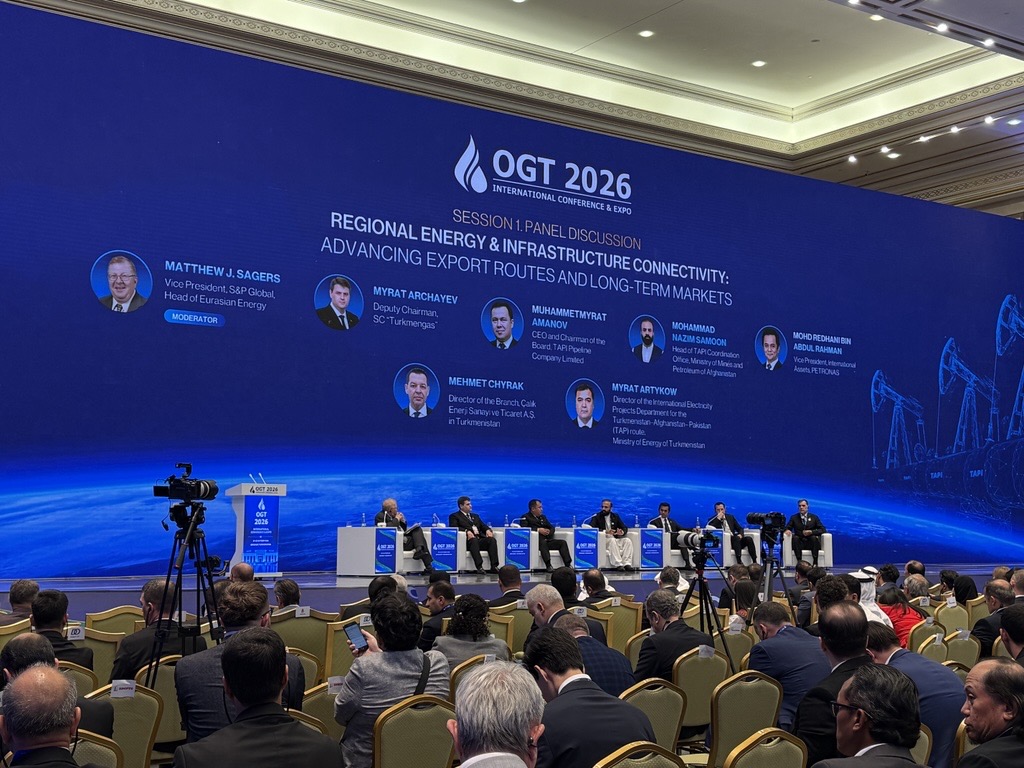
The section of the Turkmenistan–Afghanistan–Pakistan–India (TAPI) gas pipeline being built from the Turkmen border towards Herat in western Afghanistan is about 80% complete, TAPI Pipeline Company Limited CEO Muhammetmyrat Amanov said at the Oil and Gas of Turkmenistan (OGT 2026) conference in Ashgabat.
The pipeline’s Herat section is expected to be commissioned by the end of 2026, according to Amanov.
Amanov said approximately 150 kilometres of the pipeline route had been prepared, with pipes welded and assembled along 124 kilometres. About 75% of crossings over rivers, roads and other obstacles had been completed. Hydrostatic testing is under way section by section.
“The pipeline has reached the outskirts of Herat,” Amanov said, adding that work was continuing with Afghan partners to extend it into the city and the Herat industrial park.
“We expect to complete the remaining part of the pipeline, hydrostatic testing and the final crossings, and to commission TAPI Herat pipeline by end of this year. This will demonstrate to the market and to the financial institutions that TAPI is feasible and proven in practice,” he added.
Gas supply and downstream infrastructure
Amanov also highlighted progress in strengthening the project’s resource base. In April 2026, Turkmenistan inaugurated the fourth phase of development at the Galkynysh gas field, adding capacity to produce a further 10 billion cubic metres of commercial gas annually.
Meanwhile, preparations have begun for infrastructure to supply and distribute gas in Afghanistan. In August, Turkmenistan’s state concern Turkmengas and Afghanistan’s state-owned Afghan Gas Corporation signed a memorandum of understanding on downstream projects in Herat province. A joint working session was held in Herat in September, and discussions on gas distribution and other facilities are continuing.
Amanov outlined four priorities for the coming period: completing the remaining pipeline construction and testing, finalising the legal and commercial framework with Afghan partners, supporting downstream projects in Herat, and advancing environmental and digital monitoring programmes.
TAPI Company CEO told TAPI is designed in line with the best environmental standards available, with further work planned on methane reduction and digital monitoring to make it one of the world’s most modern pipeline systems.
Afghanistan sees the Herat section as a test for the wider project
Mohammad Nazim Samoon, head of the TAPI Coordination Office at Afghanistan’s Ministry of Mines and Petroleum, said the construction of the Herat section had provided valuable experience for implementing the wider project.
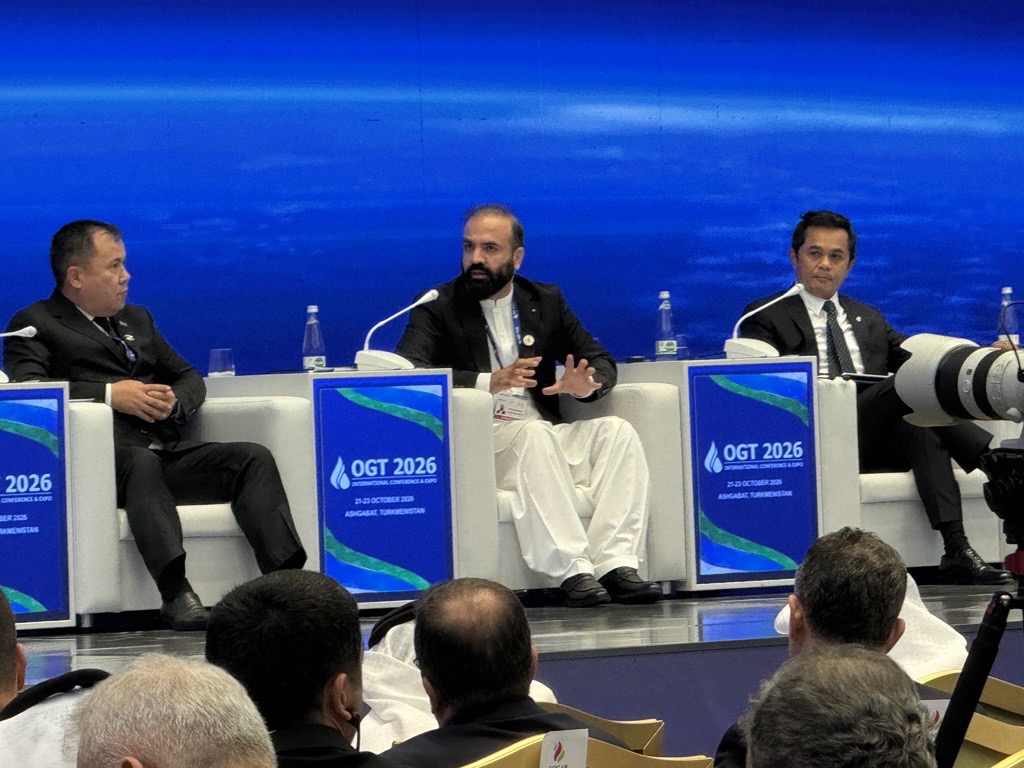
Over the past two years, the work had helped the partners develop practical experience in coordinating activities, arranging security, preparing land and rights of way, managing logistics and procurement, and securing access to construction sites.
He added that the progress made in Herat should help convince potential investors and shareholders that the regional energy project was feasible and could advance towards Pakistan and, ultimately, India.
Afghanistan open to Russian investment
Speaking separately to Russian news agency TASS on the sidelines of OGT 2026, Samoon said Afghanistan had no objections to Russian investors participating in the TAPI project.
According to TASS, Samoon said construction of the section to Herat was currently under way, while the extension towards Kandahar would require further investment.
Samoon added that Afghanistan would have no problem with Russian participation, although the proposal would need to be discussed with the project’s other participating countries — Turkmenistan, Pakistan and India.
The TAPI project envisages transporting up to 33 billion cubic metres of natural gas annually from Turkmenistan through Afghanistan to Pakistan and India. The planned pipeline is approximately 1,800 kilometres long and is intended to supply energy to South Asian markets while strengthening regional economic cooperation. ///nCa, 22 October 2026