


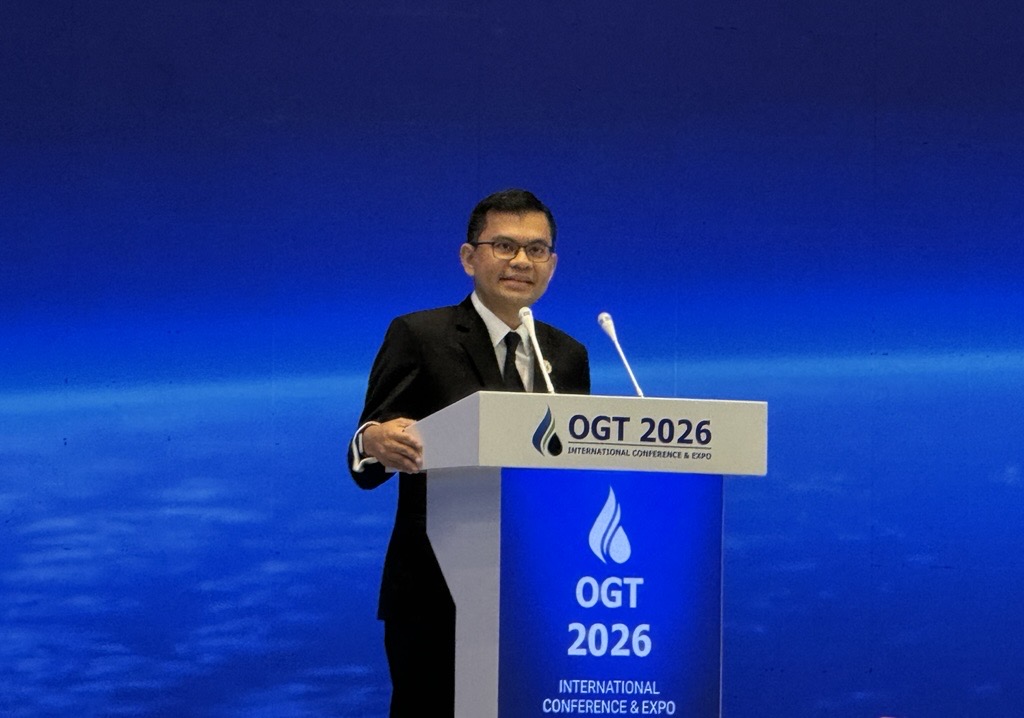
Malaysia and its national energy company Petronas are looking to expand their long-standing partnership with Turkmenistan, focusing on new investments, offshore development, technology transfer and stronger regional energy connectivity.
Speaking at the 31st International Conference and Exhibition “Oil and Gas of Turkmenistan” (OGT 2026) in Ashgabat, Malaysian Economy Minister Akmal Nasrullah bin Mohd Nasir and Petronas executives reaffirmed their commitment to cooperation that delivers lasting economic benefits for Turkmenistan.
The two sides see opportunities to build on nearly three decades of Malaysian involvement in Turkmenistan’s energy sector, with recent agreements and new offshore projects providing a basis for further expansion.
Malaysia Seeks Greater Local Value from Energy Cooperation
Addressing the opening plenary session, Akmal Nasrullah highlighted the importance of the bilateral framework agreement on long-term cooperation in developing Turkmenistan’s hydrocarbon resources, formalized by the governments of Malaysia and Turkmenistan in June 2026.
Malaysia’s participation in OGT 2026 reflects its intention to translate this framework into practical cooperation. A high-level Malaysian delegation includes representatives of around 20 companies in the oil and gas services and equipment (OGSE) sector, with seven companies exhibiting at the Malaysia Pavilion.
“We aim to explore partnerships that combine Malaysian technology and expertise with the capabilities and opportunities provided by Turkmenistan,” the minister said.
He stressed that Malaysia’s approach goes beyond supplying equipment or securing individual contracts. The priority is to establish long-term partnerships that create tangible benefits for the host country, including employment, technology transfer, opportunities for local suppliers and stronger domestic supply chains.
“Success in Turkmenistan must be measured not only by a contract secured, but by the value created for Turkmenistan: jobs for Turkmenistan citizens, opportunities for local suppliers, skills transferred to local workers, and capabilities embedded within,” Nasir said.
He added that Malaysian companies were ready to work with Turkmen partners as long-term collaborators, contributing their expertise while helping develop local capabilities.
Petronas Marks 30 Years in Turkmenistan with More Than $12 Billion Invested
For Petronas, 2026 marks 30 years of operations in Turkmenistan. The company’s Chief Operating Officer and Executive Vice President and CEO of Upstream, Mohd Jukris Abdul Wahab, said the partnership had evolved beyond hydrocarbon production to encompass infrastructure, operational expertise and workforce development.
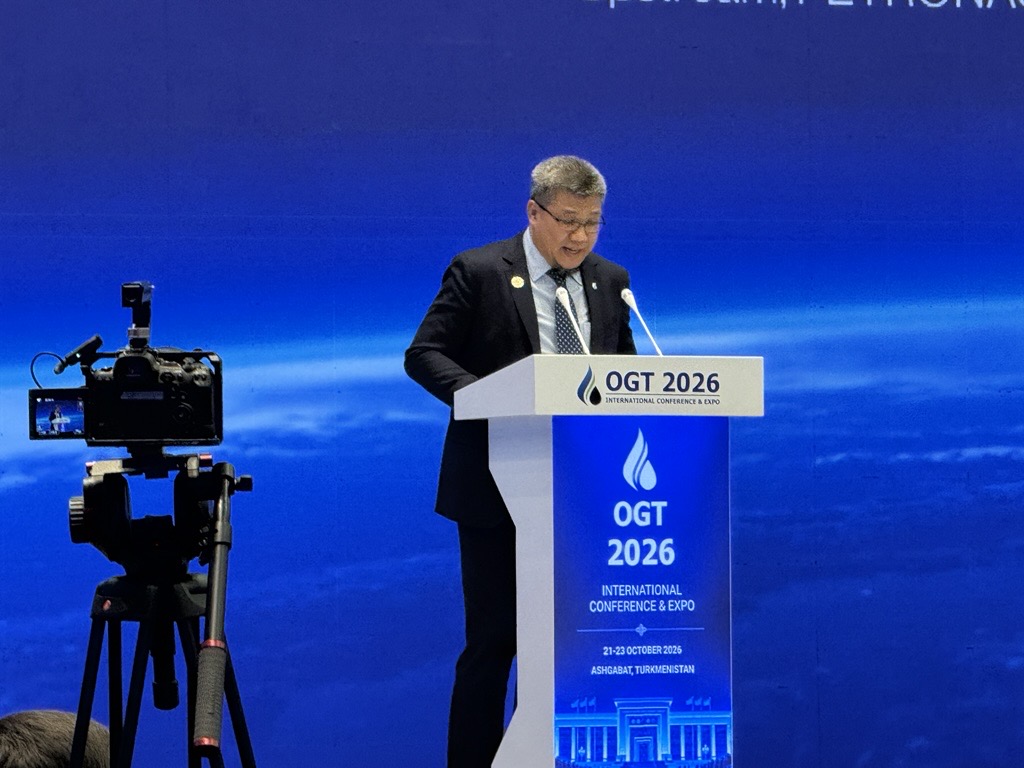
Over the past three decades, Petronas has invested more than $12 billion in Turkmenistan, covering infrastructure development, operational capabilities and workforce training.
Its presence includes offshore production facilities, the Kiyanly gas processing and terminal complex, and supporting infrastructure that forms part of an integrated energy value chain.
“These investments reflect confidence in Turkmenistan, confidence in the region, and confidence in the strength of our partnership,” Wahab said.
He praised the cooperation with Turkmenistan’s state energy companies, including Turkmengas, Turkmennebit and Turkmengeologiya, as well as other national and international partners.
Recent developments in Petronas’s portfolio further demonstrate the company’s intention to remain engaged in Turkmenistan’s energy sector.
Wahab pointed to agreements relating to offshore blocks 19 and 20, seismic studies in the northern offshore blocks, and the 25-year extension of the production sharing contract (PSC) for Block 1 through 2050.
These developments, he said, reinforce Petronas’s long-term commitment and provide a foundation for future cooperation.
Central Asian Connectivity
Petronas also sees opportunities for Turkmenistan to benefit from stronger energy links across Central Asia and beyond.
Wahab noted that the region’s importance in global energy markets rests not only on its substantial resource base but also on its strategic location and potential to connect producers, consumers, investors and markets across a wide geographic area.
He argued that energy security increasingly depends on more than the availability of resources. Infrastructure, access to markets, technology and reliable partnerships are becoming equally important.
“The future value of energy resources will increasingly depend not only on what we produce, but on how effectively we connect — connect resources to markets, investment to opportunity, and connect nations and partners to enduring cooperation,” he said.
For Turkmenistan, this approach offers scope to build on its established role in regional energy supplies while attracting further investment and strengthening links with neighbouring markets.
Petronas is prepared to contribute to these efforts by supporting closer integration between regional supply and demand centres and helping strengthen Central Asia’s energy resilience.
“We are prepared to play a bigger role to integrate regional supply and demand centers, to drive Central Asia’s resilience and sustainable energy security,” Wahab said.
He added that the company remained committed to strengthening its partnership with Turkmenistan in the years ahead.
For Malaysia, the next phase of cooperation is expected to combine investment and technical expertise with the development of local skills and businesses. For Petronas, the focus remains on long-term engagement, new offshore opportunities and stronger regional connectivity — with both sides seeking to turn an established partnership into a broader platform for energy development and economic growth. ///nCa, 21 October 2026