


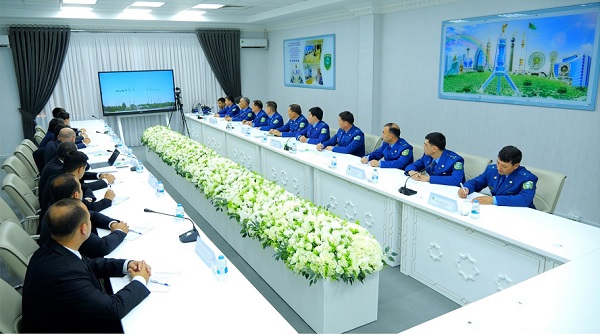
The organization of the first pilot shipment along the Azerbaijan–Turkmenistan–Uzbekistan route using the international digital “e-TIR” system was discussed during a technical workshop at the State Customs Service of Turkmenistan.
The workshop is part of a five-day program dedicated to coordination and technical support for carrying out the initial freight operations using the international digital “e-TIR” system.
The seminar was attended by representatives of the customs authorities of Turkmenistan, Azerbaijan, and Uzbekistan, as well as international organizations—IRU, the United Nations Economic Commission for Europe (UNECE), and the United Nations Conference on Trade and Development (UNCTAD).
During the meeting, it was noted that Turkmenistan is among the first countries in the region to implement the “e-TIR” system for international road transit transport. The importance of this step in enhancing the attractiveness of transit transport corridors passing through the country was emphasized.
The practical stage of the events will continue on 22–24 July at the Turkmenbashi International Seaport. Here, with the support of UNECE, pilot freight shipments using the “e-TIR” system will be conducted alongside training activities led by IRU expert Vakhtang Zarandia.
For many years, the TIR Convention (Transports Internationaux Routiers) has proven to be an effective trade facilitation tool. However, with technological advancement, paper TIR Carnets are becoming increasingly outdated when linked with electronic procedures used by national customs administrations.
Contracting Parties to the TIR Convention launched the “eTIR Project” in 2003 to provide an exchange platform for all actors (customs authorities, holders, guarantee chains) involved in the TIR system, known as the “international eTIR system.”
The eTIR international system aims to ensure the secure exchange of data between national Customs systems related to the international transit of goods, vehicles or containers according to the provisions of the TIR Convention and to allow Customs to manage the data on guarantees, issued by guarantee chains to holders authorized to use the TIR system. /// nCa, 22 July 2026