


Allaberdy Niyazov
Friends and colleagues of Begench Saparovich Karaev often jokingly compare him to René Descartes or Gottfried Leibniz. Both of these intellectual giants masterfully balanced mathematical rigor with a profound, humanistic understanding of human nature. In their studies, they always sought a harmony between structural logic and existential purpose. Those who know him well say that this very gift belongs to our protagonist—Begench Karaev, Senior Lecturer at the Institute of International Relations of the Ministry of Foreign Affairs of Turkmenistan.
His unconventional path to academic excellence began in the 1980s. After graduating from the Turkmen State Architecture and Construction Institute with a degree in mechanical engineering, he started his career as a frontline foreman at the Buzmeyin Experimental and Tool-Mechanical Plant. Fate seemed to be testing the young specialist, conducting an experiment of its own: what would win out—the rigid, dry laws of mechanics and mathematics from his university years, or his innate drive for creative expression and a deeper understanding of the world?
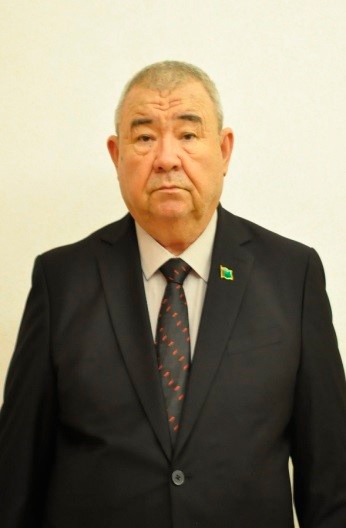
As Karaev himself puts it, human life is essentially an equation with multiple unknowns. A mathematician might be satisfied simply finding “X,” declaring the problem solved once both sides of the equation balance out. In real life, however, the fundamental laws operate on an entirely different plane, where an array of shifting variables constantly disrupts the search for a common denominator.
Managing a workforce and troubleshooting complex production lines—where veteran, highly skilled mechanics often knew more than any fresh-faced engineer—opened his eyes to realities never taught in a lecture hall. This practical, hands-on experience proved invaluable when he was later invited to lead the youth lecture initiative for the Ashgabat Regional Komsomol Committee. This invaluable school of human nature, which forged his character and shaped his worldview, gradually guided him toward the study of philosophy.
A decade later, in April 1991, he successfully defended his thesis in Moscow, earning his candidate degree in philosophical sciences. In the late 1990s, his career took another dramatic turn when he was invited to join the Ministry of Foreign Affairs of Turkmenistan. For nearly two decades, he served in high-level diplomatic roles, leveraging his academic background to help meet the ministry’s strategic goals.
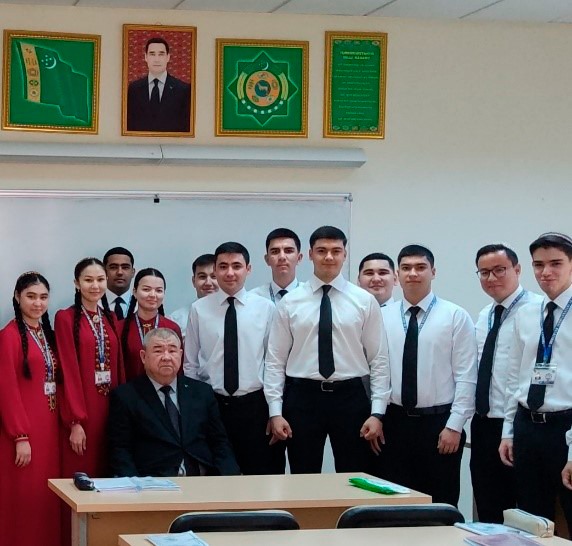
Today, it is clear that the vast professional and life experience he gained—including his time in diplomacy—ultimately transformed the technical engineer into an “architect” of meaning. He evolved into an analyst capable of transforming a chaotic flood of information into a clear, inspiring, and highly logical narrative. In our current era of information overload, such a skill is not just a bonus for an educator; it is an absolute necessity. Now, back in the classroom, Karaev dedicates himself entirely to examining the philosophical dimensions of global events and international relations.
He has authored nearly 150 academic and popular articles, alongside numerous textbooks and volumes. He also serves as a trusted consultant and expert for various civic and scientific institutions. In recognition of his contributions, Karaev has received numerous commendations, including the “Watana bolan söýgüsi üçin” (For Love of the Fatherland) medal in 1999 and the jubilee medal marking the 20th Anniversary of Turkmenistan’s Independence in 2011.
At a recent Academy of Sciences session celebrating Science Day, Karaev was formally awarded his higher doctorate certificate, officially attaining the rank of “Doctor of Philosophical Sciences” by decree of the Supreme Attestation Commission of Turkmenistan.
Yet, this milestone is hardly the peak of his academic and teaching career. His wealth of experience and relentless drive for innovation ensure that he will continue to reach new heights, mentoring and shaping the next generation of professionals for Turkmenistan’s diplomatic corps. /// cross-post from the “Turkmenistan: Golden Age” portal, 30 June 2026.