


Nowadays, against the backdrop of the gathering momentum of climate change, cities worldwide are experiencing various types of stress in the form of heatwaves, water scarcity, and extreme weather events. In addition, the pressure on urban infrastructure is also driven by the need to meet established climate targets.
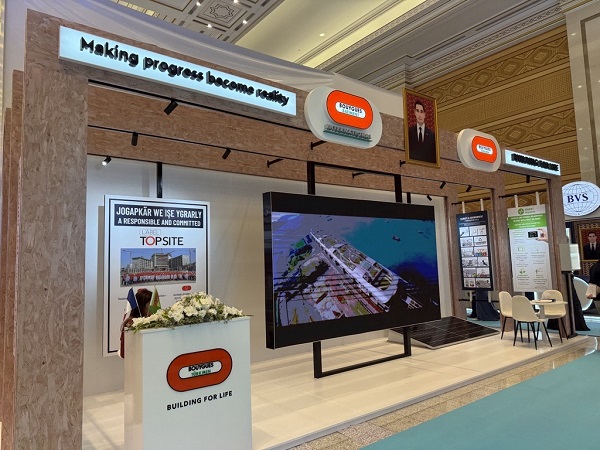
Ashgabat, the capital of Turkmenistan, is actively making efforts to minimize the negative impacts of the changing climate on the urban environment. Thomas Routhiau, Climate and Environment Manager at the French company Bouygues Turkmen, which is a long-term partner of Turkmenistan, spoke about how the city can achieve its decarbonization targets as early as the construction phase—through innovative materials and engineering solutions.
In his presentation at the “White City Ashgabat 2026” conference, Routhiau noted that from the perspective of a construction and infrastructure company like Bouygues, their responsibility is to help the city to identify what are the main aspects to match these environmental and reducing carbon targets.
“We need to adapt to the climate change. We already saw the impact, and so the city, uh, will need to adapt, uh, to face these, uh, change. For example, support more extreme weather events, heat stress, or, uh, also pressure on water and energy system. And then, finally, the city must do this while continuing to deliver all the essential services to the citizens”, the speaker stated.
In response to these challenges, Bouygues identifies 4 practical solutions.
First, there is a need to improve the energy efficiency of the building and of the districts. Bouygues Bâtiment International and Bouygues Turkmen know how to handle this task: it requires a better orientation of the building, improved insulation, smart management of lighting, heating, and cooling, passive design strategies, and efficient cooling and heating systems.
Secondly, it is necessary to decarbonize the energy supply for the building and the infrastructure. This can be achieved by connecting efficient buildings or infrastructure to green energy supply alternatives alongside traditional sources (gas), such as solar panels, geothermal power, and similar options. According to the Bouygues representative, solar panels can be very efficient in Ashgabat. They can be integrated directly into the building architecture, placed on the roof, in the wall, in the parking lot, in the garden, and even in the road.
Thirdly, the use of low-carbon construction materials. ” Today, Bouygues Bâtiment International in Turkmenistan delivers the first building with low-carbon concrete, – it help us to save, around 15% of greenhouse gases emission in relation with the concrete,” Routhiau shared, emphasizing that this is the first accomplishment in the country. Furthermore, with the help of the Institute of Chemistry of Turkmenistan, opportunities have been identified to go further regarding low-carbon concrete with the use of a material called opoka.
And finally, the fourth solution is to move from building scale to district scale to develop more efficient systems.
In conclusion, Bouygues Turkmen specialist Thomas Routhiau called to design more efficient buildings from the start of the project in order to supply an infrastructure with greener energy. ///nCa, 25 May 2026