


Elvira Kadyrova, Ankara
Former Foreign Minister of Türkiye Mevlüt Çavuşoğlu identified transport connectivity, energy security, diplomatic coordination, and parliamentary cooperation as key areas for strengthening the international role of Turkic states.
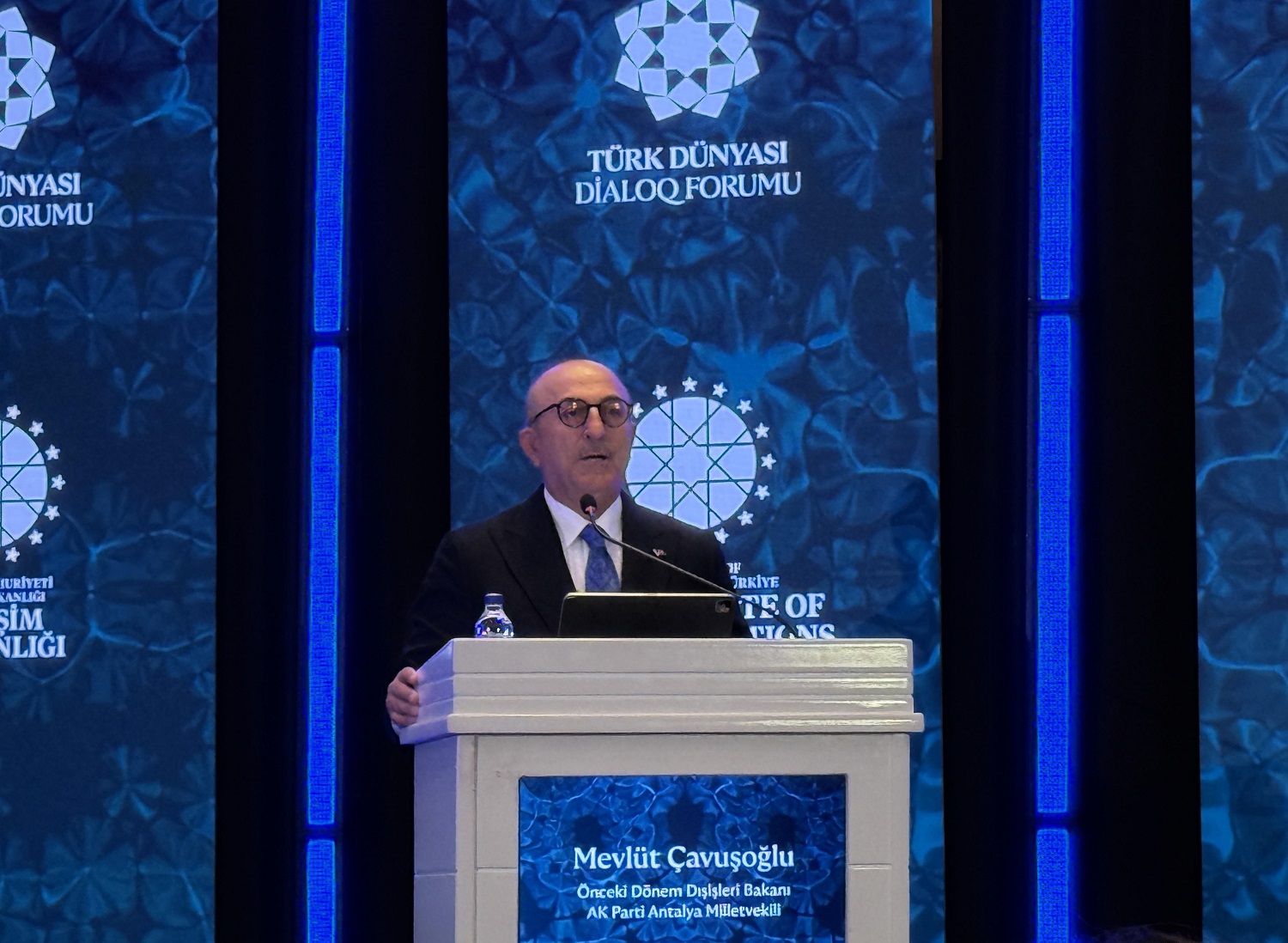
The Turkic world possesses significant geopolitical potential due to its position at the intersection of global transport corridors, energy routes, and strategic connectivity networks. However, transforming this potential into real international influence requires a shared vision, trust, institutional cooperation, and a readiness for joint action. This was stated by former Foreign Minister of Türkiye and Member of Parliament from the ruling Justice and Development Party (AK Party) Mevlüt Çavuşoğlu while speaking at the panel session titled “The Geopolitical Role of the Turkic World in an Era of Global Transformations” during the Turkic World Dialogue Forum in Ankara.
The forum is dedicated to the 13th Summit of the Organization of Turkic States, held under the motto “Turkic Century: Unity in Language, Thought, and Deed.”
According to Çavuşoğlu, the international system is undergoing a profound transformation: the core institutions and mechanisms of the global order established after World War II are weakening, while rivalry between major powers is intensifying. Regional conflicts, economic vulnerability, energy and food security challenges, and technological transformations are redefining the dynamics of international relations.
Uncertainty on global trade routes and disruptions in supply chains, he noted, have once again demonstrated how closely intertwined security and economy are.
“Geopolitical power today is no longer measured solely by military potential or available natural resources. A country’s weight in the international system is also determined by its diplomatic capabilities, economic resilience, position in transport and energy networks, technological capabilities, and the ability to build reliable partnerships,” Çavuşoğlu emphasized.
According to him, the geopolitical significance of the Turkic world should be evaluated from this broad perspective.
The region is at the center of global transport corridors, energy routes, and strategic connectivity networks. On the one hand, this makes Turkic states directly dependent on processes taking place in the world; on the other hand, it allows them to act as a significant geopolitical player capable of influencing the direction of these processes.
Çavuşoğlu noted that with the rise of Asia, Eurasia has become one of the main areas of interaction in global politics and economy. The new dynamics of relations between Europe and Asia, the rethinking of energy security, and the need for secure supply chains have made Central Asia and the Caucasus more visible on the international arena.
This picture brings both significant opportunities and challenges requiring careful management for the Turkic states.
From Geographical Position to Common Strategic Power
The former Turkish chief diplomat paid special attention to the need to transform the region’s geographical advantages into sustainable political and economic influence.
“Geographical position alone is not enough to gain strategic power. What is decisive is the ability to use the opportunities provided by geography based on a shared vision,” he stated.
To achieve this, Çavuşoğlu continued, trust, solidarity, institutional cooperation, and the will for joint action are necessary. It is the Organization of Turkic States that represents the institutional expression of this will.
He called the path from the Turkic Council to the Organization of Turkic States an important testimony to how a common identity has developed through institutional cooperation.
Today, according to him, the goal is to advance existing cooperation further and turn a common will into a joint force, concrete projects, sustainable mechanisms, and initiatives that yield results on an international scale.
Measuring success solely by trade volumes or the number and quality of implemented projects, the speaker said, is incorrect.
“True success is the deepening of trust built between our countries, our ability to jointly develop solutions to common problems, and the growth of our ability to act in coordination in the face of international events,” Çavuşoğlu noted.
He noted that the strengthening of the Organization of Turkic States does not mean competition with other countries or international organizations. On the contrary, it is a structure that complements the existing international partnerships of Turkic states, contributes to regional stability, and creates new opportunities for cooperation between different regions.
The Middle Corridor and Energy Security
Çavuşoğlu named transport and connectivity as one of the most prominent areas for realizing the geopolitical role of the Turkic world.
A special place in this context is occupied by the Middle Corridor, which, according to him, is not just a transport route opening up new opportunities between Asia and Europe.
“This is a strategic project that strengthens economic ties between our countries, deepens regional cooperation, and brings societies, institutions, ideas, and markets closer together,” he stated.
Çavuşoğlu called energy security another crucial component of the strategic importance of the Turkic world.
The energy resources of the Caspian basin, Türkiye’s central position in energy transportation, and the potential of Turkic states in the field of renewable energy, in his assessment, open up significant opportunities for strengthening both regional and global energy security.
Diplomacy and Parliamentary Cooperation
Speaking about the international role of Turkic states, Çavuşoğlu emphasized that security and diplomatic issues should not be ignored.
In his opinion, closer consultations on general security issues, diplomatic coordination to prevent crises, and mutual support on international platforms should become important dimensions of cooperation.
The former foreign minister dwelt separately on the importance of parliamentary diplomacy.
He recalled that he emphasized its importance back when he served as Türkiye’s Foreign Minister. His current activity as the head of the Turkish delegation to the NATO Parliamentary Assembly allows him to see firsthand how valuable parliamentary dialogue is for developing mutual understanding between different security approaches and political priorities.
Çavuşoğlu expressed confidence that interparliamentary friendship groups and joint initiatives will help strengthen mutual trust, exchange experience, and foster a stronger perception of common goals by the societies of Turkic states.
Türkiye Advocates for Strengthening the Global Role of the Turkic World
Speaking about Ankara’s foreign policy priorities, Çavuşoğlu stated that Türkiye views relations with the Turkic world as one of the main directions of its foreign policy.
According to him, under the leadership of Turkish President Recep Tayyip Erdoğan, great importance is attached to strengthening fraternal ties between Turkic states through concrete cooperation projects. In the coming period, Türkiye would like the Turkic world to have greater weight not only in regional events, but also in global issues.
“Our approach as Türkiye is to keep the doors of cooperation open in a world where competition turns into conflict, to strengthen dialogue in the face of divisions, common sense in the face of uncertainty, and institutional solidarity in the face of changing power balances,” Çavuşoğlu stated.
Summing up his speech, Mevlüt Çavuşoğlu, Former Minister of Foreign Affairs and AK Party Member of Parliament for Antalya, expressed the conviction that the consistent implementation of the principle of “unity in language, thought, and deed” in concrete steps will allow the Turkic world not only to ensure the well-being of its peoples, but also to more effectively contribute to the strengthening of peace, stability, and cooperation in Eurasia. ///nCa, 31 October 2026